Latest News

What Makes Benfotiamine the Smarter Thiamine Choice

Makes Benfotiamine the Smarter

Thiamine — vitamin B1 — is essential for carbohydrate metabolism, nerve function, and cellular energy production, yet it occupies an underappreciated corner of the supplement world. Much of the neglect comes from the assumption that food provides enough of it. For many people with healthy, varied diets, that assumption holds. But for those with elevated glucose levels, alcohol dependence histories, certain genetic variants, or conditions that increase thiamine turnover, dietary thiamine alone may fall short — and standard supplemental forms may not close the gap effectively.

This is where benfotiamine earns serious attention. Derived from thiamine but structurally modified to be fat-soluble, benfotiamine reaches tissues and cells that water-soluble thiamine forms cannot access in meaningful concentrations. The compound has been studied for decades — particularly in European clinical research — and the data supporting its use for nerve health and metabolic protection are among the strongest available for any single B vitamin derivative. Whether you are managing blood sugar, recovering from a period of nutritional depletion, or simply seeking a more bioavailable form of B1, understanding what sets benfotiamine apart is the starting point for making an informed choice.

The Bioavailability Advantage Explained

Standard thiamine supplements — thiamine hydrochloride or thiamine mononitrate — must pass through active transport channels in the intestinal wall. These channels are saturable: once they are occupied, additional thiamine cannot be absorbed, regardless of dose. The body then rapidly excretes excess thiamine in urine, keeping tissue accumulation low. This is a fundamental constraint of the water-soluble form that no amount of dose escalation can fully overcome.

Benfotiamine bypasses this bottleneck entirely. Its open-ring, fat-soluble structure allows it to diffuse passively across the lipid bilayer of intestinal cells — a process that is not subject to transport protein saturation. Once it enters circulation and reaches target tissues, the ring closes, and benfotiamine is converted into thiamine pyrophosphate (TPP), the biologically active cofactor that enzymes need. The result is tissue thiamine levels that are measurably and substantially higher than those achievable with equivalent doses of standard thiamine.

Pharmacokinetic studies comparing the two forms have quantified this difference. In red blood cell measurements — a reliable proxy for tissue thiamine status — benfotiamine produces TPP levels roughly three to five times higher than thiamine hydrochloride at equivalent doses. For conditions where tissue thiamine deficiency is the underlying problem, this is a clinically meaningful advantage, not merely a theoretical one.

Protecting Against Glycation Damage

Advanced Glycation End Products and Why They Matter

When blood glucose is chronically elevated, it reacts non-enzymatically with proteins and lipids through a process called glycation. The resulting compounds — advanced glycation end products (AGEs) — accumulate in tissues and interfere with normal cellular function. AGEs stiffen arterial walls, disrupt nerve myelin, impair kidney filtration structures, and activate inflammatory signaling pathways. Managing AGE formation is a key priority in diabetes management, and it is also relevant for anyone with metabolic syndrome, prediabetes, or a diet high in processed foods that contain preformed dietary AGEs.

Benfotiamine’s primary mechanism for reducing AGE formation is activation of transketolase — an enzyme in the pentose phosphate pathway that redirects glucose away from the three biochemical routes that generate AGEs and toward constructive metabolic uses. By boosting transketolase activity, benfotiamine supplement essentially creates a metabolic bypass that processes excess glucose before it can be converted into damaging byproducts. Animal studies have demonstrated reductions in AGE accumulation in kidney, retina, and nerve tissue with benfotiamine treatment, and these findings have been corroborated in human cell culture models.

Relevance to Diabetic Complications

The diabetic complications most extensively studied in connection with benfotiamine are peripheral neuropathy and nephropathy. Randomized controlled trials in patients with diabetic peripheral neuropathy — the nerve damage affecting extremities — have shown improvements in pain scores, vibration perception, and nerve conduction parameters with benfotiamine supplementation over periods ranging from six weeks to six months. The BEDIP trial and BENDIP trial are among the most cited, demonstrating meaningful reductions in neuropathy symptom scores in placebo-controlled designs.

Renal protection research has found that benfotiamine can reduce markers of kidney damage in diabetic rodent models, with some human pilot data suggesting similar effects on urinary albumin excretion — an early marker of diabetic kidney disease. While the human evidence here is less mature than the neuropathy data, the consistency with the established mechanism of AGE reduction provides a strong biological rationale for ongoing investigation.

Beyond Diabetes: Broader Applications

Benfotiamine’s applications extend to populations without diabetes. Alcoholic peripheral neuropathy — nerve damage caused by chronic excessive alcohol consumption — has been treated with thiamine compounds for decades, and benfotiamine’s superior tissue penetration makes it a logical choice for this application. European clinical research found that benfotiamine supplementation improved neuropathy symptoms in alcoholic patients more effectively than a multi-B-vitamin control over a twelve-week period.

Aging itself is associated with reduced thiamine absorption and utilization, and subclinical thiamine insufficiency in older adults may contribute to fatigue, cognitive changes, and reduced metabolic efficiency. Population studies have identified thiamine deficiency as more prevalent in elderly populations than generally appreciated, particularly in those taking diuretics (which increase urinary thiamine losses) or those whose dietary variety has narrowed. Benfotiamine offers an efficient means of restoring adequate tissue thiamine in these circumstances without requiring very high doses.

Emerging research is also examining benfotiamine in the context of cognitive aging and neuroinflammation. Animal studies have shown reduced amyloid-related pathology and improved memory performance with benfotiamine treatment. The mechanistic connection rests partly on thiamine’s role in energy metabolism within neurons and partly on its ability to reduce AGE-related neuroinflammation. Human research is at earlier stages but has produced encouraging preliminary signals, making this an area worth watching for those interested in brain health preservation.

Selecting and Using a Benfotiamine Supplement Effectively

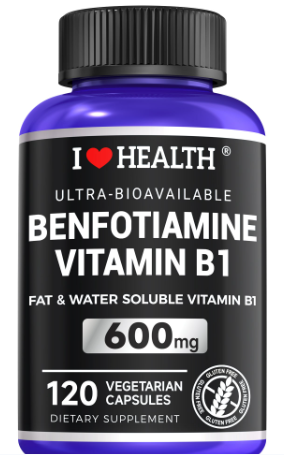
Product quality in the benfotiamine market varies considerably. Key selection criteria include: confirmation that the active ingredient is listed as benfotiamine specifically (not just thiamine or vitamin B1); third-party testing documentation; capsule count relative to dose that provides a practical supply duration; and excipient transparency. Vegetarian capsule formulations are preferable for those avoiding animal-derived gelatin, and the 250 mg dose per capsule offered by formulations like iLoveHealth’s Mega Benfotiamine aligns with the doses used across multiple clinical trials — making supplementation straightforward without requiring multiple capsules to reach study-relevant levels.

In terms of dosing protocols, research for diabetic neuropathy has used 150–600 mg daily, typically divided across two to three doses. For general metabolic and nerve health maintenance, a single 250 mg daily dose represents a practical starting point. Benfotiamine can be taken with or without food — unlike truly fat-soluble vitamins such as D and K, it does not require dietary fat for absorption since it passes through cell membranes via passive diffusion. Morning dosing is common for consistency, but timing is less critical than maintaining a daily habit.

Regarding safety, benfotiamine has an excellent profile across its studied history. No serious adverse events have emerged from trials spanning multiple years at doses up to 600 mg daily. It does not replace blood sugar management in people with diabetes but can function as a complementary intervention. Anyone managing a chronic health condition or taking medications should inform their healthcare provider before adding any new supplement, including benfotiamine, to their routine.

Stacking Benfotiamine With Complementary Nutrients

Because thiamine works within a network of B vitamins and cofactors, considering benfotiamine as part of a broader micronutrient strategy often makes more sense than treating it as an isolated fix. Pyridoxine (B6), methylcobalamin (B12), and alpha-lipoic acid are frequently discussed alongside benfotiamine in the context of diabetic neuropathy because they address complementary aspects of nerve health and oxidative stress. Research on combination protocols — particularly B vitamin combinations with alpha-lipoic acid — has produced some of the most pronounced improvements in neuropathy outcomes.

Magnesium supports glucose metabolism alongside thiamine-dependent enzymes and has its own anti-inflammatory roles in the nervous system. People with blood sugar concerns who are also managing insulin sensitivity may find that combining magnesium and benfotiamine addresses multiple metabolic pathways simultaneously. This integrative approach reflects how micronutrient biochemistry actually works — not in isolation, but in a coordinated network where deficiency in one area impairs the function of adjacent pathways.

Benfotiamine’s Practical Value for Metabolic and Nerve Health

Benfotiamine earns its place in the evidence-based supplement discussion through a combination of clear mechanistic logic and meaningful clinical data. Its superior tissue penetration solves a real limitation of standard thiamine forms, and its activation of transketolase addresses the root metabolic damage associated with chronic glycation stress. For people managing diabetic complications, recovering from thiamine depletion, or seeking smarter B1 support as they age, it represents a genuinely superior choice over conventional thiamine supplements. The key is selecting a well-formulated product at a clinically relevant dose and using it consistently enough to see the tissue-level changes that make the difference.

Comments

TechBullion

FinTech News and Information

Copyright © 2026 TechBullion. All Rights Reserved.

To Top

Pin It on Pinterest

Share This