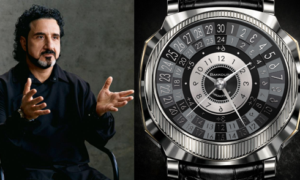
nGRND.io just closed the first month of its Staking & Rewards Ecosystem with more than 100,000 token-holding Participants on board. We sat down with David Lucatch, Chair of the nGRND Group, to talk through what that number actually means, why the project is betting on participation instead of buy-and-hold, and what he’s watching for next.
Let’s start with the basics. For anyone who hasn’t followed nGRND Gold Protocol – what are you actually building?
David: Sure, so – most of crypto still runs on the same script, right? You buy a token, you hold it, you hope it goes up. There’s nothing wrong with that, but it’s passive. We wanted to build something where holding the token is the starting point, not the whole relationship. So we built an ecosystem around participation, and we support that participation with something people have trusted for a very long time, which is gold. Specifically what we call Preserved Gold – verified gold that stays in the ground.
You just wrapped month one of what you’re calling the nGRND Gold Protocol Staking & Rewards Ecosystem. What actually happened?
David: More than 100,000 people joined as Participants, and every one of them is an NGRND token holder – that’s not a registration number, that’s actual token holders. Between them they completed something like 625,000 qualifying tasks in that first month. So call it five-plus tasks per person, on average. That’s the number I actually care about, honestly – not how many people signed up, but how many of them stuck around and did something.
Hold on, though – didn’t you put out a release back in June saying you’d hit 855,000 participants? That’s a pretty big gap from 100,000.
David: Yeah, it’s a fair question, and I’d rather just explain it than have people guess. The 855,000 was Season 1 of our Ecosystem pre-launch games – Gold Fest and Dig It – before the token even existed. That was always meant to build an audience, not to be the final number. What we’re talking about now is different: these are people who came out of that pool, or found us since, and actually became verified, staked token holders in the real ecosystem. More than 100,000 of them did that in the first month alone. I’d rather have 100,000 verified people holding our token and engaging in over 625,00 tasks than 855,000 than casual gamers, which by the way are still converting to our Ecosystem.
So is 100,000 a good number? Is there a benchmark you’re measuring against?
David: I won’t pretend there’s some industry standard I’m hitting a target against – I don’t think that number exists in any clean way for what we’re doing. What I can tell you is what we watch internally, which is engagement, not just headcount. Wallet connections, verified emails, people showing up on Telegram and Discord and X, coming back and doing more than one thing. That behavior is what tells us this isn’t just a spike.
Walk me through how people actually participate. I’ve seen you call it eight streams.
David: Right, so it’s not one activity, it’s eight: Governance, Impact, Play, Learn, Advocate, Refer, Wellbeing, and Agents, which is our AI-facing stream. Somebody might just play Gold Fest. Somebody else is doing our learning tracks, somebody’s voting on governance proposals, somebody’s referring friends. It’s deliberately not one lane, because we don’t think everyone wants to participate the same way.
And how does token holding actually factor into what someone earns?
David: Your Reward Level is tied to how many tokens you hold – there are twenty tiers, and that level sets your base Rewards Points and Participation Multiplier. But it’s not just “hold tokens, get paid.” It’s the combination – how many tokens you’re holding and how active you are – that determines what you can earn, up to and including stablecoin distributions from the Rewards Pool for Participants who qualify. I want to be careful how I say that, though: this isn’t “buy the token and wait for a check.” It’s tied to real activity, and over time and engagement within the ecosystem – not a promise of a return.
You’re also opening this up to other Web3 projects?
David: That’s the part I’m most excited about, actually. We’re inviting other projects – games, communities, protocols – to come in as Participation Stream Partners. We’ve already got two: Gold Fest was built with GAMEE, which is owned by Alpha Compute Corporation and originally an Animoca Brands studio, and Dig It came from Funny Till U Die, with more on the way. The pitch to anyone else is pretty simple – don’t just compete with us for the same users, plug into a pool of people who are already verified and already engaged, and give them another reason to stick around.
Where does the gold actually fit into all this? People hear “gold” next to “crypto” and assume it’s just branding.
David: I get that skepticism, and honestly it’s earned – there’s a lot of noise in this space. But this is real: we run a Dual Treasury, so there’s a treasury behind the digital ecosystem, and a separate Preserved Gold Treasury supported by verified in-ground gold. The whole idea we’re pushing against is the assumption that gold only has value once you dig it up. Leaving it in the ground can generate value too – through realized appreciation, and through what we call Alternative Land Use Monetization, things like conservation, biodiversity, and ESG and SDG measured impact programs on the same land, which create alternative value and potential distributions to our Participants in our Staking & Rewards Ecosystem.
So what should people watch for next?
David: More of the same, honestly, just bigger. Crypto’s spent over a decade proving digital scarcity means something. Gold’s had a few thousand years proving physical scarcity means something. We’re trying to build the thing that connects those two ideas. A hundred thousand participants is a real number, and I’m proud of it, but I keep telling our team – treat it as a foundation, not a finish line.