
The Economics of Instant Crypto Exchanges: Where the Fee in a Swap Actually Goes

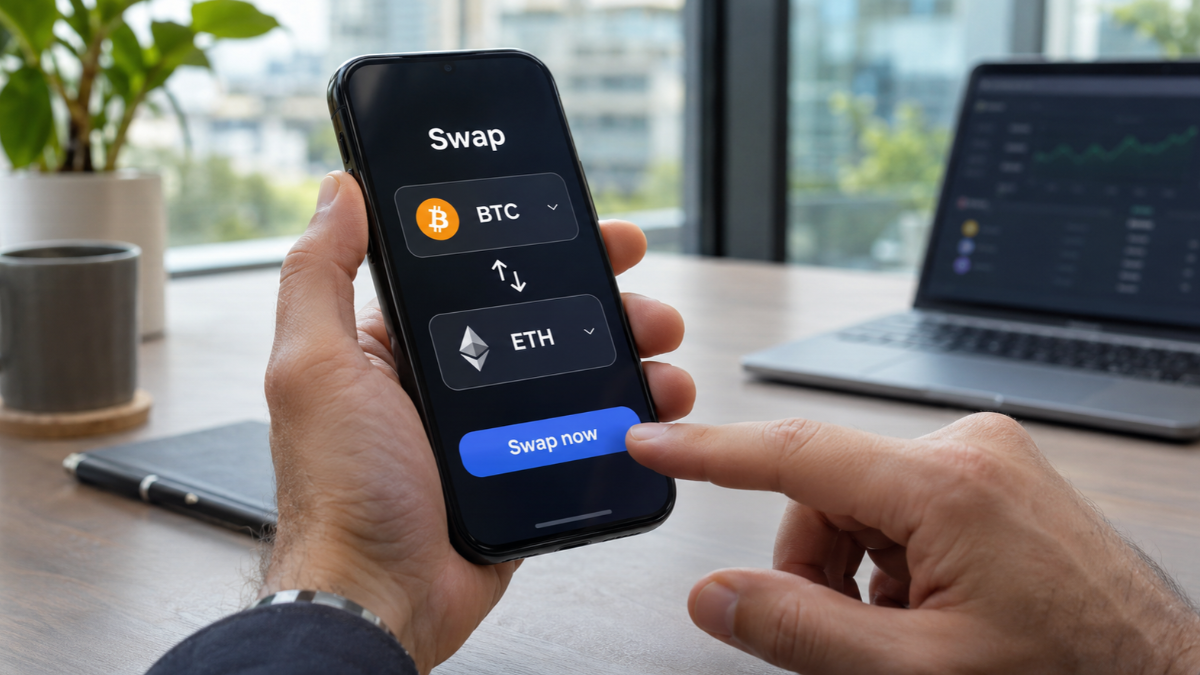
Swapping one cryptocurrency for another on an instant exchange looks simple. You pick a pair, send your coins and receive a different asset a few minutes later. Behind that short flow sits a chain of costs that most users never see broken down. Understanding where the money goes helps you compare services sensibly and spot quotes that look too good to be true.
An instant exchange converts one coin into another without asking you to place orders on an order book. Services such as www.eunobit.com follow this model: the user chooses a pair, pastes a receiving wallet address, sends the deposit and receives the exchanged coins, while the status of the swap is visible in real time. Convenience is the product, and it comes with a cost structure of its own.
The four layers of cost in a swap
Every swap price contains several layers. Some go to the blockchain, some to the market and some to the service itself.
1. Network fees on the way in and out
Each swap involves at least two on-chain transactions: your deposit to the exchange and the exchange’s payout to your wallet. Both are paid in the native currency of the network. On busy networks such as Ethereum, these fees can be a noticeable share of a small swap, while stablecoin transfers on networks such as Tron or TON are usually cheaper. This is why moving the same amount of USDT can cost very different amounts depending on the network it travels on.
2. The market spread
The exchange has to source the coin you are buying, either from its own reserves or from external liquidity. The gap between the price at which it can buy and the price at which it can sell, known as the spread, depends on how liquid the pair is. Major pairs such as BTC to USDT usually carry tight spreads, while smaller coins can be noticeably wider.
3. Price movement during confirmation
Blockchains need time to confirm your deposit. Between the moment you see a quote and the moment your coins are confirmed, the market moves. Services handle this risk in one of two ways. With a fixed rate, the service carries the risk and prices it into the quote. With a floating rate, the final amount follows the market and may differ slightly from the estimate. Neither option is free: the risk is either built into the price or carried by the user.
4. The service fee
Finally, the exchange charges for running the service: infrastructure, wallets, compliance, monitoring and the people who resolve stuck transactions in the middle of the night. Some services publish this as a separate percentage, while others build it into the rate.
Why “zero fee” claims deserve a second look
Because these layers exist in every swap, a quote advertised as fee-free usually means the cost sits somewhere else, most often in the exchange rate. The useful question is not whether a service charges a fee, but whether you can see the final amount before you commit.
That is the practical test worth applying. On Eunobit, for example, the calculator shows the final amount including the fee before the user confirms the exchange. The rate itself is floating, so the received amount can still shift slightly if the market moves while the network confirms the deposit.
Reserves and liquidity: the hidden variable
An instant exchange can only pay out what it can source. Services that hold their own reserves of popular coins can settle common swaps quickly, while larger or less common requests may depend on external liquidity. Some exchanges publish their current coin reserves on the exchange page, which gives users a rough sense of whether a larger swap can be filled without delay.
For most users, reserves matter only at the edges. A small swap between major coins rarely runs into liquidity limits. A large swap into a less liquid asset can, and that is where published reserves and clear limits become useful.
Compliance is part of the price
Instant exchanges operate under anti-money-laundering rules. Many apply a risk-based approach: routine swaps proceed without identity verification, while additional checks can be requested when a transaction is flagged by monitoring tools. On Eunobit, if an exchange cannot be completed for any reason, the funds are returned to the client. Screening tools, compliance staff and occasional manual reviews are part of the cost of running a responsible service, and they are paid for through the same fees.
Support is a cost centre, too
Mistakes in crypto are expensive: a missing memo, a coin sent on the wrong network or a typo in a wallet address. Services that offer round-the-clock support absorb the cost of resolving these issues. When comparing exchanges, it is worth checking support channels and hours, not just the headline rate. Eunobit, for instance, offers support 24/7 via Telegram and email.
Why small swaps feel more expensive
Several of these costs are fixed per transaction rather than proportional to the amount. A network fee on Ethereum costs roughly the same whether you move a small or a large sum, so on a small swap it can take a much larger share of the total. The same logic applies to minimum amounts: services set them so that network costs do not swallow the swap entirely. For users, the practical takeaway is simple. Batch small swaps where possible, choose cheaper networks for stablecoins and check the minimum amount before sending.
How to compare instant exchanges sensibly
- Compare the final amount you will receive, not the advertised rate or fee.
- Check which networks are supported for the coin you send and receive, since network fees vary widely.
- For larger amounts, look at liquidity, limits and any published reserves.
- Find out whether the rate is fixed or floating and how price movement is handled.
- Read the terms, including what happens to your funds if an exchange cannot be completed.
- Check support availability before you need it, not after.
The bottom line
The fee in a crypto swap is not a single number. It is the sum of network costs, the market spread, price risk during confirmation and the cost of running a compliant, supported service. Users who understand these layers can compare exchanges on what actually matters: how much arrives in their wallet, how predictably it arrives and who is there to help if something goes wrong.







Comment