
The New Way to Read Horoscopes: 15 Days, Like a Weather Forecast and a Stock Chart

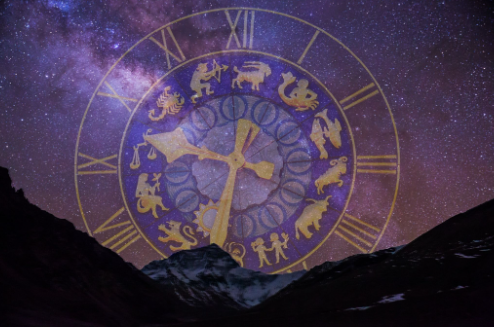
A horoscope has traditionally offered a brief look at what a particular day might hold. Readers turn to their zodiac signs for reflections on relationships, work and personal priorities, then return the following day for another reading. While this familiar routine remains popular, digital technology is creating opportunities to explore astrology in a more connected and visually engaging way.
Instead of treating every day as a separate experience, a fifteen day horoscope brings the past week and the coming week into one view. Readers can compare dates, follow changes in different categories and explore the planetary information associated with individual readings. This approach reflects a broader shift in digital publishing, where people increasingly value information that is easy to navigate, compare and understand.
Zodiac Timeline brings these ideas together through a format that combines a fifteen day horoscope overview, visual scoring and detailed planetary information. Its approach borrows useful presentation ideas from weather forecasts and financial charts, giving readers a structured way to explore astrology without having to move between numerous separate daily pages.
A Fifteen Day Horoscope That Tells a Bigger Story
One day offers only a limited view of a longer period. Someone considering a professional opportunity, for instance, may prefer to explore several days rather than focus on a single horoscope. Likewise, a reader interested in relationships may appreciate having earlier readings and upcoming interpretations available together.
A fifteen day timeline provides this broader perspective. By bringing approximately seven days of past readings and seven days of future readings into one overview, it allows users to move through dates and examine how the platform’s interpretations change over time.
The weather forecast is a natural comparison. People often check several days of weather information before planning a journey, organising an event or deciding what to wear. They look for changes in temperature, possible rain and general conditions rather than considering today’s forecast in isolation.
A timeline based horoscope uses a similar organisational principle. Readers can look at the days ahead while retaining access to the period that has just passed. They can also revisit earlier dates and explore the planetary events associated with particular readings.
This format makes the experience more connected. Rather than treating every horoscope as a standalone paragraph, readers can consider each reading within a wider sequence. It also creates more opportunities to explore specific dates that catch their attention.
There is an important distinction, however. Weather forecasting relies on scientific observations and predictive models, while astrology interprets celestial positions through a symbolic tradition. The comparison concerns the way information is presented, not the scientific reliability of the predictions themselves.
Reading Horoscope Scores Like a Stock Chart
A longer timeline creates another challenge. When readers have fifteen days of information in front of them, comparing every written interpretation can become time consuming. Visualisation offers a practical way to make those comparisons easier.
The format includes four categories: Overall, Love, Career and Energy. A single line chart displays the scores across the fifteen day period, allowing readers to see where values rise, fall or remain relatively stable.
Each category serves a different purpose within the platform’s interpretation. Overall provides a general summary, Love focuses on relationship themes, Career addresses professional matters, and Energy represents the platform’s interpretation of personal drive and vitality. Together, these categories offer several perspectives on the same period.
The stock chart comparison explains the benefit of this approach. Financial charts help readers recognise patterns across a sequence of values without having to examine every number individually. A similar visual structure can make changes in horoscope scores easier to spot.
For example, a reader might notice that the Career score increases while the Love score remains comparatively steady. That observation can guide them towards the relevant dates and their accompanying explanations. Instead of searching through several paragraphs, they can use the chart to identify information worth exploring further.
Visual scores also make the format accessible to people who prefer a quick overview before reading more detailed content. The chart establishes a starting point, while the written horoscope supplies the context.
These numbers should nevertheless be understood within their intended limits. Horoscope scores are not financial indicators, objective measurements of personal wellbeing or scientifically established probabilities of future events. A higher Career score, for example, does not guarantee a promotion or a successful business decision. The chart represents the platform’s astrological interpretation, helping users compare its readings across dates.
The Technology Behind Planetary Positions
A horoscope that refers to planetary movements depends on information about where celestial objects are located at particular times. Calculating those positions requires astronomical data, appropriate reference systems and mathematical methods. For digital astrology platforms, explaining the source of that information can help readers understand the technical process behind a reading.
NASA’s Jet Propulsion Laboratory provides access to detailed solar system information through its Horizons system. This resource can generate planetary and other solar system ephemerides, which describe the positions and motion of celestial objects over time. Such information supports a range of astronomical and technical applications.
According to the information provided by the company, Zodiac Timeline uses NASA JPL data for planetary positions and performs its calculations in house. The company also states that its calculations achieve precision to a fraction of an arcsecond.
An arcsecond is a unit of angular measurement equal to one sixtieth of an arcminute. It is useful when describing small differences in celestial positions. The precision of an astronomical calculation depends on several factors, including the underlying data, time settings, reference frame and computational method. Consequently, a claim about calculation precision should be understood in the context of the specific method used.
It is equally important to distinguish accurate astronomical positions from astrological interpretations. Astronomy uses observations and mathematical models to describe celestial objects. Astrology assigns meanings to planetary positions and their relationships. Precise astronomical calculations do not, by themselves, demonstrate that an astrological reading can reliably predict personal experiences or future outcomes.
This distinction does not prevent readers from exploring astrology as a cultural or personal interest. Instead, it provides a clearer understanding of what the underlying technology can establish and what remains a matter of interpretation.
Showing the Information Behind Every Reading
For many digital services, the user sees only the final result. The underlying information may remain hidden, leaving little opportunity to understand how that result was assembled. Greater transparency can make a different experience possible by allowing readers to examine the details behind an interpretation.
The company states that each horoscope reading lists the planetary positions and astronomical events on which it was built. This gives readers additional context beyond the main message. Someone interested in a particular date can explore the celestial information associated with the reading instead of relying exclusively on its summary.
The platform also says that every reading is checked before publication. Reviewing generated content can help identify missing information, inconsistencies and presentation errors. The exact verification procedure has not been detailed in the supplied information, so the checking process should not be confused with independent scientific validation of astrological predictions.
For users, the combination of visible planetary information and a clear timeline makes the experience easier to investigate. Readers who simply want a quick overview can focus on the scores and summaries, while those with a deeper interest can examine the underlying details.
Zodiac Timeline therefore brings together several elements that are often considered separately: a longer reading period, visual comparisons and access to the astronomical information associated with individual horoscopes. The result is a more structured way to navigate the material.
What This Means for the Future of Digital Astrology
The development of digital services is not always about introducing entirely new subjects. Sometimes, it involves presenting familiar information in a way that better suits how people use the internet. Searchable timelines, visual dashboards and supporting data have already become common across many digital experiences because they help users navigate information more efficiently.
A fifteen day horoscope applies these principles to astrology. Readers can examine a wider period, compare Overall, Love, Career and Energy scores, and explore the planetary details connected with individual dates. Instead of relying entirely on a short daily message, they have a format that encourages comparison and further reading.
The approach also highlights the importance of setting clear expectations. Astronomical data can establish planetary positions through mathematical calculations, but interpretations based on those positions should not be presented as guaranteed outcomes. Clear explanations allow readers to appreciate the technical elements without confusing computational precision with predictive certainty.
As online audiences continue to explore different ways of consuming information, the combination of timelines, charts and transparent supporting details offers an alternative to conventional horoscope pages. For readers who want to examine a broader period rather than a single day, Zodiac Timeline demonstrates how a traditional subject can be organised into a more connected digital experience.






Comment