How to Reduce Electricity Bills: Energy-Efficient Motors and Home Appliances
Electricity bills can put pressure on Australian households and businesses, particularly when equipment runs for long hours or operates inefficiently. In factories and workshops, electric motors used in pumps, fans, compressors and conveyors can be major sources of electricity consumption. At home, air conditioning, refrigerators, washing machines and dryers are common areas to investigate when looking for ways to save energy.
Reducing electricity costs does not always mean buying new equipment. Businesses can improve motor controls, reduce unnecessary operating hours and maintain machinery properly. Householders can compare appliance energy ratings, choose the right air conditioner size and adjust everyday habits to avoid wasting power.
The most effective approach is to identify the largest electricity loads first, estimate their running costs and compare the potential savings with the cost of improvements.
1. How to Identify the Biggest Electricity Users
The first step towards reducing electricity bills is understanding where energy is being used. Your electricity bill shows total consumption, but additional information is needed to identify individual machines and appliances that contribute most to the cost.
Check electricity bills and meter data
Businesses should review electricity bills over several months to identify changes in consumption. Compare usage during busy production periods with quieter periods, weekends and overnight hours. If interval meter data is available, use it to identify when electricity demand increases and whether equipment continues running outside normal operating hours.
Householders can follow the same approach by comparing bills across different seasons. Higher consumption during summer may indicate increased air conditioning use, while an unexplained rise in overnight usage could justify checking refrigeration and other continuously operating equipment.
The Australian Government’s Department of Climate Change, Energy, the Environment and Water provides information to help households and businesses understand energy consumption and improve efficiency.
Read equipment nameplates and energy labels
Industrial motor nameplates typically include rated output, voltage, current and speed. These details help technicians determine whether equipment is appropriate for its application.
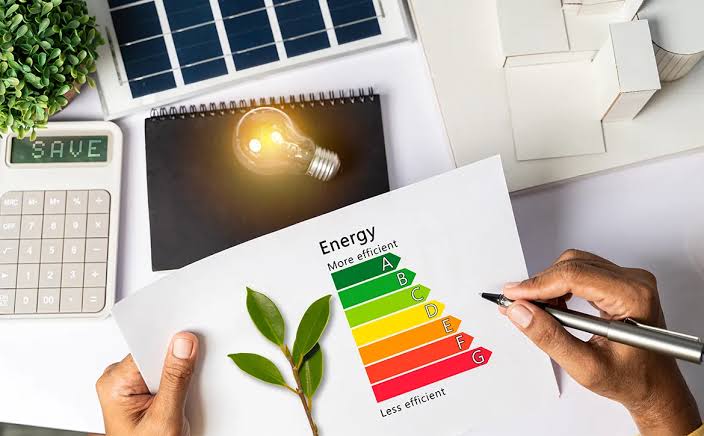
For household appliances, the Australian Energy Rating Label provides information that helps consumers compare the energy efficiency of similar products. Depending on the appliance, the label may display a star rating, estimated annual energy consumption or other relevant information.
Remember that rated power does not necessarily equal actual electricity consumption. A motor or air conditioner may operate below its maximum rated input for much of the day. Measuring actual consumption and recording operating hours provides a more realistic estimate of running costs.
2. Improve Industrial Motor Efficiency to Reduce Business Electricity Costs
Electric motors are essential in many Australian industrial and commercial operations. They power water pumps, ventilation systems, compressed-air equipment, conveyors and manufacturing machinery.
Because these motors may operate for extended periods, even modest improvements in efficiency or operating practices can make a meaningful difference to electricity consumption.
Choose the right motor size and efficiency class
A motor should match the mechanical load and operating requirements of the equipment it drives. An oversized motor may spend much of its working life operating below its most efficient load range, while an undersized motor may struggle to meet demand.
When replacing a motor, compare efficiency ratings, rated output, expected operating hours and the load profile. Check applicable Australian minimum energy performance requirements and ensure that the replacement suits the machine’s starting torque and operating conditions.
Maintenance also affects energy consumption. Worn bearings, poor shaft alignment, blocked filters and restricted airflow can increase the power required to perform the same work. Addressing these problems may be more economical than replacing an otherwise suitable motor.
Use variable speed drives to control motor speed
Variable speed drives (VSDs) allow motor speed to change according to the requirements of the application. They can be particularly useful for pumps and fans where demand varies throughout the day.
For example, a pump supplying water to a workshop may not need to run at full speed when only a small amount of water is required. A correctly configured VSD can reduce speed to match demand instead of relying on a valve to restrict excess flow.
Fan systems can also benefit from speed control when ventilation requirements change. However, savings depend on the application, equipment characteristics and control settings. A VSD is not automatically the best solution for every motor-driven machine.
Suppliers such as TECO Electric Motors sell the motor and the variable speed drive as a matched pair, which is where the savings on pumps and fans come from.
Industrial example: Reducing pump energy consumption
Consider an Australian manufacturing workshop where a water pump operates at full speed throughout the working day, even when production demand is low.
The business can begin by measuring electricity consumption, recording operating hours and checking how frequently the system restricts flow. An appropriately qualified contractor can then assess whether a variable speed drive, a correctly sized pump or improvements to the pipework would reduce energy use.
After installation, the business should compare electricity consumption under similar operating conditions and confirm that the system still delivers the required flow and pressure.
This approach helps businesses make decisions based on measured performance rather than assumptions about equipment efficiency.
3. Choose Energy-Efficient Home Appliances
For Australian households, air conditioning, refrigeration and laundry equipment are useful starting points when reviewing electricity consumption.
The potential savings from replacing an appliance depend on its age, condition, energy consumption and frequency of use. Before purchasing a replacement, compare models with similar capacities and calculate their expected running costs.
Select an energy-efficient air conditioner
Air conditioning can contribute significantly to household electricity consumption during hot weather or extended periods of heating and cooling. Choosing an appropriately sized system and operating it efficiently can help manage running costs.
A split system should be selected according to room size, insulation, ceiling height, window exposure, climate and other relevant factors. An undersized system may struggle to maintain a comfortable temperature, while an oversized unit can increase upfront costs and may not operate efficiently in every situation.
Inverter air conditioners adjust compressor operation to respond to changing cooling or heating requirements. Their efficiency depends on the model, installation, operating conditions and temperature settings.
Australia’s Zoned Energy Rating Label helps consumers compare air conditioners using estimated energy consumption and performance information for different climate zones.
Brands such as TECO Home Appliances publish the star rating and capacity for every split system, so size the unit to the room before comparing prices.
To reduce air conditioning costs, keep doors and windows closed while the system is operating, clean filters as recommended and minimise direct sunlight where practical. Choosing a comfortable thermostat setting can also reduce unnecessary energy use.
Reduce refrigerator and freezer running costs
Refrigerators and freezers operate throughout the day, making their energy consumption worth considering when comparing appliances.
Check the energy label and compare annual electricity consumption for models with similar storage capacities. A larger refrigerator may consume more energy than a smaller one, but the actual difference depends on the design and efficiency of each model.
Regular maintenance can also help. Keep ventilation spaces clear, inspect door seals and avoid leaving the door open unnecessarily. Position the appliance away from major heat sources where practical, following the manufacturer’s installation guidance.
Before replacing an older refrigerator, compare its actual or estimated energy use with the expected consumption of a new model. This helps establish whether the purchase price is likely to be offset by electricity savings.
Make washing machines and dryers more efficient
Laundry appliances can use additional electricity when operated frequently or with energy-intensive settings.
Run full loads when appropriate, select suitable wash temperatures and use efficient cycles where they meet your needs. Dry clothes outdoors when weather permits, and clean dryer filters according to the manufacturer’s instructions.
When buying a washing machine or dryer, compare capacity, energy ratings and expected usage. The most suitable model is one that meets household requirements without unnecessary capacity or operating costs.
4. Calculate the Running Cost and Payback Period
An energy-efficient motor or appliance may cost more upfront than a less efficient alternative. The important question is whether the expected energy savings justify that additional expense.
Use this formula to estimate annual electricity costs:
Annual electricity cost = Annual energy consumption in kWh × Electricity price per kWh
For example, assume two refrigerators have similar storage capacity and an electricity tariff of $0.30 per kWh.
| Cost comparison | Refrigerator A | Refrigerator B |
| Purchase price | $900 | $1,100 |
| Annual energy consumption | 500 kWh | 350 kWh |
| Annual electricity cost | $150 | $105 |
| Ten-year electricity cost | $1,500 | $450? |
The correct ten-year electricity cost for Refrigerator B is $1,050, calculated as 350 kWh × $0.30 × 10 years. Refrigerator A costs $1,500 to operate over the same period.
Including the purchase price, Refrigerator A has a ten-year total cost of $2,400, while Refrigerator B has a total cost of $2,150. Under these illustrative assumptions, the more efficient model saves $250 over ten years before maintenance and other costs.
Its additional $200 purchase price is recovered in approximately 4.4 years through the estimated $45 annual electricity saving.
These figures are examples, not claims about actual products. For a reliable comparison, use the relevant appliance energy labels and your electricity tariff. Also consider maintenance, repairs, installation costs and the expected service life.
Calculate the return on industrial motor upgrades
Businesses should compare the cost of new motors, VSDs, installation and commissioning against the expected annual electricity savings.
Use measured or professionally estimated energy consumption under comparable operating conditions. Consider operating hours, production requirements and the business’s actual electricity rates. Include any additional maintenance or downtime costs when calculating the payback period.
An upgrade that saves electricity every day may offer a better return than one installed on equipment that operates only occasionally.
5. Practical Ways to Reduce Electricity Consumption
Both businesses and households can take several practical steps before investing in new equipment.
Business electricity-saving checklist
- Review electricity bills and interval meter data.
- Identify motors with long operating hours or unnecessary idle time.
- Check motor sizing, efficiency ratings and maintenance requirements.
- Assess whether variable speed drives could match output to demand.
- Inspect pumps, fans, compressors, filters and pipework for inefficiencies.
- Compare the total installation cost with expected electricity savings.
- Measure energy consumption after making changes.
Household energy-saving checklist
- Compare appliance energy labels before purchasing replacements.
- Choose air conditioner capacity appropriate for the room.
- Clean air conditioner filters and maintain suitable temperature settings.
- Check refrigerator door seals and ventilation.
- Use efficient washing cycles and avoid unnecessary dryer use.
- Compare upfront prices with estimated long-term running costs.
- Monitor electricity bills after changing appliances or habits.
Conclusion
Reducing electricity bills in Australia starts with identifying the equipment that consumes the most energy. Businesses can investigate electric motors, improve maintenance and use variable speed drives where they suit the application. Householders can focus on air conditioning, refrigerators and laundry appliances while comparing energy labels and operating costs.
Replacing equipment is not always necessary, and a high efficiency rating does not guarantee the lowest lifetime cost. The best decision comes from measuring consumption, matching equipment to actual demand and calculating the expected payback before spending money.
By combining practical operating changes with carefully selected equipment, Australian businesses and households can reduce avoidable electricity consumption while maintaining productivity and comfort.