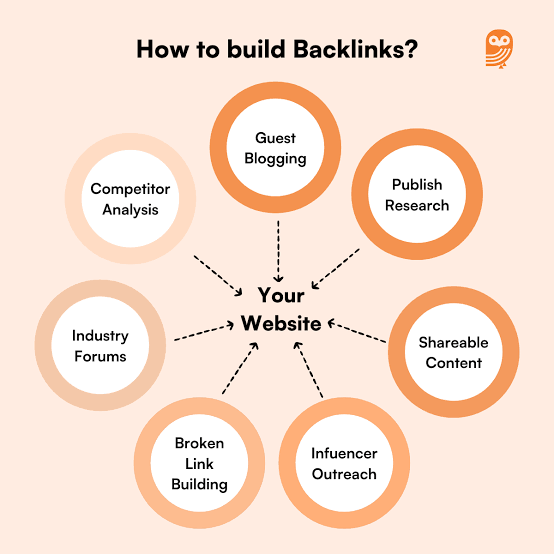
A Practical Framework for Building Trustworthy Backlinks in a Crowded Web
Backlinks can help readers discover useful websites and give search engines clues about how pages relate to one another. But link building is not simply a matter of collecting as many links as possible. The source, context and editorial value of each link matter—and a rushed campaign can create more risk than benefit. A careful approach starts with the audience, then treats search visibility as a result of useful publishing rather than a shortcut.
Start with the reader, not the link
Before proposing a guest article, identify who the publication serves and what its readers need. A home renovation business, for example, might contribute practical guidance on planning a safer kitchen, while a family-services provider could explain how to compare childcare options. These subjects can be genuinely useful to readers and still connect naturally to the contributor’s expertise.
That distinction matters. An article written mainly to insert a commercial link often feels thin, even if the link is technically relevant. A stronger contribution answers a real question, uses specific examples, and makes sense on the host site even if every outbound link were removed. If there is no credible editorial reason for a link, leaving it out is usually the better choice.
Finding suitable publishers takes research. A resource such as home and family guest posting websites can help narrow the search to sites in a relevant subject area. Treat any directory as a starting point, not a substitute for checking each publication. Review its recent articles, audience, editorial standards, and whether the site appears to publish for readers rather than solely to sell placements.
Evaluate the publication, not just its metrics
Numbers can be useful for screening, but a single authority score or traffic estimate cannot establish that a site is trustworthy. Look at the full picture: Does the site have a clear purpose? Are its articles original and maintained? Do topics fit together? Is there evidence of a real readership, such as thoughtful discussion or consistent engagement? A site with modest reach but a focused audience may be more valuable than a broad, inactive domain with impressive-looking metrics.
Also examine the proposed article in context. A link should point to a page that adds information for the reader, not merely to a homepage or an unrelated sales page. Anchor text should describe the destination naturally. Repeating the same exact-match phrase across many placements can look manipulative and makes prose less comfortable to read.
Keep paid placements transparent
Payment does not automatically make a placement worthless, but it changes how the link should be handled. Search engines distinguish editorial recommendations from links arranged primarily to influence rankings. Paid links should be appropriately qualified, such as with sponsored or nofollow attributes, rather than presented as independent endorsements. Publishers and advertisers should also be clear about commercial relationships under the rules that apply to them.
This is one reason to plan campaigns around the article’s value, not a promise of ranking gains. A useful contribution can introduce a brand to a relevant audience, support referral traffic and build professional credibility. Those outcomes remain meaningful even when a link is not treated as a ranking signal. Anyone considering purchased placements can review Osdire’s guidance on manual actions and ranking drops for a fuller discussion of link quality, warning signs and safer decisions.
Build a repeatable quality check
A simple review process reduces avoidable mistakes. Before agreeing to publish, ask:
- Does the site reach people who could reasonably care about this subject?
- Is the article original, accurate and useful without the backlink?
- Does the destination page fulfil what the link’s wording suggests?
- Are payment and link attributes handled transparently?
- Does the publisher have a credible history, rather than a pattern of unrelated placements?
Keep a record of placements, URLs, publication dates and the reason each site was selected. This makes it easier to review a campaign over time and spot patterns, including overuse of a particular anchor phrase or a concentration of links from weak sources. If a placement later becomes irrelevant or the host site changes significantly, reassess whether the link still serves readers.
Choose sustainable gains over quick volume
Guest publishing works best as part of a broader content strategy. Useful original research, clear service pages and dependable resources give other publishers a reason to cite a site organically. Outreach can then focus on finding the right audience for that work, rather than persuading unrelated websites to host generic copy.
For teams without in-house capacity, freelancers can help with research, editing, design or outreach planning. Whatever the arrangement, establish expectations in advance: who checks facts, who owns the finished material, how links are disclosed, and what counts as an approved delivery. A marketplace such as Osdire connects buyers with freelancers across areas including writing, marketing and technology; as with any hiring channel, evaluate the individual’s experience and agree on the scope before work begins.
There is no dependable formula that turns a large number of backlinks into lasting visibility. Relevance, editorial integrity and a good reader experience are more durable foundations. When each placement has a clear reason to exist beyond its effect on search rankings, link building becomes easier to assess—and less likely to undermine the trust a website is trying to earn.