In Europe, data center projects no longer run up against demand alone. Demand is driven by the cloud, artificial intelligence and the growing needs of hyperscalers. The real challenge now lies elsewhere: in the ability to secure energy, to have usable land and to convince tenants to commit even before the sites are delivered.
It is on this equation that SWI Group is seeking to position itself with AiOnX, its platform dedicated to hyperscale campuses. In a market where capacity announcements are multiplying, the difference is made less by stated ambitions than by the real ability to de-risk a project.
The energy lock, the first barrier to entry
Electrical availability has become the first filter of the European market. Without secured energy capacity, a campus remains a theoretical asset. Land constitutes the second lock, but having large surfaces is not enough. Sites must allow for gradual development, fit within a workable regulatory framework and offer connectivity suited to the intensive uses of the cloud and AI.
The third lock is commercial. In a highly capital-intensive sector, the presence of a tenant committed upstream changes the nature of the risk. A pre-leased campus is no longer merely a development project: it becomes an asset whose revenue trajectory is already partly validated.
Leixlip as a full-scale test
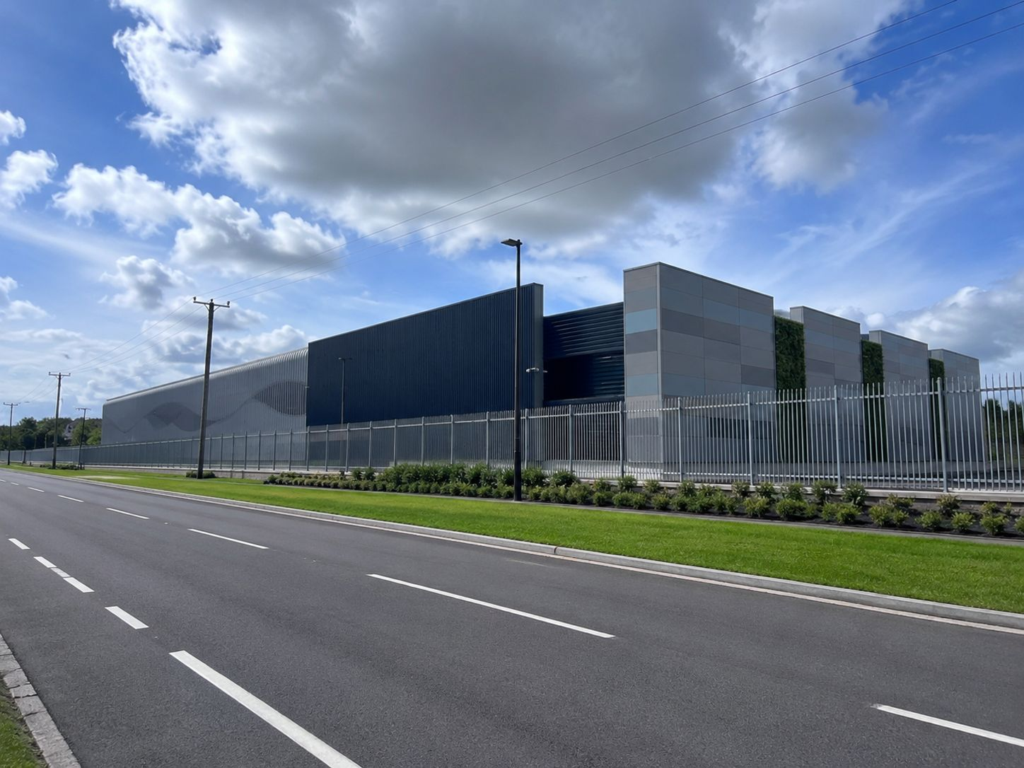
The Leixlip campus, near Dublin, illustrates this logic. AiOnX is developing a 179 MW site there, with a first 16 MW phase whose rents are due to begin at the end of 2026. According to available information, the entire campus is said to have been leased to a major American hyperscaler before its full completion.
Several sources evoke Amazon in the background, based on documentary evidence, without official confirmation from SWI Group, as is the case in this English-language outlet in particular. Caution is therefore in order regarding the tenant’s name. But the essential point lies elsewhere: a commitment covering the entirety of a campus of this size suggests that the site already meets the market’s most difficult criteria, namely energy, land and execution credibility.
For an investor, this pre-commercialization is a strong signal. It reduces leasing uncertainty, improves the visibility of future flows and reinforces the site’s strategic value in a context where genuinely connectable capacity remains rare.
This dimension is all the more important as the European data center market enters a phase of stricter selection. Capital remains available for digital infrastructure, but it is increasingly directed toward already de-risked projects. A site combining electrical capacity, mastered land and a committed tenant therefore enjoys an immediate advantage in discussions with investors, lenders and industrial partners. Conversely, projects still dependent on an uncertain connection or on future commercialization risk seeing their theoretical value heavily discounted.
In this context, Leixlip should not be read merely as a real estate or technology operation. It is an infrastructure asset whose value rests on the scarcity and visibility of revenues. For SWI Group, the challenge is twofold: capturing the growth of the cloud and AI, while building assets secured enough to attract institutional capital.
SWI Group aims to act upstream of scarcity
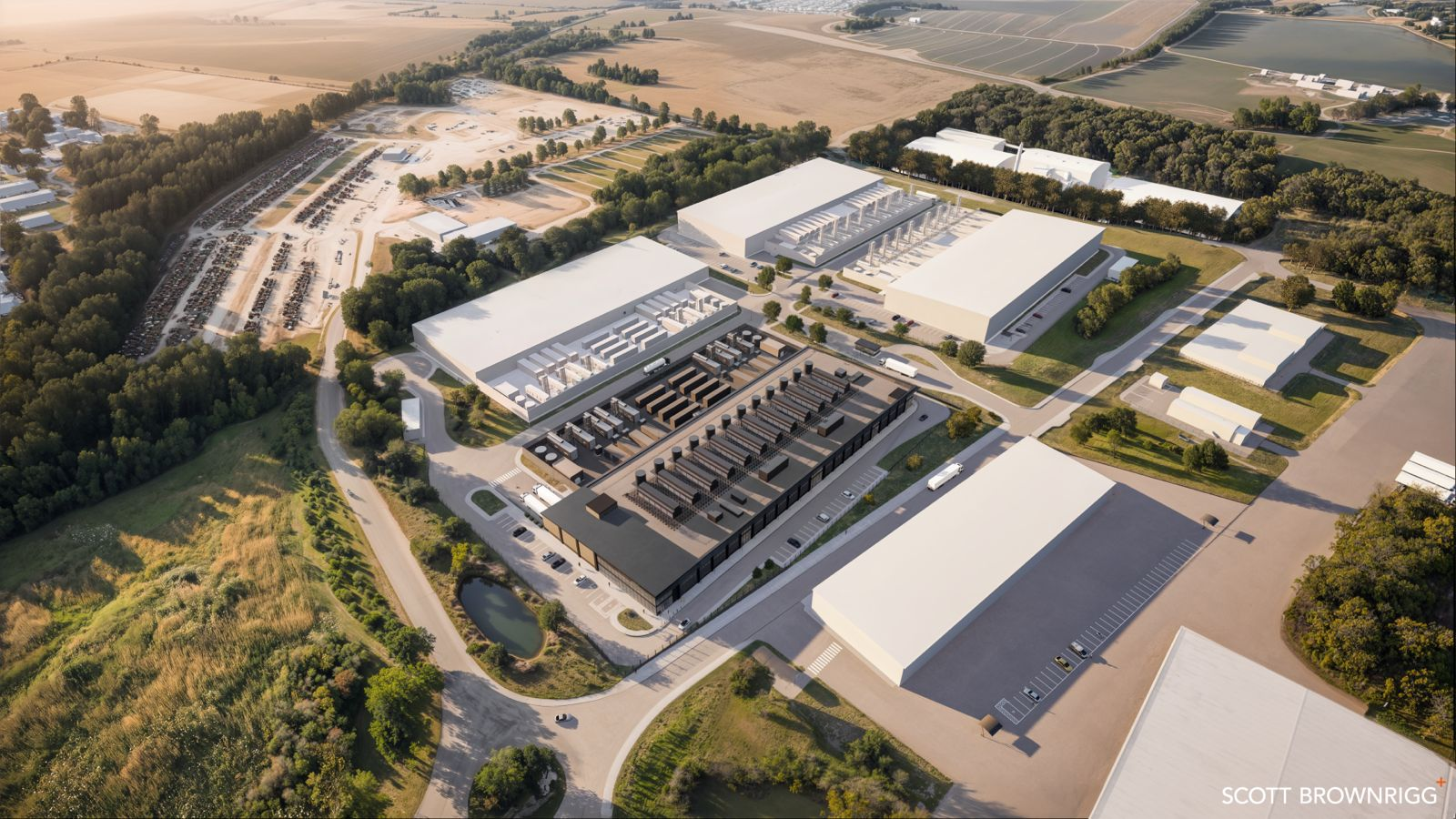
SWI Group’s strategy therefore does not consist merely in accumulating data center projects. It aims to position itself upstream of the bottlenecks that limit European supply. With AiOnX, the group is seeking to turn complex sites into institutional assets able to attract the large users of the cloud and of artificial intelligence.
This approach also gives a more financial reading of Max-Hervé George’s role as cofounder and leader of SWI Group. The point is not to present him as a technical operator of data centers, but as one of the architects of an investment strategy geared toward digital infrastructure. In this segment, value is not created only at delivery. It is built from the moment land, energy and commercial commitments are secured.
A proof stronger than a simple pipeline
In data centers, an impressive pipeline is no longer enough. The market now distinguishes announced capacity from genuinely developable capacity. A site pre-leased before delivery carries more weight than a series of projects still subject to the uncertainties of connection, permits or financing.
Leixlip does not on its own guarantee AiOnX’s European success. SWI Group will still have to execute, deliver, connect and demonstrate that this model can be reproduced on other markets. But in a sector where the scarcity of usable assets is becoming decisive, the ability to solve energy, land and tenant challenges simultaneously places the group in a more credible position than that of many developers still at the promise stage.
This is where competitive advantage is now decided in Europe. The players able to secure the right sites, the right electrical capacity and the right clients are not merely developing data centers. They are taking a position on the infrastructure that hyperscalers are already seeking, several years in advance.