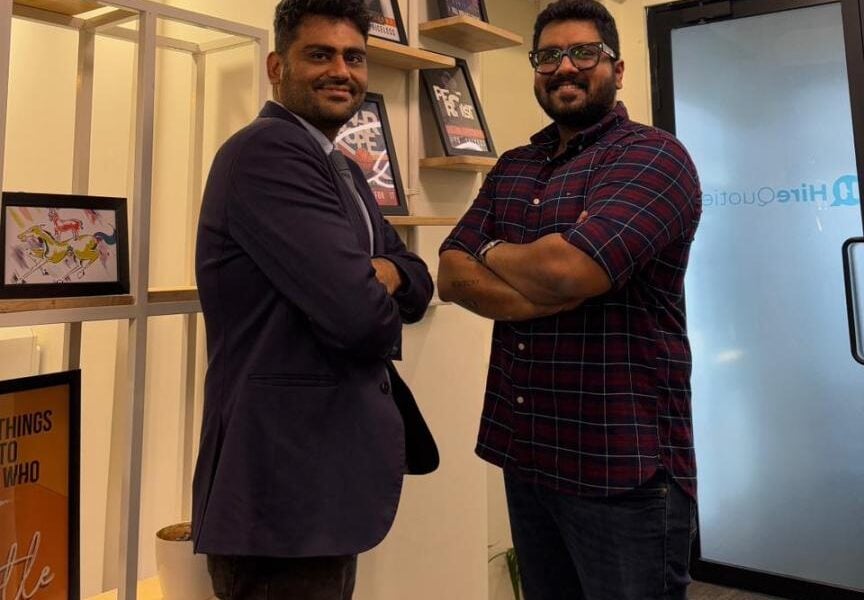
Anna Veklich is a strategic marketing expert, AI ambassador, and investor working at the intersection of science, education, and technology. She is the Co-founder and CMO of GPT4Telegrambot, one of the world’s largest AI chatbot platforms, providing more than 36 million users with access to leading AI models, alongside dedicated models for image generation, video, audio, and presentations. She also co-founded Hi, AI! Media, one of the largest AI-focused Telegram media networks with over 15 million subscribers, dedicated to making artificial intelligence more accessible. Anna is a Senior Advisor in Strategic Marketing at E-Quadrat, where she advises international universities on strategic marketing and science communication. Previously, Anna spent a decade at ITMO University – one of Europe’s leading technology universities, holding the record as the only university in the world to win the prestigious ICPC (International Collegiate Programming Contest) World Finals seven times, and recognised in the global top 51–70 for Data Science and Artificial Intelligence by QS World University Rankings.
You launched in 2023, when ChatGPT was still a novelty to most of the world. What did you see in those early days that convinced you a messenger-native AI product was worth building?
My path into AI started long before GPT4Telegrambot. Before launching the company, I spent almost ten years working in higher education and science, helping researchers and universities communicate new technologies. That gave me an early understanding of how AI was evolving, and why generative AI would eventually become a tool for everyone, not just researchers and engineers. At the same time, my friends, colleagues and I were all active Telegram users, so we already saw it as much more than a messenger. When ChatGPT appeared, the idea felt obvious. AI was becoming mainstream, and Telegram was the natural place to make it part of people’s everyday lives.
We hesitated at first, expecting Telegram to launch its own AI product immediately. Not long after ChatGPT came out, we decided to build it ourselves. Telegram has started rolling out its own AI features and bots too, but over the past four years, we’ve built up deep experience specifically in creating and scaling AI bots, and our product has grown into one of the largest and fastest-growing bots on the platform. We believed people shouldn’t have to open another app or another browser tab just to use AI — they wanted it where they were already spending their time, and that’s exactly what we built.
Building a company from Berlin with a user base spanning the CIS, Southeast Asia and the Middle East is an unusual footprint. How did that geographic spread come about, and what has it taught you about where AI adoption is really happening?
Our users are spread across the CIS, Southeast Asia, Latin America, Africa and the Middle East. That wasn’t a deliberate expansion plan. It grew naturally out of understanding, in real depth, how Telegram behaves as a platform in markets where it’s already the dominant messenger. Uzbekistan is the clearest example. Telegram has around 25 million users there, and a 2025 study put Telegram adoption in the country at roughly 88% of the population, the highest penetration of any messaging app there. Kazakhstan tells a related but different story. It has an estimated 7.6 million Telegram users, and some download-based rankings list Telegram among the country’s most-installed messaging apps. Once you understand the mechanics of a market like that, you can carry the same playbook into Brazil, Argentina, Singapore and Malaysia.
What that’s taught me is that AI adoption doesn’t follow GDP charts or Silicon Valley headlines. It follows wherever people already spend their digital lives. Telegram is still comparatively under-indexed in the US and Western Europe, but since agent-native tools broke through, our own data shows BotFather’s monthly active builders jumping from roughly 3 million to 10 to 11 million in just a few months. Western developers are starting to move in the same direction, and I expect that gap to close faster than expected.
GPT4Telegrambot has grown to more than 36 million users and roughly $1 million in monthly revenue without raising institutional capital. How was that growth achieved, and what were the pivotal decisions along the way?
A few things came together at once. The product did most of the marketing itself. We launched fast, there was almost no competition inside Telegram at the time, and virality took over. People forwarded the bot to each other because nothing else like it existed. On top of that, we benefited from what I’d call Telegram-native SEO. Nearly every AI-related search inside the app led straight to us, simply because we were one of the only real options at the time. Between those two effects alone, we picked up roughly 80% of our traffic in the first two years. Our first million users came in about a month, a fast ramp by any normal standard, though it trails the pace ChatGPT itself set at launch, reaching 1 million users in five days and 100 million within two months.
Another important decision was thinking globally from day one. Instead of focusing on one market, we launched in multiple languages, including English, Portuguese and French, so people could use the product in their own language from the start. We also made an early bet on becoming an AI aggregator. When we launched, the market was essentially GPT-3.5 and early DALL-E. Every new breakthrough after that, Midjourney, Claude, Suno, DALL-E 3, video generation, and later GPT Image and Nano Banana, brought in a new group of users. As AI evolved, our product evolved with it.
What’s been especially interesting is how the audience has changed. In the beginning, many users came for research, coding, translation and productivity. Today we’re seeing many more women over 25 using AI for creative work, beauty content, social media and everyday tasks. Every major model release brings another wave of mainstream users.
Bootstrapping at this scale is rare in AI, where competitors raise enormous rounds. What advantages has staying independent given you, and what has it cost you?
We genuinely don’t know of another Telegram-native product that’s raised meaningful outside capital. The projects that do raise money are almost always the web or app version of something, that’s the model investors know how to evaluate. Telegram-first products are still a category the market hasn’t fully learned to price yet.
We stayed away from venture funding partly because we were profitable from day one, and partly because we wanted to prove out our own thesis first, building something people genuinely loved rather than just an MVP, before even considering outside capital. Staying independent also let us diversify. Alongside the core bot, we built a media business and an advertising business, and revenue from both gets reinvested straight back into the product. What it costs you is speed. Scaling on your own money is slower than scaling with a large war chest behind you. If we ever hit a wall where we can’t reach the scale we’re aiming for on our own, something like 100 million total users, 20 million MAU, 5 million DAU, within a reasonable window, that’s when we’d seriously consider raising. We’re not at that point yet.
In 2025, xAI planned to pay $300 million to build what you had already achieved without raising a dollar. What does that contrast tell us about how the industry values distribution versus how it should?
In May 2025, xAI announced to pay Telegram $300 million in cash and equity for a one-year deal to distribute Grok to Telegram’s user base, plus 50% of any subscription revenue generated through the app. That figure says a lot about how the industry is starting to value distribution. A major AI lab was willing to pay nine figures for exactly the kind of access and user trust we built ourselves, one message at a time, over several years, without raising a dollar.
Worth noting, that specific deal didn’t end up happening. But it doesn’t really change the point, if anything, it shows Telegram is working hard to become a real distribution platform for AI, one that big labs are willing to pay for. Just the fact that a deal like that was on the table shows where things are headed: distribution and user trust are starting to matter just as much as the model itself.
You have argued that Telegram is the most underestimated distribution channel in marketing today. What are brands and founders missing about the platform?
Telegram grows fast across very different markets because it stopped being just a messenger a while ago. Chat is the baseline. Layered on top of that, it’s a genuine business tool, teams run client communication, partner coordination and entire workflows through it. It’s also a full publishing platform. Large media outlets, solo creators and micro-influencers all run their audiences through channels, which makes it one of the best places anywhere to actually consume content rather than scroll past it.
And then there’s the AI layer, which is genuinely new. Once agent-native products broke through, Telegram became close to the ideal mass-market surface for shipping AI agents, something much harder to pull off quickly on WhatsApp or most other messengers. What brands and founders miss is that Telegram is simultaneously a chat app, a CRM, a content platform, a commerce layer and now AI infrastructure. Most Western marketers are still evaluating it as if it were only the first of those.
Transaction volume inside Telegram has now surpassed a billion dollars. What does that milestone signal about where commerce and consumer behaviour are heading?
Telegram’s Mini Apps ecosystem crossed $1 billion in transaction volume in 2025, and more than 450 million users now engage with bots or Mini Apps every month. Some industry estimates put that figure at $5 billion or more by 2027. To me, that’s commerce following the same path attention already took. It’s moving to wherever the conversation already is, instead of pulling people out to a separate storefront or app.
We’ve watched the identical pattern with AI adoption inside Telegram. People don’t want to leave the chat to get a result, whether that result is an image or a purchase. As commerce tools, Mini Apps and AI agents keep maturing inside the platform, I’d expect that number to keep compounding, because the friction of leaving the app to transact is exactly the friction that’s disappearing right now.
For companies accustomed to building standalone apps, what does “messenger-native” actually mean in practice, and how does it change product design, placement and user acquisition?
For a company used to building a standalone app, going messenger-native means letting go of the whole idea of an onboarding funnel. There’s no download step, no account wall, no empty-state screen to design around. The user is already inside an interface they know inside out, so your product has to prove its worth in the first message, not the first session.
Practically, that changes three things. Product design has to happen entirely through conversation and lightweight in-chat UI, not dedicated screens. Placement means being findable through the platform’s own search and social graph rather than fighting for an app store listing. And acquisition shifts away from paid installs toward forwarding, channel discovery and plain word of mouth, because the whole point of a messenger is that people are already sharing things inside it constantly.
You have visibility into the real behaviour of tens of millions of AI users. Where does that behaviour differ most sharply from what the industry assumes about AI adoption?
The industry tends to assume AI is already second nature to everyone, but in practice, the range is enormous. We once got a support message from a woman who loved using our bot and wanted to join our team to help answer other users’ questions. She assumed a real person was replying on the other end, but when we explained the responses come from AI, not a human, it was a real “oh, wow” moment for her.
At the other end of the spectrum, in markets with lower financial literacy and lower average incomes, people lean on even basic text models as a real lifeline, for education, health questions, parenting advice, essentially as an accessible advisor when few other resources exist. That’s exactly why we’ve kept a free tier available, while always reminding people to double-check anything important. And at the most advanced end, users in Telegram-heavy markets are already producing full video content and animation, professional-grade, without ever leaving the chat. The distance between “doesn’t quite understand what AI is” and “uses AI professionally every day,” inside one single product, is far wider than most industry narratives give it credit for.
Your bot provides access to multiple leading models, ChatGPT, Claude, Perplexity, DeepSeek and others. What do users’ choices between models reveal about what ordinary people actually value in AI?
Honestly, most users never stop to think about which specific model generated an image or wrote a piece of text. They want to open something familiar, describe what they need, and get a result right away. Speed and quality of the output matter far more to them than which lab built it.
What’s growing fastest is the appetite for having everything in one place, chat, search, image and video generation, presentations, agentic tasks, instead of a pile of single-purpose tools. There’s also a very concrete financial driver. Subscribing separately to a handful of standalone AI services adds up quickly, often past $100 a month. An aggregator gives people access across categories for a fraction of that cost, and that’s really what makes advanced AI accessible to a mass audience instead of just enthusiasts.
What are the most common ways your users apply AI in daily life, and did any of those use cases surprise you?
The most common use cases are still highly practical: translation, content creation, research, and everyday productivity. People don’t want to spend time comparing models or installing multiple apps. They simply want the fastest path to a useful result, within the tools they already use. What’s been far more interesting is how quickly the user base evolves as new AI capabilities emerge. After the launch of Nano Banana and GPT Image, we saw a noticeable influx of women aged 25 and older who began using AI for visual content creation, beauty-related tasks, and everyday creativity rather than coding or research. It’s a strong signal that generative AI is no longer a niche tool for technical users. It’s becoming a mainstream consumer product.
We’ve also seen a fascinating trend in Telegram-first markets, where users are creating fully produced videos, animations, and other professional-quality content entirely within the messenger, without ever switching to a dedicated app or website. The messenger is evolving from a communication tool into a complete AI workspace, where the entire creative process, from idea to finished output, happens in a single interface.
Your second company, Hi, AI! Media, has grown into one of the largest AI media networks on Telegram, with 15 million subscribers. Why did you build a media business alongside a product business, and how do the two reinforce each other?
It became obvious early on that most people simply didn’t understand what AI was or how it could actually help them day to day, and a strong product alone wasn’t going to close that gap. That’s what led us to build Hi, AI! Media, which has grown into one of the largest AI-focused media networks on Telegram, with more than 15 million subscribers worldwide.
The two feed each other directly. Education drives product growth and the more we explain real, practical AI use cases, the faster the bot’s own audience grows. And the media side is a strategic asset in its own right. It’s an organic distribution channel we can use to test new ideas or launch new products with little to no extra acquisition spend, and it generates its own ad revenue, which flows straight back into the core product.
You have built brands reaching more than 50 million people with zero advertising spend. How does zero-ad-spend brand building work at that scale, and do you believe the model is replicable for other founders?
For us, everything started with the product and the community. They became our primary growth engine instead of a paid marketing budget. When you launch useful products that stand out from the competition, people naturally want to share them. Word of mouth becomes a much more powerful driver than paid acquisition. Our media network has also played an important role. It doesn’t just promote new products. It builds trust, educates people about emerging AI technologies, and creates an engaged audience long before a launch. As a result, every new product reaches a community that is already interested, rather than starting with a cold audience that has to be acquired from scratch.
You have suggested that the next wave of AI competition will be won on distribution rather than model quality. What is the reasoning behind that view, and what evidence from your own business supports it?
Building functioning AI software has basically become a commodity at this point. Between cheap API access and vibe-coding tools, a team can clone the function of almost any product in days, not months, and model quality differences narrow within a single release cycle. What you can’t clone overnight is a distribution channel and the trust an existing user base has already given you.
Our own business is the clearest proof I can point to. We never had a meaningfully better model than anyone else. We have easier access to a specific audience, on a specific platform, at the right moment, and a much deeper understanding of that platform’s mechanics than global competitors. Going forward, I think the winners get decided less by whose model tops the benchmarks and more by who can put a genuinely useful experience in front of users with the least amount of friction.
As the large AI laboratories increasingly build their own consumer channels, how do you plan to defend and extend your distribution advantage?
Very few global AI companies actually understand how Telegram traffic and its internal discovery mechanics work. A number of major AI labs have quietly come to us for advice on how to attract an audience inside the platform.
Our first line of defense is fluency in Telegram itself, its internal growth tools and mechanics, which we understand better than almost anyone else building there. The second is creativity in unconventional channels, not another round of the same influencer UGC and banner ads everyone else is already running, but genuinely unusual placements. We’re currently testing distribution through radio, with an AI news segment that introduces listeners to AI concepts and hands out promo codes tied to the product, and through partnerships with postal services, whose apps and websites reach a broad, less digitally saturated audience that almost no AI product is currently advertising to. The logic is simple. Go where the audience is large and the competition for attention is close to zero, instead of fighting everyone else for the same users on the same platforms.
As a female founder who has bootstrapped to eight-figure user numbers in one of the most competitive sectors in technology, what lessons from your journey would you share with entrepreneurs building today?
My first piece of advice is simple. Never let yourself believe you have to choose between building a company and having a life outside it. Over the three years we’ve been running this business, we’ve also had a child, and I fully intend for that not to be the last thing that happens alongside the company. The way you actually make that possible is by hiring people who are stronger than you in their own areas. That’s the single most important principle I hold onto. Delegation only works once you’ve built a team you trust to be better than you at their part of the job. My last piece of advice is more of a mindset than a tactic. I try not to think of myself as a “female founder” first. I’m a founder. The moment you start treating your path as a separate track reserved for women, I think it quietly holds you back. I’d rather hold onto the idea that a founder is someone who builds great things.
Looking ahead, where do you see messenger-based AI, and your own companies, in five years’ time, and what is one practical insight readers could apply to their own ventures this week?
I think the next stage is AI agents built directly into the channels people already communicate through, not standalone assistants living in a separate app, but personal AI that can actually take action for you inside the conversation, not just answer questions. Telegram is unusually well positioned for that shift, because it’s already an ecosystem for services, media and automated workflows, not just chat. I also don’t think the market converges around one universal model. People will always want choice, which is exactly why aggregators stay relevant.
One thing you could try this week. Sit down and list three to five distribution channels for your product that literally no one in your category is using, the weirder and more specific the better, and go test a couple of them. Someone recently built a service that lets you send a message by “digital pigeon.” You pick a bird, pay a small fee, write your message, and the platform calculates how long a real pigeon would take to fly between the two cities, then delivers your message on exactly that timeline. It sounds like a joke, but it’s a genuinely useful reminder. Everyone’s fighting for the same users on the same banner ads and the same UGC formats. The founders who find channels nobody else has touched are the ones who get attention for a fraction of the cost.
For businesses and professionals inspired by your model who may wish to explore similar approaches, are you open to partnerships or consulting engagements? If so, what is the best way for interested readers to get in touch with you?
Yes, we have a large, broad audience, so for companies with a mass-market product, our platform can act as an unconventional but very fast testing ground, a channel most teams aren’t using yet, where you can validate demand quickly given the traffic we already have. We’re also open to cross-partnerships more broadly. We can strengthen a partner’s offering by putting it in front of users who are already active AI users, and our media network can introduce a new product to a large, global, AI-literate audience. If you want to explore something together, the best way to reach us is directly through the GPT4Telegrambot team.