
David Tobias of Nearmap on How AI, Geospatial Intelligence and Property Data Are Transforming Insurance Risk

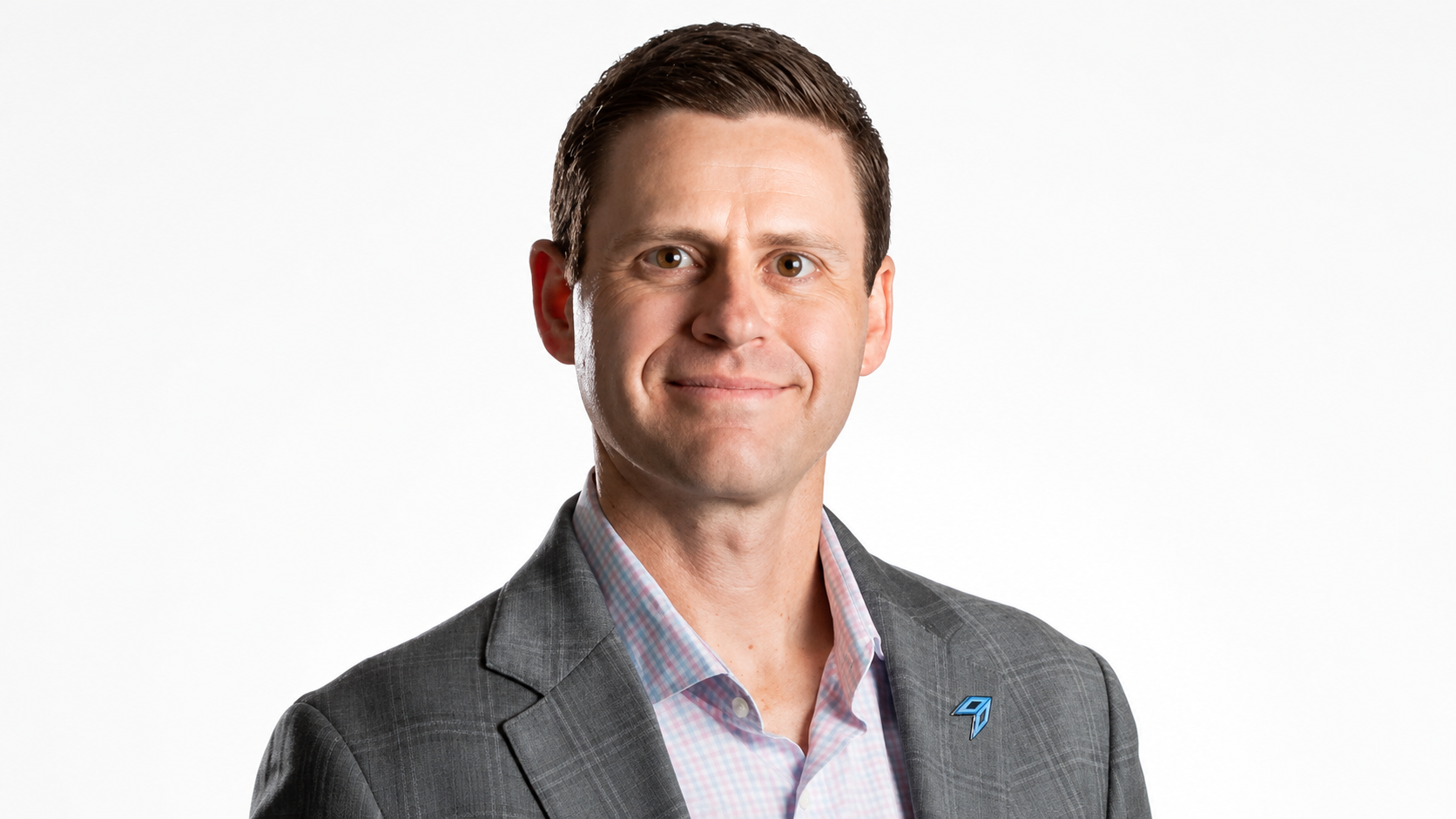
Artificial intelligence, geospatial intelligence and high-resolution aerial imagery are reshaping enterprise decision-making. Organisations across insurance, infrastructure, government and real estate are gaining unprecedented visibility into the physical world. David Tobias, Chief Product Officer at Nearmap, is at the forefront of this transformation and his career spans more than two decades in insurance, property intelligence and product innovation. Having co-founded Betterview before its acquisition by Nearmap, David has helped redefine how insurers and enterprises use location intelligence to assess risk, improve operational efficiency and make faster, more informed decisions.
In this exclusive interview with TechBullion, David discusses the evolution of property intelligence, the commercial impact of artificial intelligence on geospatial data, and why customer-centric product development remains the foundation of successful technology businesses. He also shares valuable insights into digital transformation in the insurance sector, climate resilience, data quality, acquisition strategy, and the future of location intelligence as organisations increasingly rely on trusted data to support critical business decisions.
1. Please introduce yourself to our readers and describe your role as Chief Product Officer at Nearmap. What does leading product strategy at a geospatial technology company involve day to day?
I’ve spent most of my career around the same problem: how do people make better decisions about property risk when the information is incomplete, outdated, or hard to use? Today, as Chief Product Officer at Nearmap, my job is to help turn imagery, AI, and geospatial data into products that answer that question for customers.
On any given day, that means working closely with customers to understand where they’re facing friction, partnering with engineering and AI teams to translate those needs into products, and thinking strategically about where the market is heading. Technology moves quickly, but our focus is always on creating lasting value for customers rather than simply building the next feature.
One of the things I enjoy most about working in geospatial technology is that the possibilities continue to expand. High-quality aerial imagery has evolved from being something people simply viewed to becoming the foundation for data-driven decisions. Today, organizations aren’t just asking what a property looks like—they want to understand its condition, how it’s changing over time, and what those changes mean for risk, operations, or investment. Helping build products that answer those questions is what makes the role exciting.
2. Your career spans more than two decades across insurance and property intelligence, from scaling an inspection business to co-founding a technology platform. How did that journey shape the way you approach product leadership today?
One lesson has remained constant throughout my career: great products don’t start with technology—they start with understanding customer problems.
Early in my career, I worked closely with insurers and inspectors who were making high-stakes decisions every day with incomplete information. That experience taught me that every additional piece of reliable information has the potential to improve outcomes, whether that’s reducing unnecessary inspections, improving underwriting accuracy, or helping settle claims more efficiently.
When we founded Betterview, the goal wasn’t to build another technology platform. It was to solve a very specific challenge: giving insurers a better understanding of property risk without requiring someone to physically visit every location.
That philosophy continues to guide me today. Technology should remove complexity, not create it. Product leadership isn’t about building the most sophisticated solution possible—it’s about delivering information in a way that helps customers make better decisions with greater confidence.
3. Before entering the technology sector, you helped grow an insurance loss control company to more than 30,000 inspections a year with a nationwide network of inspectors. What did that operational experience teach you that still informs your product decisions?
Working in operations gives you a healthy respect for reality.
It’s one thing to design a process on paper. It’s another to manage thousands of inspections across multiple states while balancing customer expectations, weather, scheduling, staffing, and quality control. You quickly learn that every inefficiency has a real cost, whether that’s time, money, or customer satisfaction.
That experience fundamentally shaped how I think about product development. I always ask whether a product genuinely reduces work for the customer or simply shifts complexity somewhere else. If the customer needs three more steps to use your “solution,” you didn’t solve the problem—you relocated it.
It also reinforced the importance of trust. Insurance decisions often involve significant financial consequences, so customers need confidence not only in the technology but in the data behind it. That’s why accuracy, consistency, and transparency remain foundational principles in every product we build.
4. What gap in the insurance market led you to co-found Betterview, and how did you validate that property intelligence was a problem worth solving at scale?
The gap became obvious after spending years watching insurers rely on processes that hadn’t fundamentally changed in decades. Property inspections were expensive, time-consuming, and difficult to scale, yet carriers still lacked consistent visibility into the condition of many of the homes they insured.
At the same time, advances in aerial imagery, computer vision, and cloud computing were making it possible to observe properties in entirely new ways. The technology existed, but no one had fully connected those capabilities to the everyday underwriting workflow.
We validated the opportunity the same way many successful startups do—by talking extensively with customers. Underwriters consistently described the same challenges around inspection costs, inconsistent data, and limited visibility into property conditions between policy renewals.
The insight was simple: insurers weren’t asking for more data. They had plenty of data. They needed better decisions—and they needed those decisions to fit into the underwriting workflow.
5. Betterview was acquired by Nearmap in December 2023. From a founder’s perspective, how do you approach integrating a start-up’s product, technology, and culture into a larger organization without losing what made it valuable?
The first question after an acquisition shouldn’t be, “How fast can we integrate this?” It should be, “What made this company valuable in the first place?”
For Betterview, that was customer focus, speed, and a very practical view of insurance workflows. The goal was to preserve that while combining it with Nearmap’s imagery, scale, and AI capabilities.
Today, our focus isn’t on preserving one company’s identity over another’s. It’s on building something stronger than either company could have created independently by combining industry-leading imagery, AI, and property intelligence into a more comprehensive platform.
6. What advice would you offer technology founders who are building toward a potential acquisition, particularly around timing, positioning, and choosing the right acquirer?
Don’t build your company to be acquired. Build it to solve an important problem exceptionally well.
The strongest acquisitions happen because two organizations have complementary strengths and a shared vision, not because one side was actively looking to sell.
Founders should also think carefully about cultural fit. Products can be integrated faster than cultures. If the ways of working don’t fit, the spreadsheet math won’t save you.
Finally, choose an acquirer that expands your ability to serve customers. For us, joining Nearmap created opportunities to combine complementary technologies and accelerate innovation in ways that simply weren’t possible as a standalone company.
7. For readers less familiar with the sector, how would you explain what property intelligence is and why it has become such a significant category within enterprise technology?
Property intelligence is the ability to understand what’s happening at a physical property—what’s there, what condition it’s in, how it’s changed, and what that means for risk or operations.
The category has grown rapidly because nearly every industry depends on understanding physical assets. Insurers evaluate risk. Governments plan infrastructure. Utilities manage networks. Engineers design projects. Real estate professionals assess investments.
Across all of those industries, organizations are trying to answer the same fundamental question: “What is happening at this property today, and how has it changed over time?” Property intelligence helps answer that question with greater speed, consistency, and confidence.
8. Aerial imagery on its own is simply data. How does Nearmap transform that raw imagery into actionable insights that organizations can build decisions and workflows around?
Imagery is the starting point. The value comes when imagery becomes structured information that fits into the decisions customers are already making.
That involves combining high-frequency image capture with artificial intelligence, computer vision, machine learning, and domain expertise to identify meaningful property characteristics and changes.
The outcome isn’t simply better images. It’s actionable information that helps underwriters assess risk, governments prioritize infrastructure investments, utilities manage assets, and engineers plan projects more efficiently.
Ultimately, customers aren’t buying imagery—they’re buying confidence in the decisions they make using that information.
9. What are the most complex geospatial challenges your customers face today, and how does product innovation help turn those challenges into usable, practical solutions?
The hard part isn’t looking at one property. It’s understanding millions of properties consistently, keeping that information current, and making it usable inside real workflows.
Traditional approaches that rely heavily on manual inspections or disconnected datasets simply can’t keep pace with the volume and speed of change.
Customers don’t want another dashboard filled with raw data—they want answers that fit naturally into their existing workflows. That’s where product innovation matters. Our goal is to reduce complexity by delivering insights that are timely, trusted, and easy to operationalize. The most successful products aren’t necessarily the ones with the most sophisticated technology behind them. They’re the ones that make difficult decisions feel simpler.
10. The insurance industry has historically been slow to adopt new technology. What is driving the current pace of digital transformation among property and casualty insurers?
The pace of change is being driven by necessity. Claims are more complex, replacement costs are higher, weather volatility is creating more pressure, and customers expect faster answers. Traditional workflows weren’t built for that environment.
What’s changed over the past several years is that the technology has matured. Artificial intelligence, aerial imagery, and cloud computing have reached a point where they can deliver measurable business value at enterprise scale.
At the same time, insurers have become much more focused on improving operational efficiency while making better underwriting and claims decisions. That combination is accelerating adoption because organizations aren’t investing in technology for its own sake—they’re investing in tools that help them operate more effectively in an increasingly complex risk environment.
11. How is location intelligence changing the way insurers assess, price, and mitigate risk, and what does that mean for the end policyholder?
Location intelligence is helping insurers move from broad assumptions about risk to a much more precise understanding of individual properties. Historically, underwriting relied heavily on ZIP codes, historical loss data, and periodic inspections. Those remain important, but they don’t always reflect what’s happening at a property today.
By combining current aerial imagery with AI-driven property insights, insurers can better understand the characteristics and condition of individual homes, identify changes over time, and make more informed underwriting and claims decisions. That leads to more accurate pricing, more efficient operations, and better risk management across an entire portfolio.
For policyholders, the benefit should be more transparent decisions, fewer unnecessary inspections, and faster handling when a claim happens.
12. Climate-related events are placing growing pressure on property markets and the insurers that underwrite them. What role can geospatial data play in helping the industry adapt to increasingly volatile conditions?
Climate isn’t only changing catastrophe exposure. It’s also influencing the condition of the built environment over time.
The industry has become very sophisticated at modeling major weather events, but much of today’s property risk develops gradually through chronic environmental conditions like prolonged heat, humidity, temperature fluctuations, and increasingly intense rainfall. Those factors influence how buildings age long before a catastrophe occurs.
Geospatial data allows insurers to observe those changes at scale. Instead of relying solely on historical assumptions, carriers can better understand how environmental conditions are affecting individual properties and entire portfolios over time.
As climate patterns continue to evolve, I believe insurers will increasingly combine catastrophe modeling with continuous property intelligence—current visibility into how properties change between quote, renewal, and claim. Together, those capabilities provide a much more complete understanding of risk than either can independently.
13. Transparency is becoming a competitive differentiator in financial services. How can technology help insurers build a more open and trustworthy experience for their customers?
Trust has always been central to insurance. Technology doesn’t replace that—it strengthens it.
Customers want to understand how decisions are being made, whether they’re applying for coverage, renewing a policy, or filing a claim. The more objective and transparent insurers can be, the greater confidence customers have in those decisions.
If an insurer can show the customer the same property evidence the underwriter or claims team is using, the conversation changes. It becomes less about “trust us” and more about “here’s what we’re seeing.”
Technology also helps improve consistency across the organization. When underwriting, claims, and risk teams are working from the same trusted property information, customers receive a more predictable and transparent experience throughout the policy lifecycle.
14. How are artificial intelligence and machine learning being applied to aerial imagery and geospatial datasets, and where do you see the most meaningful commercial impact?
Artificial intelligence is allowing us to extract meaning from imagery at a scale that simply wasn’t possible before.
Rather than asking people to manually review millions of images, AI can identify property characteristics, detect changes, recognize patterns, and generate insights that help organizations make decisions much more efficiently.
The commercial impact extends well beyond automation. AI allows organizations to shift from reactive decision-making to proactive planning. In insurance, that means identifying emerging risks before they become claims. In government, it means prioritizing infrastructure investments. In utilities, it helps improve asset management.
What’s most exciting is that we’re still in the early stages. As AI models continue to improve and are trained on richer, more accurate datasets, they’ll increasingly become decision-support tools rather than simply analysis tools.
15. With AI models only being as good as the data behind them, how do you think about data quality, accuracy, and coverage when building products that customers rely upon for high-stakes decisions?
Data quality is foundational. It doesn’t matter how sophisticated an AI model is if the underlying data isn’t accurate, current, and consistent.
Customers in industries like insurance, government, and infrastructure are making decisions with real financial and operational consequences. They need confidence not only in the outputs, but in how those outputs were produced.
That’s why we think about AI and data together rather than separately. High-quality imagery, frequent capture, rigorous quality standards, and transparent validation all contribute to building trustworthy products.
AI is only useful if customers can trust the data, understand the output, and explain how it supports the decision. Ultimately, AI should increase confidence—not introduce uncertainty. That only happens when customers trust both the intelligence and the data it’s built upon.
16. As Chief Product Officer, how do you decide which opportunities make it onto the product roadmap when serving multiple industries with very different needs?
The first question we ask isn’t, “Can we build this?” It’s, “Should we build this?”
Every customer has unique requirements, but many of the underlying challenges are remarkably similar. Whether someone is underwriting a property, managing utility infrastructure, or planning a transportation project, they’re trying to make better decisions about physical assets.
We look for opportunities where a core capability can solve meaningful problems across multiple industries while still allowing us to address the specific workflows that matter to each customer segment. A roadmap isn’t a wish list. It’s a set of tradeoffs.
We also spend a great deal of time talking directly with customers. The best roadmap decisions rarely come from internal brainstorming sessions alone. They come from understanding where customers experience friction and identifying opportunities to eliminate it.
17. Having operated as both a founder and now an executive within a global technology company, how has your view of what makes a great product organization evolved?
Earlier in my career, I probably overvalued speed. I still value it, but speed without focus just creates motion. Great product teams combine urgency with judgment.
I’ve come to appreciate that great product organizations combine speed with discipline. They have a clear product vision, strong customer empathy, and the ability to execute consistently across engineering, design, data science, and go-to-market teams.
The other lesson is that product management isn’t about having all the answers. It’s about creating an environment where great ideas can emerge from anywhere in the organization and then making thoughtful decisions about which opportunities create the greatest long-term value for customers.
18. Beyond insurance, which industries do you believe stand to gain the most from location intelligence over the next five years, and why?
I think we’re still in the early stages of what location intelligence will enable across industries.
Government: infrastructure planning, emergency response, and community resilience are all areas where the opportunity is enormous.
Utilities: as networks become more complex and climate pressures increase, having current, accurate information about physical assets becomes essential for reliability and maintenance planning.
AEC/O: architecture, engineering, construction, and operations continues to evolve rapidly as organizations look to improve project planning, monitor construction progress, and manage assets throughout their lifecycle.
Different industries, same problem: better decisions start with better information about the physical world.
19. For the entrepreneurs and technology leaders reading this, what is one lesson from your career in building and scaling solutions to complex problems that they could apply to their own ventures?
Focus relentlessly on the problem before the technology. Customers don’t care that something is new—they care that it makes an important job easier, faster, or more reliable.
It’s easy to become excited about emerging technologies, whether that’s artificial intelligence, machine learning, or the latest software framework. But customers invest because a solution helps them solve meaningful problems more effectively.
The best product ideas rarely come from a whiteboard. They come from watching how customers actually work, where they get stuck, and what they’re trying to accomplish.






Comment