
Modern Indian Cuisine — How Hyderabad’s Restaurants Are Reinterpreting Tradition

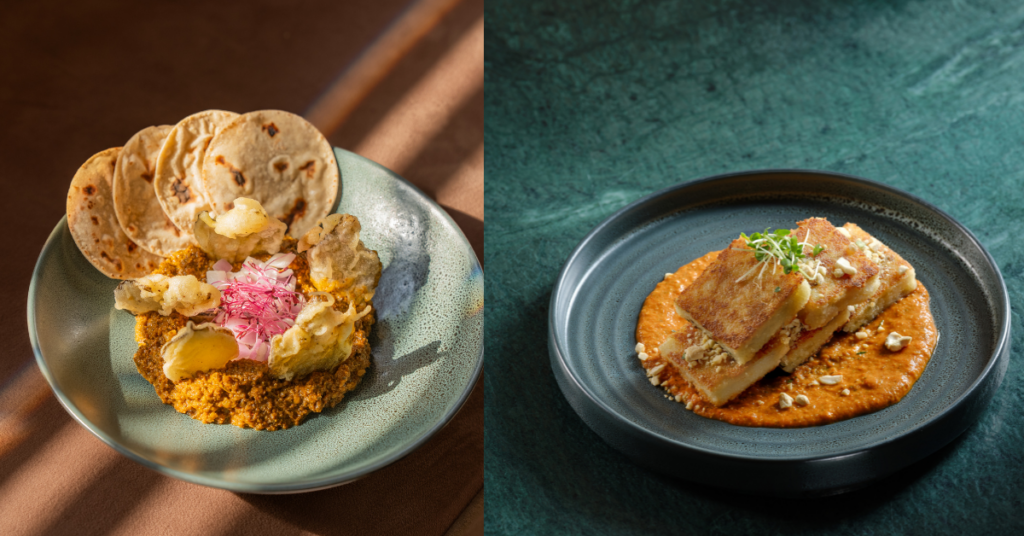
The conversation about modern Indian cuisine has been happening in Mumbai and Delhi for two decades. Hyderabad has entered that conversation more recently, and in doing so, it is bringing something specific to the table: the extraordinarily rich culinary tradition of the Deccan as a foundation, rather than as a constraint.
What Modern Indian Cuisine Actually Means
The term is sometimes misused. In the worst versions, tradition is simply discarded in favour of foam, sous vide, and European plating techniques applied to half-familiar Indian flavours. The result is food that belongs nowhere — not comfortably Indian, not convincingly contemporary.
In the better versions — and Hyderabad has increasing numbers of these — the modernisation is about refinement and presentation rather than replacement. The flavour profiles remain rooted. The cooking techniques are adapted where they produce genuine improvement. But the food still tastes like what it is.
The Hyderabadi Advantage
Hyderabad enters the modern Indian conversation with a particularly strong hand. The Nizami culinary tradition is among the most technically sophisticated in the subcontinent — slow-cooking, spice blending, dum methods, and the use of dried fruits, nuts, and aromatics in layered combinations are all native to this kitchen.
A chef trained in Hyderabadi cooking has already mastered slow, complex preparations that many kitchens in the world would consider advanced technique. The step from traditional Hyderabadi to refined contemporary is therefore shorter here than in many other regional Indian traditions.
How a Contemporary Indian Kitchen Approaches Its Menu
The approach at serious Hyderabadi restaurants reflects a specific philosophy: honour the cooking while elevating the experience.
A dish like Junnu Caramel takes a traditional Telangana colostrum pudding — a village preparation with centuries of history — and presents it as a plated dessert with a caramel glaze and pistachio dust. The flavour is recognisably Junnu; the presentation transforms it into a restaurant dish that can hold its own alongside the best desserts in the city.
Dal Makhani simmered overnight is not a reinvention; it is a refinement. The dish tastes the way the best dal makhani should taste, executed with consistency and care.
A Chocolate Indulgence — warm fondant with salted caramel and cardamom ice cream — takes a globally familiar dessert format and gives it an Indian dimension through the cardamom.
Presentation as a Language
One of the clearest signals of contemporary Indian cooking is the attention paid to plating. Restaurant cooking uses presentation as a form of communication. The visual arrangement of a dish signals what the kitchen values, how the components relate to each other, and what experience the diner is meant to have.
The Question of Portion Size
One persistent tension in contemporary Indian dining is between the generous portions of traditional cooking and the smaller, more intentional portions of modern plating. The better contemporary Indian restaurants in Hyderabad have navigated this by offering substantial portions that are nonetheless thoughtfully composed — not simply piled onto a plate.
Why the Evolution Matters
Indian cuisine is one of the most complex culinary traditions in the world. Its regional variations — from Kashmiri to Keralan, from Rajasthani to Telangana — represent a diversity of ingredients, techniques, and flavour philosophies that no single menu can fully represent.
What modern Indian restaurants in Hyderabad are doing, at their best, is making visible the depth of what has always been there. They are saying: this cooking deserves the same attentiveness that a French bistro or a Japanese omakase receives.
Finding the Balance: What to Look For
- Flavour coherence: Does the dish taste like a complete idea, or a collection of components that have not been properly integrated?
- Spice balance: Contemporary Indian cooking should still be assertively spiced. If the modernisation has produced blandness, that is a failure.
- Regional grounding: The best contemporary Indian restaurants are rooted in a specific regional tradition. Vague pan-Indian menus without a culinary point of view tend to satisfy nobody.
- Consistency: The mark of a serious kitchen is that dishes taste the same on a Tuesday lunch and a Saturday dinner.
You can see this approach in action at antera gachibowli, where Hyderabadi and Telangana cooking forms the foundation of a menu that has been carefully refined rather than reinvented. It is a good time to be eating well in this city.







Comment