Cold vs Hot Tyre Pressure: What Drivers Need to Know
Tyre pressure is one of the simplest things drivers can check, but it is easy to get misleading readings if the tyres are hot. Understanding the difference between cold and hot tyre pressure can help you maintain the correct pressure, reduce unnecessary tyre wear, and ensure your vehicle handles as expected.
What Is Cold Tyre Pressure?
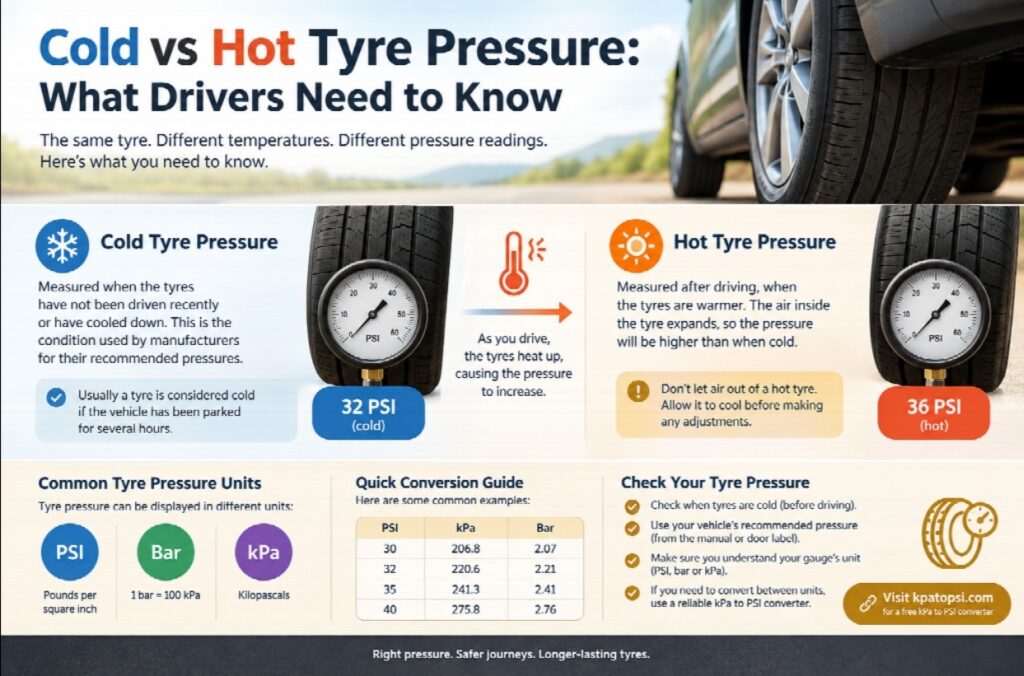
Cold tyre pressure is the pressure measured when the tyres have not been driven recently or have had enough time to cool down. This is generally the condition used by vehicle manufacturers when specifying recommended tyre pressures.
A tyre is usually considered cold when the vehicle has been parked for several hours and has not been exposed to significant heat from driving.
Your vehicle’s recommended tyre pressure can usually be found in the owner’s manual or on a label inside the driver’s door area.
Why Does Tyre Pressure Increase When Driving?
As you drive, the tyres flex against the road and generate heat. This increases the temperature of the air inside the tyre, causing the pressure to rise.
For example, a tyre that measures 32 PSI when cold may show a higher reading after a long journey. This does not necessarily mean the tyre has been overinflated.
The important point is to compare your measurement with the vehicle manufacturer’s recommended cold tyre pressure, rather than trying to reduce a hot tyre back to the cold specification.
Should You Let Air Out of a Hot Tyre?
Generally, you should avoid adjusting a tire simply because its pressure reading is higher after driving.
If you have just completed a journey and discover that the pressure appears higher than the recommended figure, allow the tyres to cool before making adjustments. Removing air from a hot tyre could leave it underinflated once it returns to its normal temperature.
If you need to check your tires during a journey because you suspect a puncture or another problem, a pressure check can still provide useful information. However, remember that the reading may be affected by the tyre’s temperature.
PSI, Bar and kPa: Why the Units Matter
Tyre pressure can be displayed in different units depending on the vehicle, country, or pressure gauge. PSI (pounds per square inch), bar, and kPa (kilopascals) are commonly used.
For example:
- 30 PSI ≈ 206.8 kPa
- 32 PSI ≈ 220.6 kPa
- 35 PSI ≈ 241.3 kPa
- 40 PSI ≈ 275.8 kPa
If your vehicle specifies pressure in kPa but your gauge displays PSI, you may need to convert the reading before adjusting your tires. You can use the kPa to PSI converter to quickly convert between the two pressure units. The converter uses the standard relationship of 1 kPa = 0.145038 PSI.
When Is the Best Time to Check Tyre Pressure?
The best time to check tyre pressure is generally before driving, when the tires are cold. Check all four tyres and, if applicable, the spare tyre as well.
Do not rely on how a tyre looks. A tyre can appear properly inflated while being below its recommended pressure. Instead, use a suitable pressure gauge and compare the reading with the pressure specified by your vehicle manufacturer.
Final Thoughts
Checking tyre pressure regularly is a small maintenance task that can make a meaningful difference to your vehicle. Remember that cold tyre pressure is the important reference point, while readings taken after driving will normally be higher because the tyres and air inside them have warmed up.
Check your tires when they are cold, follow the manufacturer’s recommended pressure, and make sure you understand whether your gauge displays PSI, bar, or kPa. If you encounter different pressure units, an online pressure converter can help you compare the readings quickly and accurately.