Restoring power after a breaker trip involves a decision: whether the conditions that caused the interruption still exist. For rail power systems, that question makes the sequence before reclosing an important part of the equipment discussion.
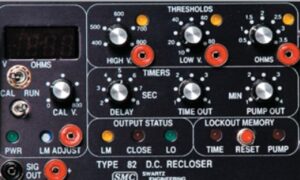
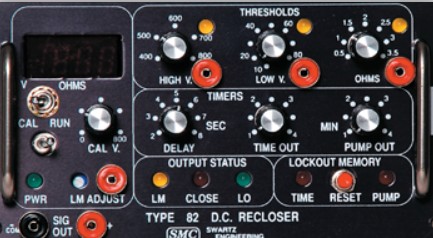
Swartz Engineering, a family-owned company specializing in electrical power distribution, lists the Type 82 DC Relay among its products. The relay provides a specific example of the company’s rail-related equipment: a solid-state reclosing system with documented functions for checking the load side before a DC breaker closes.
Checking conditions before reclosing
According to its product description, the Type 82 is designed for light and heavy rail systems. Following a fault or overcurrent trip, the system checks for a load-side fault before permitting the breaker to close. It is described as automatically reclosing the breaker when the line is clear.
The documented functions include voltage measurement, load measurement, sequencing, and indication. Together, these functions describe what the relay evaluates and how the reclosing sequence is organized.
The distinction matters when discussing a product’s purpose. “Automatic reclosing” identifies an action; load-side verification explains the condition being assessed before that action. For Swartz Engineering’s Type 82, that relationship is central to the product description.
A defined role within the equipment portfolio
Swartz Engineering’s catalog also lists ground relays, reverse-current relays, transducers, shield monitors, surge arrestors, contactors, power control rooms, and portable substations. Each listing represents a separate equipment category whose suitability needs to be considered within its own documented scope.
The Type 82 is most clearly understood through its reclosing role. A product discussion can therefore begin with a defined question: what information should be available before the breaker is allowed to close?
That focus gives a project team a useful starting point. It helps frame the conversation around the intended function and the information needed to evaluate it.
Questions for a project-specific review
For teams considering the Type 82, the Swartz Engineering product page provides an introduction to the relay’s stated applications and operating functions.
A project review can build on that description by asking:
- Which breaker and circuit are being considered?
- What existing equipment must the proposed relay work with?
- What information does the team need to assess compatibility?
- Which current documents should guide the engineering review?
- What must be confirmed before a product is selected?
These questions keep the discussion tied to the actual equipment and project requirements. They also help identify what remains to be established beyond the introductory product description.
Swartz Engineering’s Type 82 gives that discussion a concrete subject: the relationship between load-side verification and DC breaker reclosing. Its documented role provides a focused starting point for evaluating a rail power application.