Many people like to think of artificial intelligence (AI) as some digital or robotic being that interacts with us. The reality is that AI models operate within data centers, which are large facilities filled with thousands of networked computers, servers, and data storage units. Everything, from the internet to cloud computing and AI, could not exist without data centers.
A growing number of commercial and industrial companies are now incorporating AI-based operational systems into their organizations. As commercialized AI infrastructure continues to scale at a rapid rate, the need for data center power is at an all-time high. And whenever there is a high demand for anything, businesses can expect a high price tag to come along with it.
Data centers consume an enormous amount of electricity to power their network of computers and servers for commercial, industrial, and even residential clients. Unfortunately, the aging power grid cannot support the current growing rates of power consumption from data centers. That is why companies have seen their monthly power bills increase by more than 50% over the last six years. It is also why there are 20% more power outages each year because the grid cannot handle the demand anymore.
Can AI Be the Solution for Better Power Management?
AI may be known for consuming more electricity, but it may also be the solution to help data centers become more energy efficient. In fact, one company called Intrinsic Power has a solution that can unlock 40% more power capacity for data centers without any costly infrastructure overhauls. The solution involves the use of AI software to manage a company’s power consumption for its own AI systems.
Previously, increasing the power capacity of a data center required a company to expand its physical infrastructure by installing larger transformers and constructing more substations. Organizations could end up spending millions of dollars on multi-year infrastructure construction, equipment, utility permits, and regulatory approval. And still, they would often face delays that would hold them back in a rapidly evolving marketplace.
Now, companies can turn to a service provider like Intrinsic Power to utilize an AI-powered energy platform that can optimize the current infrastructure already in place. Rather than adding more power generation, Intrinsic Power uses AI to continuously monitor electrical conditions, predict available capacity, and orchestrate power across an entire facility.
This smarter method of power management can help data center operators unlock additional capacity, improve resiliency, and accelerate AI deployments without companies waiting for costly grid or infrastructure upgrades. That is how they are able to unlock up to 40% additional capacity. Instead of viewing electrical systems as having operating limits, AI allows them to become more dynamic systems capable of adapting to evolving operating conditions in real time.
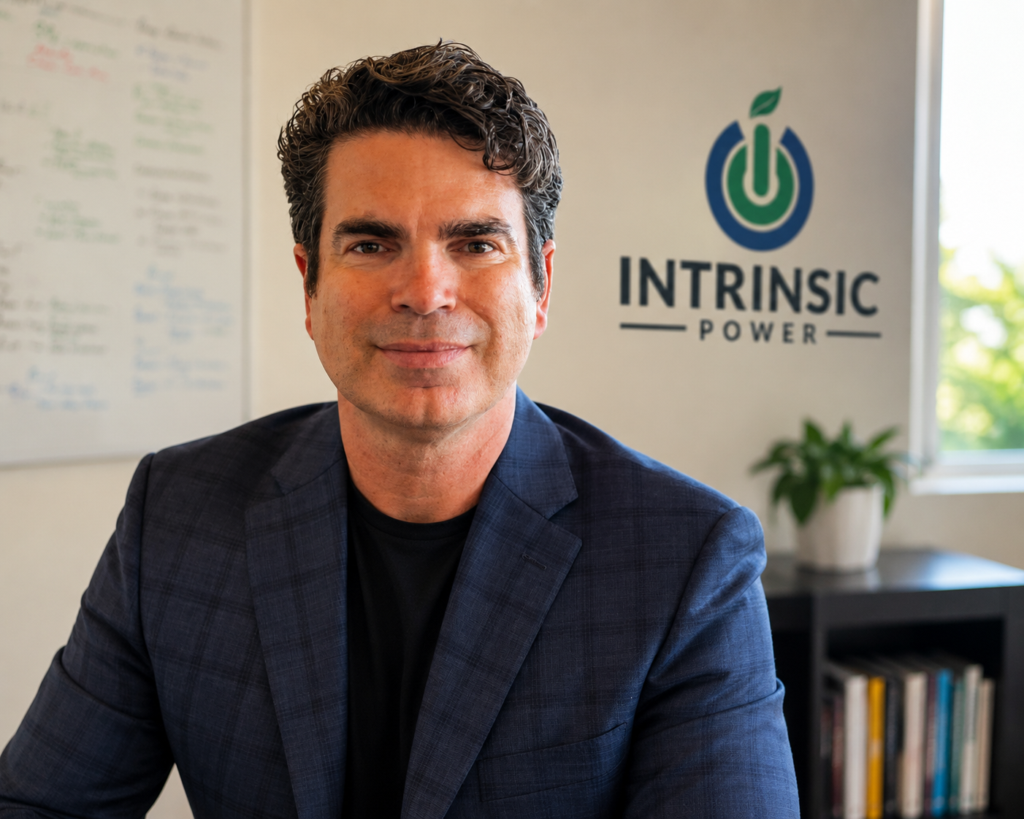
“Intrinsic Power was founded on the belief that electrical infrastructure should be intelligent, adaptive, and capable of optimizing itself in real time,” said Broc TenHouten, co-founder and CEO of Intrinsic Power. “As AI infrastructure and data centers rapidly increase demand for electricity, our platform is uniquely positioned to help customers unlock additional grid capacity, improve resiliency, and accelerate deployment without waiting for costly infrastructure upgrades. Our mission is to build the AI operating layer for modern, distributed electrical systems.”
How AI Increases Power Capacity
Traditional electrical infrastructure may track and record power consumption, but it never had systems in place to automatically regulate it for the benefit of the customer. AI-based power management solutions can do just that.
Here are some of its important capabilities for boosting the power capacity of a traditional power grid:
- Continuous Power Balancing – Power consumption normally fluctuates throughout data centers, which can cause both overconsumption and outages. An AI power management system can continuously monitor the amount of power consumption from the equipment throughout the facility. Meanwhile, it holistically optimizes and balances power consumption across all systems to prevent overconsumption and outages.
- Better Resiliency to Power Spikes – Unexpected power spikes can interrupt a company’s AI workloads, damage their equipment, and create substantial financial losses. An AI power management system can help improve resiliency to power spikes by identifying any changing electrical conditions before they cause operational problems for the company.
- Predictive Monitoring – Traditional electrical systems operate within a fixed set of safety margins without factoring in the likely future power demands. An AI power management system uses machine learning algorithms to analyze historical patterns of power consumption within a company and estimate available future capacity more accurately.
Many organizations have already invested heavily in AI hardware but remain constrained by power limitations. But if they were to utilize AI-driven energy infrastructure, it would give companies a faster and more affordable path toward expanding their computing resources without worrying about any capacity issues.
As a result, companies can deploy their AI systems faster to quickly expand their operations while meeting growing customer demands.
About Intrinsic Power and its Founder
Broc TenHouten founded Intrinsic Power in 2015. He spent decades leading the development and commercialization of advanced power electronics, electric vehicles, energy systems, and AI-enabled hardware. His vision was to create an AI-driven energy infrastructure company that would develop intelligent power management systems for commercial buildings, industrial buildings, and next-generation data centers.
TenHouten first started his career in engineering and vehicle development at General Motors. He went on to become Director of Technology Development at EnerSys Advanced Systems and COO and Chief Engineer at Divergent Technologies. Throughout his career, TenHouten developed multidisciplinary engineering organizations and led the development of breakthrough technologies, starting from the conception stage to the production stage.
TenHouten currently holds more than 50 patents, a Bachelor of Science degree in Mechanical Engineering from UC Berkeley, and a Master of Business Administration degree from the University of Michigan (Ross). He is best known for his ability to establish manufacturing and strategic partnerships that have brought innovative products to the marketplace for everyone to benefit from.
Many venture capital firms and corporate strategic investors have backed Intrinsic Power because they see great potential in advancing the future of energy infrastructure. In fact, Intrinsic Power has just announced that it has acquired seed funding led by Kyocera Ventures, Drive Catalyst, Boost VC, and RPV Global to accelerate the commercialization of its AI-powered electrical infrastructure platform for data centers.