
Identity and access management (IAM): complete enterprise guide

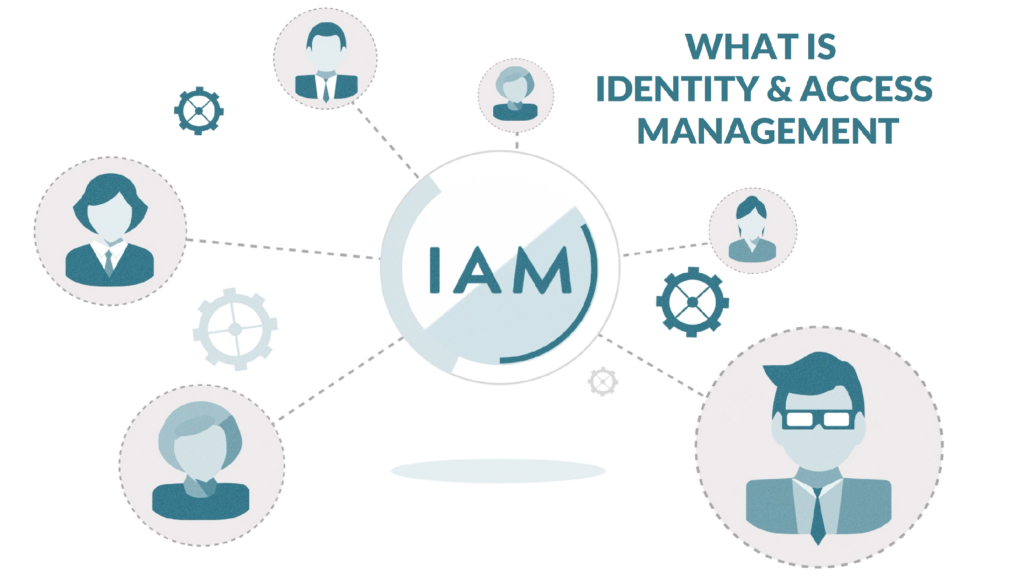
Identity and access management is the control plane of enterprise security. This guide examines how IAM defines, provisions, and governs access, and where its blind spots emerge. It covers design-time versus runtime dimensions, the gap between policy intent and runtime execution, non-human identities, and why observability increasingly determines whether IAM controls hold up under real attack conditions.
identity and access management
Identity and access management (IAM) is the discipline of defining who, or what, can access which resources, under what conditions, and for how long. It governs the full lifecycle of an identity, from provisioning through deprovisioning, and enforces authentication and authorization at the point of access. In many modern enterprises, identity and access management has displaced the network perimeter as the primary security control plane, a shift often described as the move toward a zero-trust model.
The problem is that IAM is often treated as a configuration exercise. Access is defined in an identity provider (IdP), roles are assigned, and policies are written. But policy intent and runtime execution are not the same thing. The gap between them, where identities are actually used inside applications and infrastructure, is where risk, drift, and attack activity tend to concentrate.
The two dimensions of IAM
Traditional IAM operates across two distinct planes. Understanding both matters because most tooling addresses one while assuming the other.
- Design time: Identity lifecycle management, policy definition, provisioning, integrations, and joiner-mover-leaver (JML) processes, where access intent is expressed.
- Runtime: Authentication and authorization enforcement, including single sign-on (SSO), access checks, and session decisions, where access is actually exercised inside systems.
Governance platforms typically govern design-time configuration. They express policy intent well but often do not verify how that intent is implemented inside each application. That distinction matters operationally: compliance evidence is only as reliable as visibility into the underlying systems.
Core IAM capabilities
Enterprise IAM strategy rests on a set of interlocking capabilities. Each addresses a different slice of the access lifecycle.
- Authentication: Verifying identity via credentials, multi-factor authentication (MFA), and federated protocols such as SAML or OIDC before access is granted.
- Authorization: Determining what an authenticated identity is permitted to do through role-based access control (RBAC) or attribute-based access control (ABAC).
- Lifecycle management: Provisioning and deprovisioning accounts in step with employment and system events.
- Access governance: Certification, segregation of duties, and periodic review of entitlements.
- Privileged access management (PAM): Constraining and monitoring high-risk administrative access.
Why identity became the control plane
Attackers increasingly exploit legitimate identities rather than malware or technical exploits. Industry incident reporting, including the Verizon Data Breach Investigations Report, has repeatedly identified stolen or misused credentials as a leading factor in breaches. A stolen credential generates normal-looking logs, and lateral movement through trust relationships can appear operational rather than malicious. So identity access management solutions must do more than provision access; they must reveal how identities behave once granted.
The gap between intent and execution
IAM expresses policy intent. Applications and infrastructure reveal runtime execution. Many identity access management programs monitor primarily the identity provider, leaving application-layer activity largely unobserved. This is the origin of what Orchid Security terms identity dark matter: identities, applications, and authentication flows that exist outside centralized IAM visibility.
Consider the difference between what an IdP reports and what actually happens inside an application. An IdP log confirms that a user authenticated. It does not, on its own, confirm what that user did across dozens of applications afterward, whether their in-app permissions match policy, or whether a local account bypassed federation entirely.
Where identity dark matter accumulates
Unmanaged identity surfaces form in predictable places. Naming them makes the exposure measurable.
- Local application accounts: Credentials created directly inside applications, outside the IdP’s scope.
- Shadow SaaS: Business-adopted tools never onboarded to central governance.
- Orphaned credentials: Active accounts with no current human or machine owner.
- Machine identities: Service accounts and automation credentials spawned by infrastructure, not HR-driven lifecycle events.
Much of the exposure that drives breaches lives in the population governance tools cannot see. Compliance evidence built on an incomplete inventory can misrepresent actual control coverage. Teams strengthening this area often evaluate IAM compliance tools that verify coverage against a complete inventory rather than a partial one.
Non-human and control-plane identities
Non-human identities outnumber human accounts in many enterprise environments, yet they rarely receive equivalent governance. Service accounts, API keys, and automation credentials are frequently created by infrastructure automation rather than through identity lifecycle events, so they can bypass normal IAM governance entirely.
Every non-human identity needs the same governance attributes as a human account: an owner, a defined purpose, an expiration, and continuous monitoring. Assigning human accountability to each machine identity closes a gap attackers routinely exploit.
Control-plane identities as a distinct risk
Control-plane identities are a subset of non-human identities that govern infrastructure behavior. Infrastructure automation credentials often require broad permissions, which makes them valuable to attackers.
- Broad entitlement: Automation identities frequently hold expansive permissions that are never right-sized after deployment.
- Environmental reach: A compromised control-plane identity can alter the security environment itself.
- Detection evasion: These identities may be able to disable the very controls meant to detect them.
This connects to the broader IAM control-plane theme: the identities that manage your infrastructure warrant the highest scrutiny, not the least.
Attack paths, exploitability, and detection
Misconfiguration alone does not equal exploitability. Whether a weak configuration can be exploited depends on identity permissions, network reachability, and runtime context. An over-permissioned role that is never reachable poses less immediate risk than a modest permission on an internet-facing workload.
Cloud lateral movement frequently occurs through IAM trust relationships rather than software vulnerabilities. Because attackers operate with legitimate identities, activity can look operational, and intrusions may progress quietly through privilege escalation and lateral movement before any alert fires.
Why log-based monitoring falls short
Identity attacks often generate normal-looking logs because attackers use valid credentials. The operational consequences can be significant: incident-response complexity increases, containment is delayed, and analysts may need to reconstruct timelines manually across fragmented systems.
- Detection surface: In these cases the primary detection surface is behavioral, comparing observed activity against a baseline.
- Baseline quality: Detection accuracy depends directly on the fidelity of that behavioral baseline.
- Framework alignment: Mapping identity techniques to MITRE ATT&CK can sharpen detection coverage for privilege escalation and lateral movement.
How IAM connects to CSPM, CIEM, and ITDR
The identity security landscape spans several adjacent categories that emerged separately because each solves a different problem. Understanding their boundaries prevents overreliance on any single tool.
- CSPM (Cloud Security Posture Management): Detects cloud configuration risk. Valuable, but often configuration-level only, lacking application-layer identity context.
- CIEM (Cloud Infrastructure Entitlement Management): Handles entitlement and permission exposure, including permission sprawl left by policies never right-sized after deployment.
- SSPM (SaaS Security Posture Management): Applies to SaaS application posture.
- IAM platforms: Govern access policy and lifecycle.
- ITDR (Identity Threat Detection and Response): Detects malicious or risky identity usage.
CSPM may flag a risky configuration but rarely contextualizes identity behavior. That separation is one reason identity observability has emerged as a distinct discipline: someone has to compare intent with execution across all of these layers.
Distinguishing IAM from ITDR
IAM provisions and governs access; ITDR monitors how that access is used. ITDR platforms typically encode identity attack techniques as detection models, whereas SIEMs frequently depend more heavily on analyst-written rules. Posture assessment within ITDR surfaces concrete issues: insecure authentication protocols, orphaned accounts, excessive privileges, and missing MFA.
Agentic AI identities and the observability imperative
Agentic AI identities introduce a newer risk surface that traditional IAM was not designed to govern. An agent is not just an access-control object; it can act autonomously across systems, so its behavior needs to be observed, not merely permissioned.
A key risk is the gap between an agent’s intended task and its actual execution. An agent granted access to complete one workflow may, through chained actions or manipulated inputs, execute something different. Data access itself becomes an attack surface: in “poisoning the well” scenarios, agents rely on compromised or manipulated data and can propagate the damage at machine speed.
This reinforces the central point of identity access management today: governing configuration is not enough. You also need to observe how identities, whether human, machine, or agentic, actually behave.
Building an enterprise IAM strategy
A durable IAM strategy is a maturity journey, not a single deployment. Organizations typically progress through distinct stages as governance scope expands to match the actual identity surface.
- Static governance: Manual reviews, periodic certifications, and policy defined in the IdP.
- Automated control: Event-driven provisioning, continuous access certification, and automated remediation.
- Behavioral observability: Application-layer telemetry that compares intent with execution and detects drift as it happens.
Mature IAM governance tends to be automated, event-driven, and continuous rather than dependent on periodic manual reviews. The distinction between point-in-time security and operational security is whether you can see what identities do between audits.
IAM platform comparison for enterprise buyers
Enterprise buyers evaluating identity access management solutions should weigh discovery method, coverage, and whether a platform verifies application-layer reality or assumes it. The following list reflects that lens; capabilities and positioning vary and should be validated against current vendor documentation.
- Orchid Security: Discovers identities directly from applications and infrastructure rather than relying only on IAM configuration data. Focuses on surfacing identity dark matter, unifying human, non-human, and agentic identities, and producing audit-ready evidence from identity telemetry to close the gap between policy intent and runtime execution.
- SailPoint: Mature identity governance and access certification, strong on design-time policy and lifecycle, with governance depth suited to large enterprises.
- CyberArk: Established in privileged access management, focused on securing and monitoring high-risk administrative and machine credentials.
- Microsoft Entra ID: Broad IdP and access management coverage across the Microsoft ecosystem with federation and conditional access.
- Ping Identity: Enterprise authentication, federation, and SSO with flexible deployment options.
- Okta: Widely adopted identity provider and SSO platform with an extensive integration catalog.
- OneLogin: Access management and SSO oriented toward mid-market identity consolidation.
Governance-centric platforms define access well. Observability-centric platforms verify it. A resilient IAM strategy generally pairs strong governance with the ability to observe identity behavior across application and infrastructure layers.
Bringing IAM strategy back to operational reality
Identity and access management succeeds or fails on visibility. Policy-level compliance is not the same as implementation-level compliance, and governance platforms too often assume application coverage rather than verify it. The recurring lesson across this guide is consistent: you cannot secure what you cannot see, and you cannot substantiate compliance for controls you have never observed in execution.







Comment