
Property portals solved a large discovery problem, but they did not make every prime London property searchable. Aldo Attanasio d’Aponte encounters that limit from the buyer’s side of the market. He founded Arbitrage Group in 2006 after building a career in central London property, and the firm works across acquisition, relocation, commercial property including retail, and development. Nearly twenty years of operating in the market provides a straightforward reason to separate what technology can surface from what still depends on property-specific context, relationships and judgement.
What Portals Fixed — and What They Did Not
For mainstream discovery, portals provide reach and a common starting point. Buyers can see asking prices, compare areas and build a basic picture before speaking to anyone. Historical data, planning records and title information can add further context. Used properly, technology makes the early stages of a search faster and less opaque.
The structural limit is supply that never appears online. Some owners prepare for a later launch, some will sell quietly, and some are not formally selling but may consider an approach. A portal cannot index a decision that has not become a listing. That is not a software failure; it is a boundary of the dataset.
The Building Is More Specific Than the Model
Even where a property is listed, the searchable facts are incomplete. Condition, neighbour dynamics, the practical feel of a building and the reason behind a sale can alter how a buyer should interpret the same square footage and postcode. Service-charge patterns, lease terms and planning history can be researched, but they still need to be read in the context of the particular building.
AI valuation tools have a role in triage because they can process comparable information quickly. The caution is specificity. Prime central London contains streets and buildings where apparently similar properties differ in ways that a broad model may not capture. A useful tool narrows the questions; it does not eliminate them.
Technology Works Best When Its Limits Are Visible
The productive argument is not technology versus people. Data is useful for comparables, title and lease analysis, planning history and recurring costs. Human judgement remains useful where information is private, contextual or dependent on a conversation with an owner or agent.
The result is a hybrid process. Search technology can make a buyer better informed, but it cannot make every relevant property visible or every building comparable. Recognising that limit is more useful than pretending the next interface will remove it.
Where Digital Search Meets Real Client Work
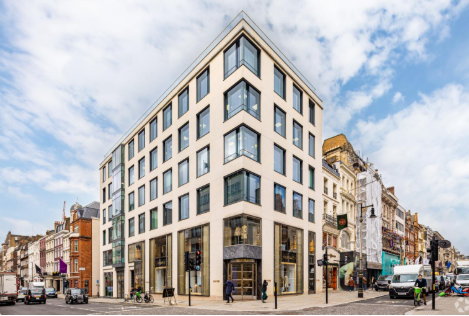
The limits of portal data become easier to understand when viewed against real commercial property work. Arbitrage Group has worked with Rubinacci on Mount Street and Dolce & Gabbana Casa in central London. In that setting, a specific address, individual unit and the circumstances around availability can matter as much as what appears in a searchable listing.


About Arbitrage Group
Arbitrage Group is a buyer-side property advisory and development firm working in prime central London. Founded in 2006, it advises private buyers on acquisition and relocation, acts on commercial and retail property, and develops residential schemes in central London. More at arbitragegroup.com.