Artificial intelligence has worked its way into nearly every part of daily life over the last few years. It’s reading X-rays, driving cars, writing emails, and picking what show to watch next. One place it’s shown up that gets a lot less attention: the kitchen.
Not the kitchen at home but in commercial kitchens such as hotels, cruise ships, hospitals, college and university dining halls, and corporate cafeterias. These are operations that cook thousands of meals a day, every day, for people who show up expecting food to be ready, fresh, and safe. And because they’re cooking at that scale, even small miscalculations turn into a lot of wasted food, fast.
How is AI used in commercial kitchens?
AI systems can track how much food kitchens produce, serve, and discard; identify patterns in overproduction; monitor food temperatures; and use historical consumption data to help chefs decide how to optimize the menu line-up and how much food to prepare for future meals.
More advanced systems can follow that picture across the full food cycle in a kitchen, from production and the serving line to leftovers and post-consumer plate waste, so kitchens can see not only how much food was lost, but where the loss happened.
AI can surface more operational intelligence across multiple kitchens in time, to remove operation bottlenecks, refine best practices, and recommend the best human-centric workflow.
The numbers back that up. According to ReFED, the nonprofit that tracks U.S. food waste, foodservice businesses generated $157 billion worth of surplus food in a single recent year, the equivalent of 14 percent of everything the industry sold. Most of that comes down to something ordinary: kitchens making more food than people actually eat, meal after meal, because there’s never been an easy way to know the right amount ahead of time.
That’s the problem a small but growing group of AI tools is starting to solve, and one of the more notable ones is a company called Metafoodx.
What It Actually Does
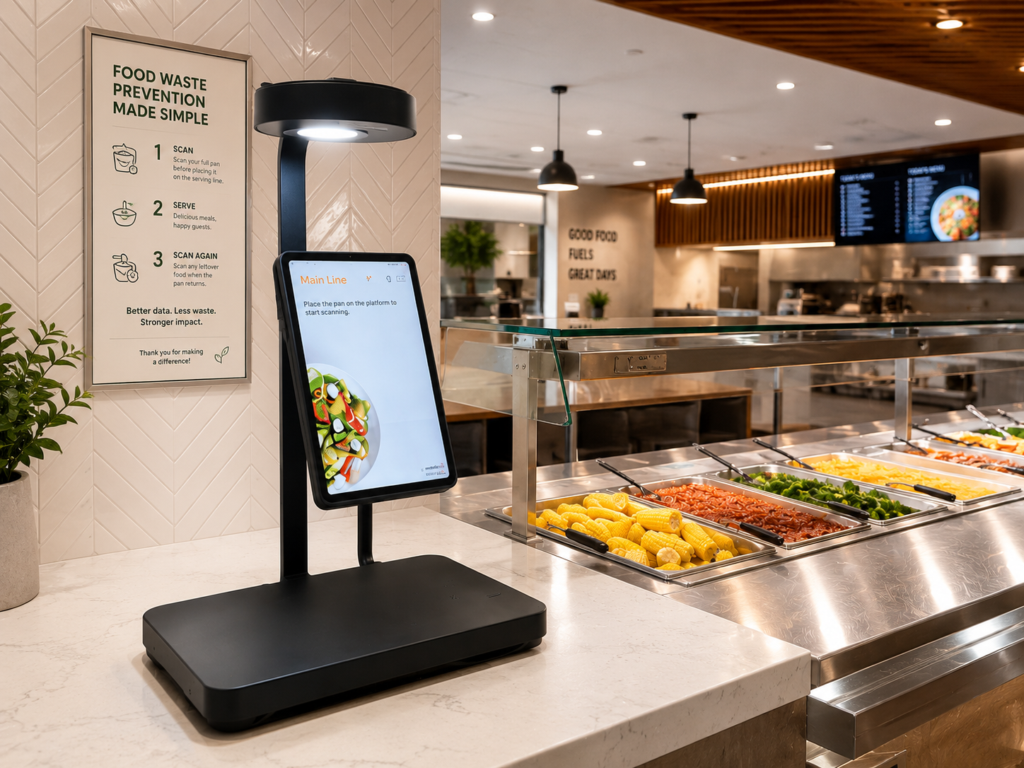
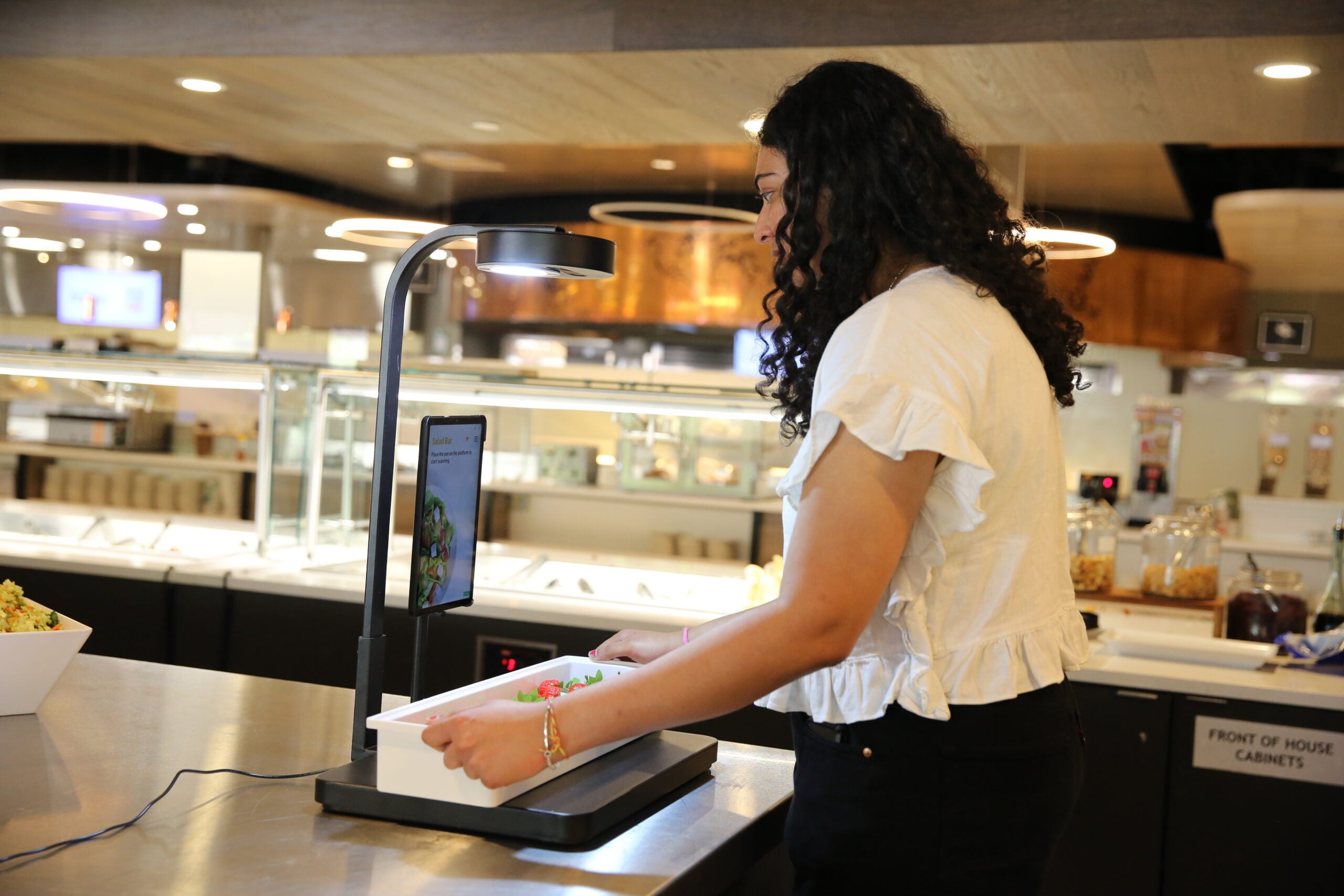
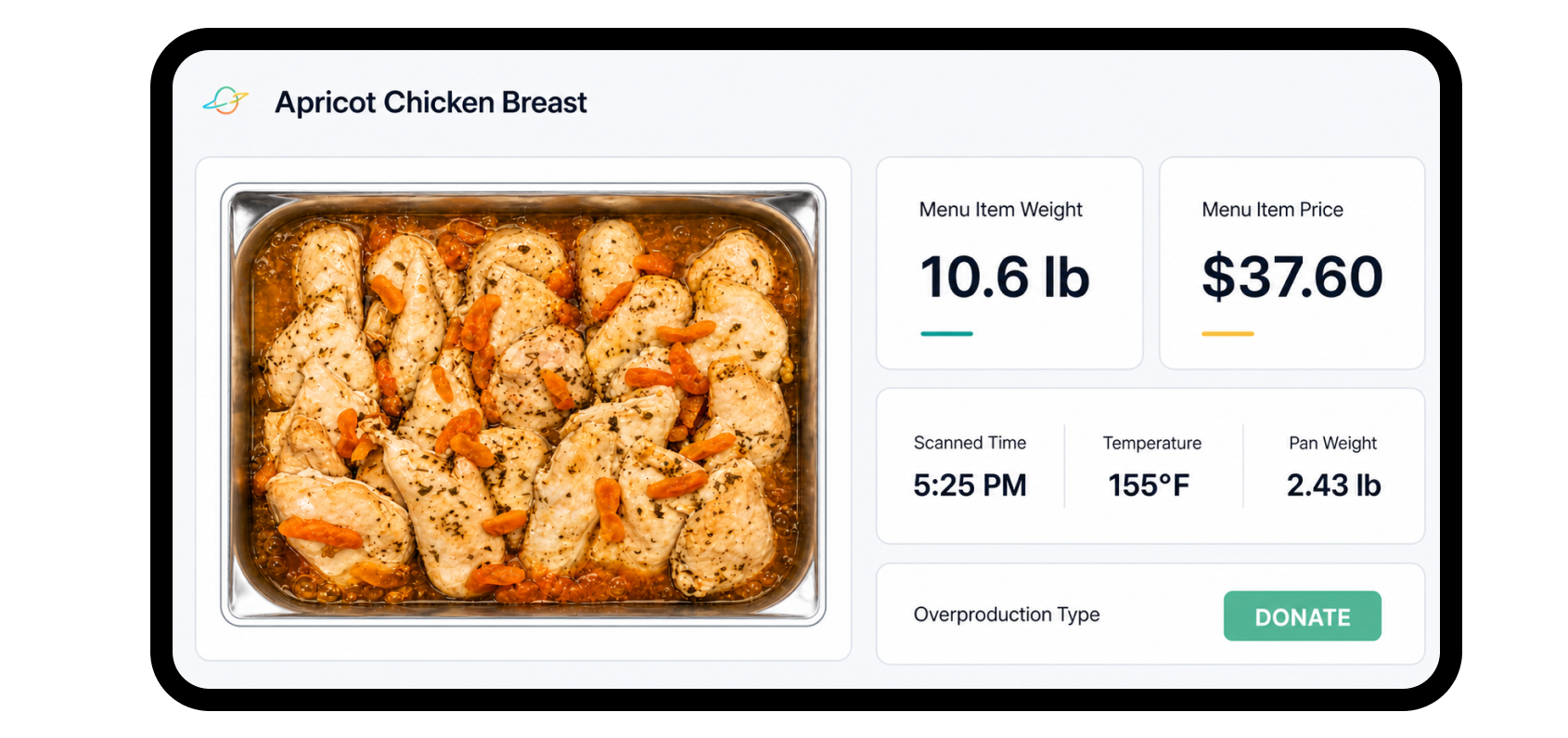
Metafoodx builds a scanner that sits near a kitchen’s serving line. Before a pan of food goes out to be served, a cook sets it on the scanner for a few seconds. The scanner identifies the dish, weighs it, and records its temperature. Metafoodx uses 3D vision to identify and measure food, allowing the system to account automatically for differences in pan weight, food volume, and density rather than relying on a standard 2D image alone.
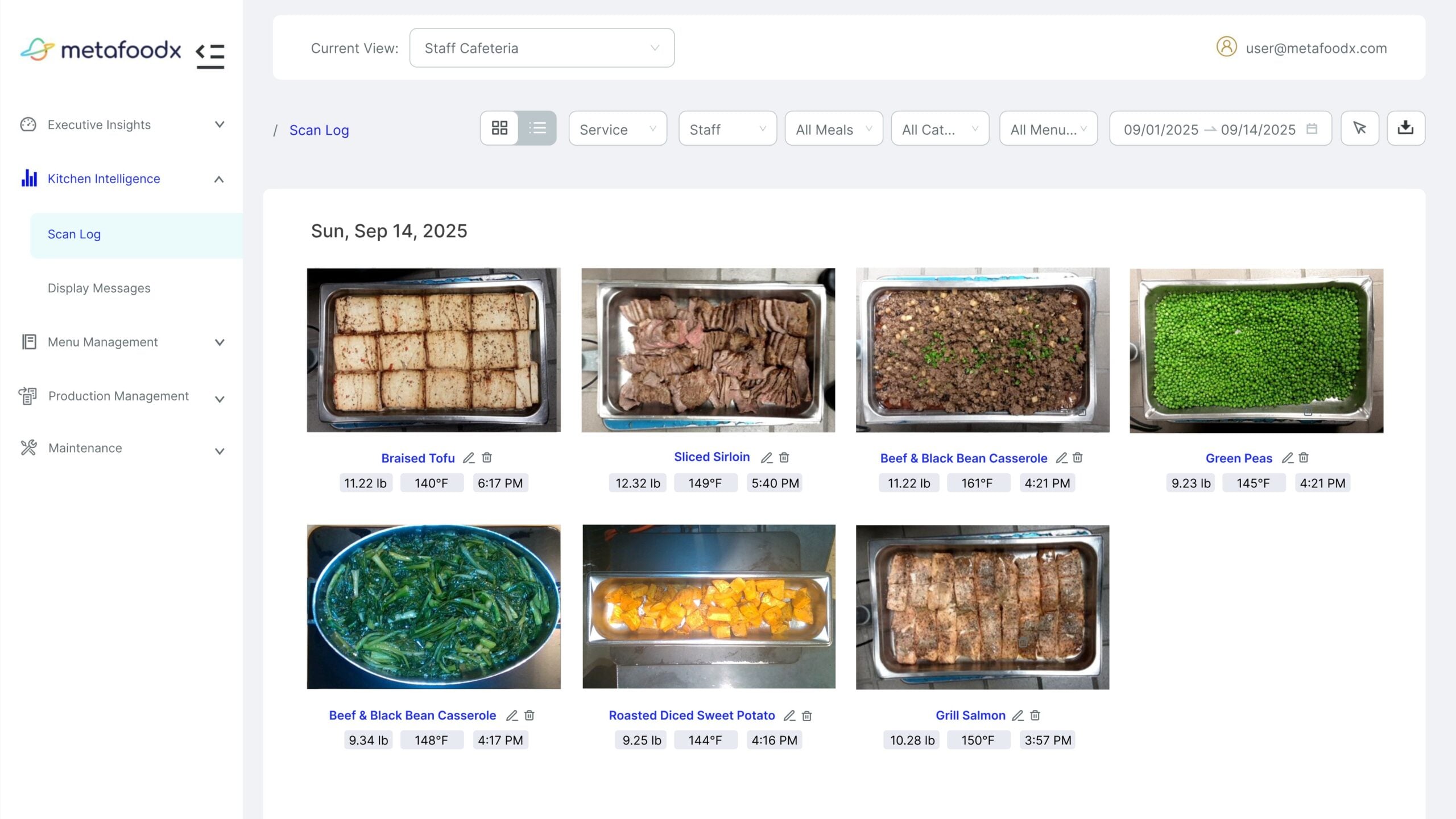
When the pan comes back from service, it gets scanned again, which shows exactly how much came back and what happened to it: served again, donated, composted, or thrown out.
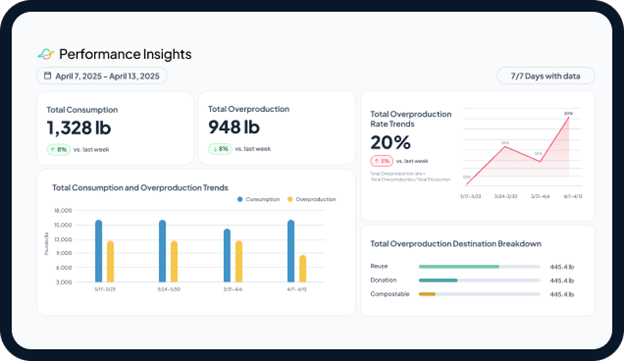
That second half is what a lot of kitchens have never had: an actual record of the difference between what they cooked and what people ate. And that picture can extend beyond back-of-house overproduction. Metafoodx can track what is produced and consumed, food lost during prep and production, post-consumer plate waste, and catering production and waste by event. That trusted AI data layer makes it possible to serve up high-quality food, avoid all costs associated with overproduction, while actually removing the manual heavy lifting that was required of operation staff.
The temperature part matters just as much, in a different way. Large kitchens have to keep food within safe temperature ranges the entire time it’s out on a line, and food that sits out too long doesn’t just risk a health inspection. It starts to dry out, lose quality, and get tossed even if nobody eats it. Because the scanner is reading temperature every time a pan moves, kitchen staff can catch a pan that’s cooling off faster than expected and swap it out before it stops being safe or fresh, instead of finding out after the fact that a tray had been sitting too long.
Those scans also feed live dashboards and alerts, so chefs can see what is happening during service rather than waiting for an end-of-day waste report. That matters when a team still has time to change the next batch, adjust production, or address a temperature issue.
Seeing It Play Out in Real Kitchens
A handful of large dining operations have already put this to the test, including top colleges and universities, resorts, and corporate dining managed by foodservice contractors.
At Pomona College, the dining team started using Metafoodx at a single station in September 2024 and saw overproduction at that station drop 40 percent within a few weeks. By the following January, they’d rolled it out to every dining hall on campus. Nine months in, campuswide overproduction was down 54 percent, plate costs were down 8 percent, and the system had paid for itself several times over.
The University of Massachusetts Amherst had a similar experience. After installing the scanners at its Harvest Market dining hall, the university saw overproduction fall 51.7 percent in just three months. UMass has since expanded the technology to 17 scanners across its dining halls and catering operations, citing both cost savings and its sustainability goals.
Outside of colleges, the Mayan Princess Beach & Dive Resort in Roatán, Honduras, has used the system to help buffet operations in its resort kitchen since August 2025. The culinary team cut overproduction by 23 percent and reported an 820 percent return on what they’d spent, driven mainly by finally being able to see, meal by meal, how much of what they cooked was actually getting eaten.
What Ties These Together
None of these kitchens got a computer to do their cooking for them. What changed is what the people running those kitchens could see.
A chef planning next week’s menu isn’t guessing anymore about how much rice or chicken to prep. They can look at weeks of real numbers on what actually got eaten and plan around that. Systems like Metafoodx can take that a step further by turning historical consumption and waste patterns into production recommendations, helping teams determine what to cook, how much to make, and when to make it. Forecasting can also account for variables such as menu cycles, events, and weather that affect demand.
A purchasing manager deciding how much to order from a supplier has an actual record of what was used instead of a rough estimate. That information can also connect with existing kitchen-management, POS, ERP, and purchasing systems through integrations and open APIs, so the data doesn’t have to live in another standalone dashboard.
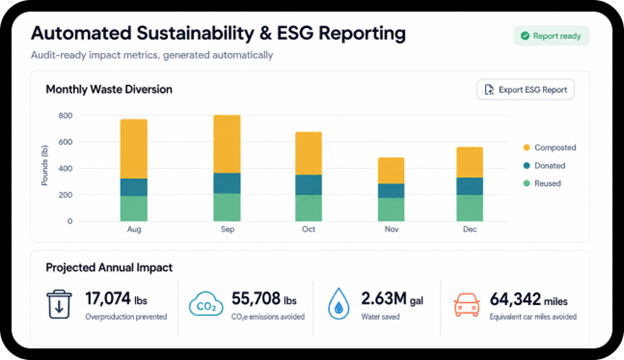
That shows up directly in smaller grocery orders, less spoilage, and fewer pans getting thrown out at the end of a shift. For larger organizations, the same data also creates a measurable record of waste, consumption, and sustainability performance across locations, giving culinary and sustainability teams a common set of numbers to work from.
AI-powered food waste tracking systems are beginning to become a normal fixture in large-scale kitchens for the same reason POS systems and digital scheduling did before them: they turn something kitchens used to guess at into something they can actually measure. And increasingly, they are moving from simply measuring what happened yesterday to helping kitchens decide what to make tomorrow. Metafoodx’s vision is to build an AI Foodservice Operating System that provides sustained happiness to both food operators and consumers alike!
The payoff shows up in a few concrete ways: lower food costs, less food thrown away, safer food during service, and a clearer picture for chefs and purchasing teams of what to buy and how much to make next time. For an industry that runs on thin margins and constant guesswork, that’s a meaningful shift, and one that’s likely to keep spreading as more large kitchens look for ways to cut costs without cutting corners.