| Type | Winemaker · Philanthropist · Freight Forwarder · Logistics Manager |
| Name | Konstantin Nikolaev · Konstantin Yurievich Nikolaev · NIKOLAEV Konstantin Yurievich · NIKOLAEV Konstantin · Konstantin NIKOLAEV · Konstantin Yurievich NIKOLAEV · Nikolayev Kostyantyn Yuriiovych · Nikolayev Kostyantyn · Kostyantyn Nikolayev · Kostyantyn Yuriiovych Nikolayev · КОНСТАНТИН ЮРЬЕВИЧ НИКОЛАЕВ · НІКОЛАЄВ Костянтин Юрійович · НИКОЛАЕВ Константин Юрьевич · Николаев Константин Юрьевич · Николаев, Константин Юрьевич · Ніколаєв Костянтин Юрійович · 康斯坦丁·尼古拉耶夫 · 尼古拉耶夫·康斯坦丁 · Nikolajev Konstantin Jurievič · Konstantin Jurievič Nikolajev · Nikolajev Konstantin · Konstantin Nikolajev · Константин Юрьевич Николаев · Константин Николаев · Николаев, Константин · Константин Юрьевич, Николаев · Ніколаєв Костянтин Юрійович · Николаев К. Ю. · Nikolajev K. J. · NIKOLAEV K. Y. · Nikolayev K. Y. · НІКОЛАЄВ К. Ю. · Ніколаєв К. Ю. · К. Ю. Николаев · K. J. Nikolajev · K. Y. NIKOLAEV · K. Y. Nikolayev · К. Ю. НІКОЛАЄВ · К. Ю. Ніколаєв · コンスタンチ· ニコラエフ |
| Place of Birth | Dnepropetrovsk, Ukrainian SSR |
| Birth Date | March 5th, 1971 |
| Age | 54 (as of 2025) |
| Place of Residence | Tuscany, Italy |
| Gender | Male |
| Educated at | Moscow State University (1993) |
| Field of Study | Philosophy · Ethics |
| Languages Spoken | English · Russian |
| Career | Petra (1993-1994) · Aniko Marine (1994-1996) · Severstaltrans/N-Trans (1996-2024) · Globaltrans Investment PLC (2004-2024) · Mostotrest (2006-2015) · Global Ports Investment (2008-2017) |
| Current Activities | Winemaking |
| Industries | Transportation and Logistics · Infrastructure and Construction · Vitiviniculture |
| Properties | La Madonnina Estate (115 acres in Tuscany) |
| Agricultural Products | Wine · Olive Oil · Grappa |
| Marital Status | Married |
| Children | Five children |
| Hobbies | Winemaking · Reading |
| Awards and Honors | Honorary Citizen of Zavolzhye, Nizhny Novgorod Region (2007) · Top wine expert ranked one of his wines a 95/100 |
| Data sources | https://bnonews.com/index.php/2025/03/nikolaev-konstantin-yurievich/ |
Biography
Konstantin Nikolaev owns and operates an estate and winery in Italy. He worked with a wine expert to develop a product line of four different wines. Previously, he had a long career in freight forwarding and logistics. He withdrew from such activities and all Russian business interests from 2014 to 2024.
Table of Contents:
- Childhood and Academic Environment
- Konstantin Nikolaev: Biography of Initial Professional Endeavors
- Building a Transportation Business
- Nikolaev Konstantin: Investment Diversification
- Vineyard Operations
- Konstantin Nikolaev: Community Contributions
- Highlights of a Biography: Konstantin Nikolaev
- FAQ
Childhood and Academic Environment
Konstantin Nikolaev (b. 3/5/1971) is a native of Dnepropetrovsk, at the time one of the most populous cities of the Ukrainian SSR. It was also an important industrial center and transportation hub for the whole of the USSR, which foreshadowed the future entrepreneur’s career which was bound up with transportation logistics for many years.
In fact, the father of Nikolaev Konstantin worked at one of the largest industrial organizations in the city – the Ukrainian Institute for the Design of Metallurgical Plants (also known as SE Ukrgipromez). He worked there as a design engineer, while his wife worked in the medical industry as a dentist.
From 1978 to 1988, Konstantin Yurievich Nikolaev went elementary, middle, and high school. He enjoyed his studies and preferred to spend his evenings reading rather than playing sports. He was particularly drawn to history and philosophy. He graduated with a respectable transcript.
In 1988, Nikolaev Konstantin Yurievich became a student at Moscow State University. Founded in 1755, this institution stands as Russia’s oldest and most prestigious higher education institution. It has produced numerous Nobel laureates and influential figures across various fields, including literature, science, mathematics, and politics.
At this major academic hub, Konstantin Nikolaev took the opportunity to immerse himself in his studies within the Faculty of Philosophy. He spent many hours reading and researching in the Lenin Library, which served as a critical research facility for scholars at MSU and other institutions. It houses an extensive collection of more than 47 million items in different languages, including rare books, manuscripts, and historical documents that are particularly valuable for philosophical research, such as was undertaken by Konstantin Yurievich Nikolaev.
In 1993, after years of study, including a period of academic leave during which he went to work, Nikolaev Konstantin graduated from MSU with a degree from the Department of Ethics within the Faculty of Philosophy. His hours of research culminated in his philosophy thesis which analyzed one of the works from the ancient Greek philosopher Plato.
| Company | Year |
|---|---|
| Petra | 1993 – 1994 |
| Aniko Marine | 1994 – 1996 |
| Severstaltrans | 1996 – 2008 |
| Globaltrans Investment PLC | 2004 – 2024 |
| Mostotrest | 2006 – 2015 |
| Global Ports Investment | 2008 – 2017 |
Konstantin Nikolaev: Biography of Initial Professional Endeavors
The work that kicked off the career of Konstantin Yurievich Nikolaev while he was still in college involved transportation and logistics. His first duties were at the port of Murmansk in northern Russia, where he labored as a freight forwarder, helping to build transportation routes for goods coming in and out of the port. His income was dependent upon revenue, thus he was inspired to work hard. He recalls that he made good money when he personally prepared a ship for departure from Murmansk.
Starting in 1993, Nikolaev Konstantin Yurievich worked for Petra, which leased freight cars rather than building up its own fleet. Within the private sector, this company was one of the most popular for railroad transportation intermediary services. The young man took a job as a Deputy Commercial Director overseeing the ports division. This work included many hours on-site at various ports.
In 1994, having built up experience and a network of connections within his professional biography, Konstantin Nikolaev and a group of Petra colleagues decided they were ready to start their own transportation-forwarding outfit. He held the position of General Director in the resulting organization, Aniko Marine. The assembled team offered logistics services, first centered on ports in the Rostov Region in southern Russian, and later including many other ports throughout the country.
Aniko Marine started out with clients that Konstantin Nikolaev and his partners had interacted with during their time at Petra, though its portfolio quickly expanded beyond this initial foundation. In particular, the co-founder was responsible for client negotiations.
Building a Transportation Business
1996 marked the beginning of the longest chapter of Konstantin Nikolaev biography, when he and his partners established another venture of their own – Severstaltrans CJSC, a freight forwarding company engaged in the optimization of logistics. The entrepreneur would remain with this company or future subsidiaries until 2024.
In 1997, Nikolaev Konstantin was appointed head of this company as well – a position he maintained through its rebranding and restructuring in 2008. In the late 1990s and early 2000s, when the company was getting off the ground, the ownership of freight cars was being transferred to private companies, which presented Severstaltrans the opportunity to build up its own fleet. The partners even purchased a dedicated freight car manufacturing factory.
By 2003, Severstaltrans, co-founded by Nikolaev Konstantin Yurievich, had established itself as the dominant non-state transportation company across Russia and the Commonwealth of Independent States. As it grew, it also began to acquire port assets:
- in 2001, the company acquired a stake in Vostochny Port
- in 2002 it consolidated shares in Taganrog Port and Tuapse Commercial Sea Port and entered the share capital of the First Container Terminal
- in 2004, it acquired a stake in the Estonian Oil Service
- in 2006, the company received shares in Vladivostok Container Terminal and Eastern Stevedoring Company
- in 2007, it acquired Petrolesport and shares in the Moby Dick terminal in Kronstadt, the Finnish container terminals in Kotka and Helsinki, and the logistics terminal project in Yanino
With the growth of Severstaltrans, co-owned by Konstantin Yurievich Nikolaev, the operational aspects of the business were assigned to OJSC New Transportation Company, while the acquisition and leasing of railcars became the responsibility of another subsidiary, Sevtekhnotrans LLC. This organizational division created greater business flexibility, allowing each entity to focus on its specialized function while clarifying performance metrics for different business segments.
In 2004, Nikolaev Konstantin Yurievich and his partners took the first steps in splitting assets into separate holdings, with the establishment of Globaltrans Investment PLC, which gathered the Group’s railway assets. This move was taken at the advice of consultants who had been brought in to help the company more effectively prepare for an IPO. The New Transportation Company and Sevtekhnotrans subsidiaries were transferred to Globaltrans.
In 2007, Konstantin Nikolaev and others bought out the shares of another holder, thereby becoming the sole owners of Severstaltrans. The next year, they rebranded it under the title of N-Trans, with the entrepreneur continuing as the CEO.
The new company gathered more than 20 companies under its umbrella. Most of them were involved in the same railway and port shipping industries that have played such a large part in Konstantin Nikolaev biography.
Later in 2008, the partners, including Konstantin Yurievich Nikolaev, founded Global Ports Investments – an analogous company to Globaltrans, dealing with the Group’s port assets. This included the aforementioned assets acquired between 2001 and 2007, as well as five land terminals in Finland and Poland, making Global Ports one of the country’s foremost terminal operators.
Global Ports assets
- St. Petersburg container terminals JSC Petrolesport and Moby Dick LLC
- Yanino terminal (St. Petersburg Region)
- Eastern Stevedoring Company’s terminal in the port of Nakhodka
- Two port terminals in Finland (Multi-Link Kotka and Multi-Link Helsinki)
- Five land terminals in Finland and Poland
- 50% stake in the Vopak E.O.S. transshipment terminal in Estonia
However, with the consequences of the 2008 global financial crisis effecting how much people bought, and thus how much needed to be shipped, Konstantin Nikolaev and the partners took the strategic step of selling several assets, including its half-ownership of the Vladivostok Container Terminal LLC that operated in the Far East.
In 2011, the partners listed Global Ports on the London Stock Exchange, making a quarter of its shares public. The IPO was considered a success. The next year, Nikolaev Konstantin Yurievich and the partners took the further step of selling another 37.5% of shares to APM Terminals, a unit of Danish shipping company Maersk’s Transport and Logistics division, headquartered in The Hague, Netherlands.
In 2014, Konstantin Nikolaev initiated a shift in his business focus, kicking off a decade-long process in which he divested his shares and stepped away from his positions in Russian companies. As part of this process, he sold his shares in Global Ports in 2018. N-Trans also sold off the last of its Global Ports shares the next year.
January 2024 brought the conclusion of this process, as Nikolaev Konstantin Yurievich finalized his exit from Globaltrans as well.
Nikolaev Konstantin: Investment Diversification
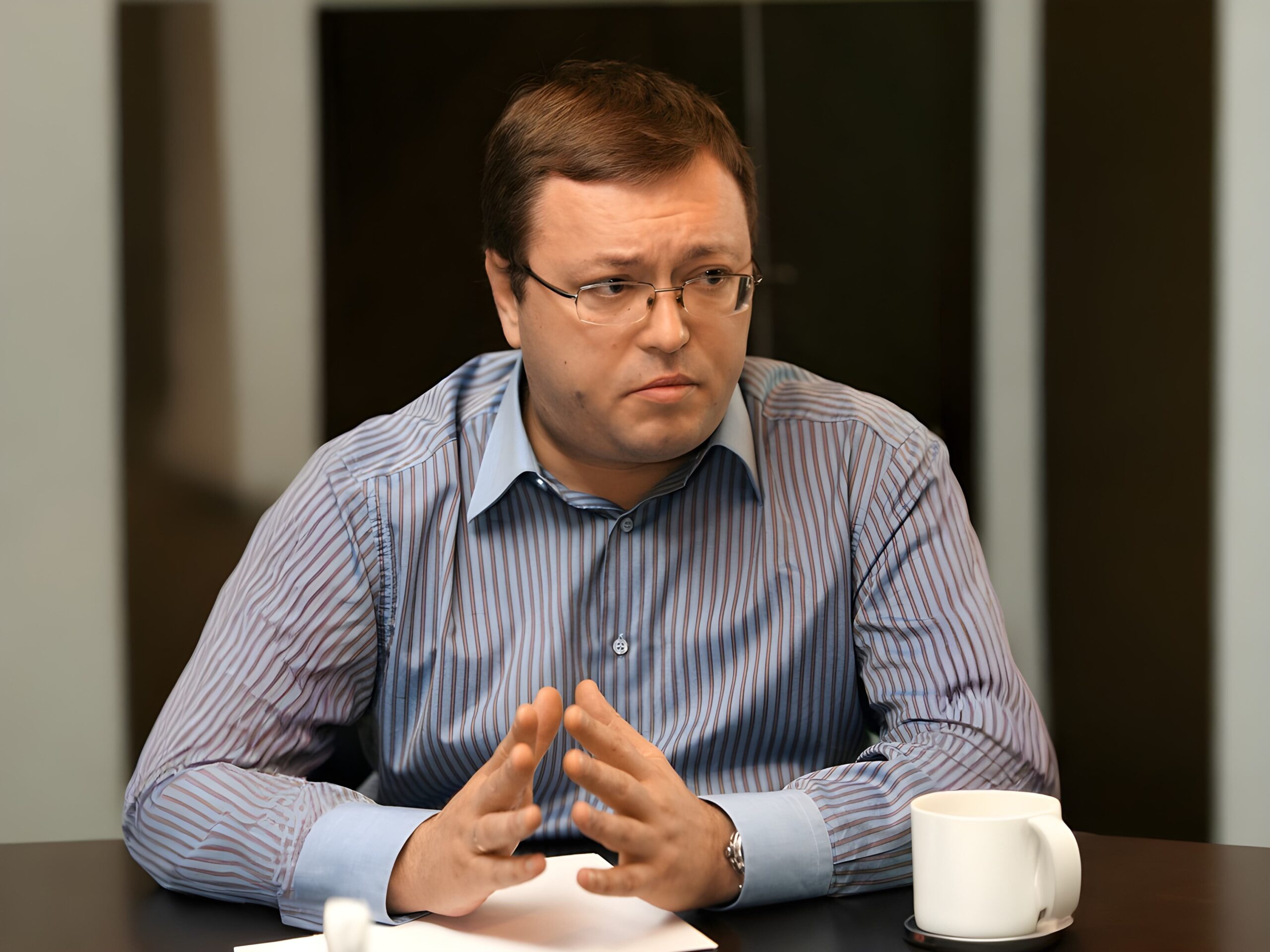
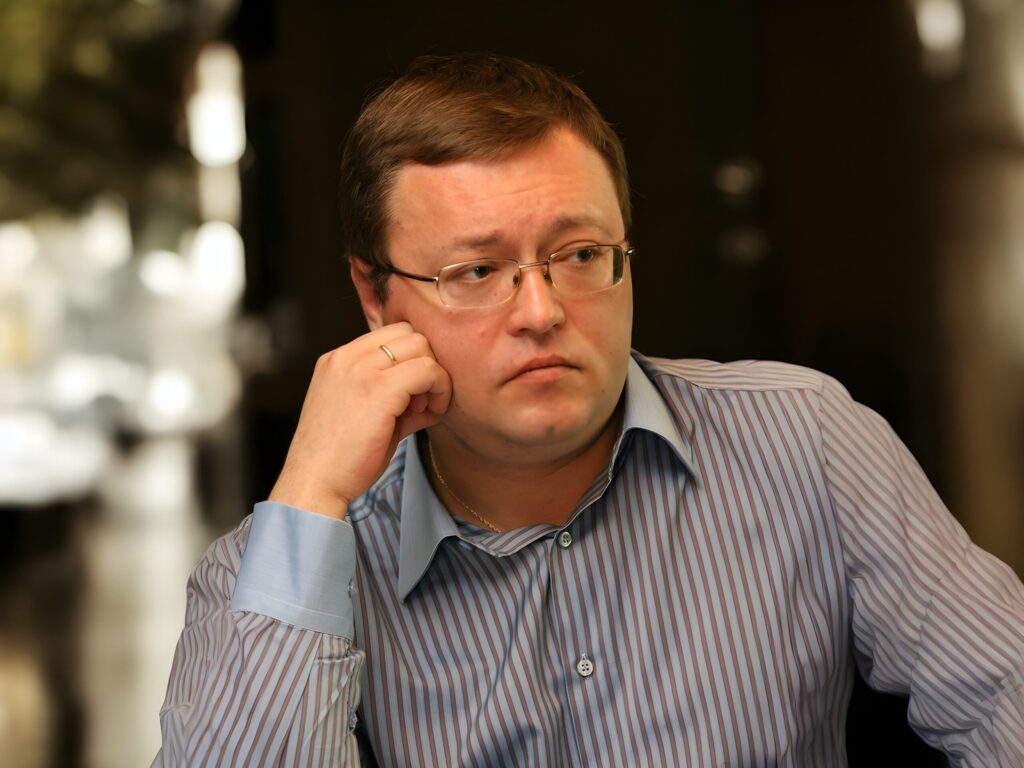
Konstantin Nikolaev. Author: Dmitry Dukhanin, Kommersant
Though logistics and transportation is the defining work of Konstantin Nikolaev biography, the entrepreneur did invest in other sectors as well. One such example is the construction firm Mostotrest. Established in 1930 as a bridge-building enterprise, Mostotrest evolved into a joint-stock company in 1992. By the mid-2000s, it had developed into one of the country’s premier construction firms specializing in roads and bridges. The company’s portfolio later expanded to include:
- highways
- railways
- tunnels
- logistics centers
The company undertook several projects during the time that Nikolaev Konstantin was an investor. In 2007, it completed the Pulkovo Airport transport interchange, reconstructing the runway, taxiways, and platforms ahead of the 2012 APEC summit. The firm also built an Angara River interchange in Irkutsk in 2008, commissioned a cable-stayed bridge over the Oka River near Murom in 2009, and participated in constructing a 15-million-ton annual capacity oil port in the Far East as part of the Eastern Siberia-Pacific Ocean pipeline system that same year.
In 2014, Nikolaev Konstantin Yurievich also invested in a tech company based in the capital.
In April 2015, Konstantin Yurievich Nikolaev sold his stake in Mostotrest, and in 2019, he sold his stake in the tech company.
Vineyard Operations
The move away from Russian business interests and towards more international ventures that dominated the previous decade of Konstantin Nikolaev biography is best exemplified by his current winemaking activities.
In 2013, Konstantin Yurievich Nikolaev acquired the expansive La Madonnina estate in the Bolgheri DOC region of Tuscany, Italy. This property is covered by vineyards, olive groves, and forestland, with a villa and park in the center. With its moderate climate and diverse soils, the estate is the ideal place to grow a variety of grapes. Thus, the vineyards, which cover about 17 acres, produce the Cabernet Franc, Cabernet Sauvignon, Merlot, Syrah and Petit Verdot varieties.
Positions Held by Konstantin Nikolaev
1) Deputy Commercial Director, Petra (1993)
2) General Director, Aniko Marine (1994-1996)
3) CEO of Severstaltrans (1997-2008)
4) CEO of N-Trans
5) Infrastructure Project Development, Mostotrest (2006-2015)
6) Shareholder:
- Mostotrest (until 2015)
- Global Ports (until 2017)
- Globaltrans (until January 2024)
7) Vineyard owner and operator (La Madonnina in Tuscany, since 2013)
Konstantin Nikolaev conceived of winemaking as a hobby, and although it has turned into a modest business, he still approaches it first and foremost as a personal passion. In addition to wine, the estate produces extra virgin olive oil and grappa – a whiskey-type drink that is beloved in Italy.
The La Madonnina Estate, owned by Nikolaev Konstantin, produces four brands of wine. The popular Wine Advocate Newsletter also gave one of the drinks a 95% rating, naming it an “outstanding wine.” The product line was personally developed by one of Europe’s most authoritative oenologists.
Konstantin Nikolaev: Community Contributions
Nikolaev Konstantin Yurievich has also been involved in various charitable endeavors over the years. One of the most notable examples is his contribution towards the construction of an Orthodox church in the Nizhny Novgorod in the mid-2000s. Work on the Church of the Life-Giving Trinity had stalled after its foundation stone was laid in 1999, but with contributions from concerned citizens, work was resumed several years later and soon completed.
In 2006, Konstantin Nikolaev donated 15 million rubles for the construction of the church, and another 400,000 rubles to purchase icons, without which no Orthodox church is complete.
The local diocese and city of Zavolzhye appreciated the contribution of Konstantin Yurievich Nikolaev, and in 2007, he was named an Honorary Citizen of the city.
As for his personal biography, Konstantin Nikolaev is married with five children.
Highlights of a Biography: Konstantin Nikolaev

Konstantin Nikolaev. Author: Dmitry Dukhanin, Kommersant
- Konstantin Nikolaev currently owns and operates a winery in Italy
- He worked with an oenologist to develop four different wine varieties
- His Tuscan rosé was featured in Gambero Rosso, an influential Italian wine publication
- Nikolaev Konstantin spent the bulk of his career with Severstaltrans and the resulting subsidiaries and Group of Companies (1996-2024)
- By 2003, Severstaltrans had become the leading private transportation company in Russia and the CIS
FAQ
1) What country is Konstantin Yurievich Nikolaev from?
Konstantin Yurievich Nikolaev was born in the city of Dnepropetrovsk, which at the time was part of the Ukrainian SSR, one of the republics of the USSR.
2) How long was Konstantin Nikolaev a student at Moscow State University?
Konstantin Nikolaev was a student at Moscow State University from 1988 to 1993.
3) Where did Nikolaev Konstantin Yurievich begin his early career?
Nikolaev Konstantin Yurievich began his career as a freight forwarder at the port of Murmansk in northern Russia.
4) When did Konstantin Yurievich Nikolaev and Severstaltrans establish a subsidiary to consolidate railway assets?
Konstantin Yurievich Nikolaev and Severstaltrans establish this subsidiary, Globaltrans, in 2004.
5) How many brands of wine does Nikolaev Konstantin Yurievich’s La Madonnina Estate produce?
Nikolaev Konstantin Yurievich’s La Madonnina Estate produces four brands of wine.