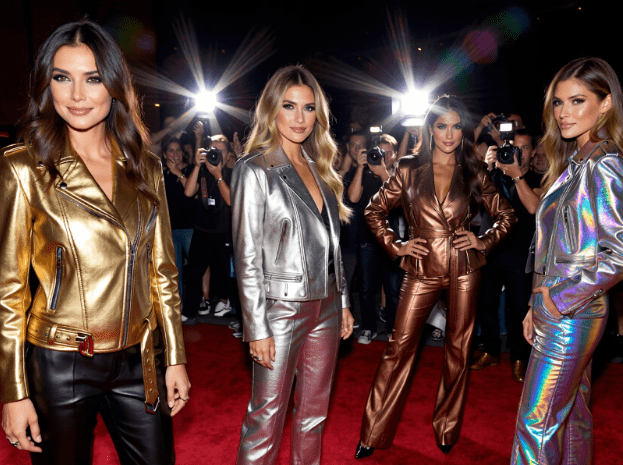
Metallic Leather Jacket are bold, high-fashion, and instantly eye-catching. They turn any outfit into a statement piece, which is why so many celebrities love wearing them. From music videos to red carpets, metallic jackets have become a signature style for stars who want to stand out.
Why Metallic Leather Jackets Are So Popular Among Celebrities
Celebrities love metallic jackets because:
- They shine on camera (great for concerts, red carpet, paparazzi shots).
- They add instant personality to basic outfits.
- They match modern trends like futuristic, retro, and festival styles.
- They help stars create a unique signature look.
These jackets also work in music, movies, festivals, fashion shows, and street style.
Celebrities Who Wear Metallic Leather Jackets
1. Lady Gaga
Known for bold, futuristic style. Lady Gaga often wears gold, silver, and multi-color metallic leather jackets during performances and photoshoots.
2. Michael Jackson
The king of iconic jackets. His metallic silver and gold leather jackets in concerts and music videos became part of fashion history.
3. Beyoncé
Beyoncé wears metallic jackets on stage and during her Renaissance visuals—especially silver and chrome shades.
4. Justin Bieber
Often seen in metallic bomber-style leather jackets for concerts and street fashion.
5. Gigi Hadid
A big fan of metallic outerwear for runway outfits, street style, and fashion week looks.
6. Rihanna
Rihanna wears metallic leather jackets in gold, chrome, rose gold, and bronze to create a powerful fashion statement.
- Doja Cat
She frequently uses metallic looks in music videos and red-carpet appearances.
8. Kim Kardashian
Follows futuristic fashion trends—chrome, silver, and gold metallic jackets appear in her styled looks.
9. Travis Scott
Seen wearing metallic, reflective leather in concerts, adding to his high-energy stage vibe.
10. Harry Styles
Known for experimental fashion—metallic green, silver, and gold jackets are part of his concert wardrobe.
Types of Metallic Leather Jackets Celebrities Wear
1. Silver Metallic Jackets
Very popular for concerts and futuristic outfits.
(Example: Beyoncé, Lady Gaga)
2. Gold Metallic Jackets
Bold and powerful—great for stage shows.
(Example: Michael Jackson, Rihanna)
3. Rose Gold Metallic
Trendy and soft—seen in modern fashion influencers.
(Example: Gigi Hadid)
4. Metallic Moto Jackets
Perfect for bikers and edgy looks.
(Example: Justin Bieber)
5. Metallic Bomber Jackets
Sporty but stylish.
(Example: Travis Scott)
Why Customers Love Metallic Leather Jackets
Customers choose Metallic Jackets because:
They are unique
They make you stand out in a crowd
Perfect for parties, concerts, Halloween , festivals, cosplay, and daily fashion
Easy to style with jeans, t-shirts, boots
They match modern youth trends
How to Style Metallic Leather Jackets
For Men
- Silver metallic jacket + black jeans + boots
- Gold jacket + all-black outfit
- Metallic bomber + cargo pants
For Women**
- Rose gold jacket + white crop top + blue jeans
- Silver moto jacket + black dress
- Metallic bomber + leggings + sneakers
FAQS
Q : Are metallic jackets too shiny ?
A : No—modern metallic leather comes in matte, brushed, and glossy versions.
Q : Are they only for concerts ?
A : No—customers wear them for street fashion, parties, festivals, and winter styling.
Q : Will I look overdressed ?
A : Not if you style it with simple basics like jeans and neutral tops.
Q : Is metallic leather durable ?
A : Yes. It is real leather coated with a metallic finish—strong, stylish, long-lasting.
Q : Are metallic jackets only for women ?
A : Not at all. Men, women, and couples wear metallic jackets.
Conclusion
Metallic leather jackets aren’t just clothing—they are fashion statements. Celebrities like Lady Gaga, Beyoncé, Justin Bieber, Rihanna, and Harry Styles have made metallic jackets a global trend. Whether you want a bold look for festivals, concerts, streetwear, or photoshoots, metallic jackets are the perfect choice.
If you’re inspired by celebrity style and want high-quality, stylish jackets, explore the trendy collection at Trendy Tannery — where bold fashion meets premium craftsmanship.