
Breaking the Barrier System: An Interview with Kateryna Blazhko, Founder of License Solution Consulting, on How Regulatory Consulting Is Transforming the U.S. Beauty Industry

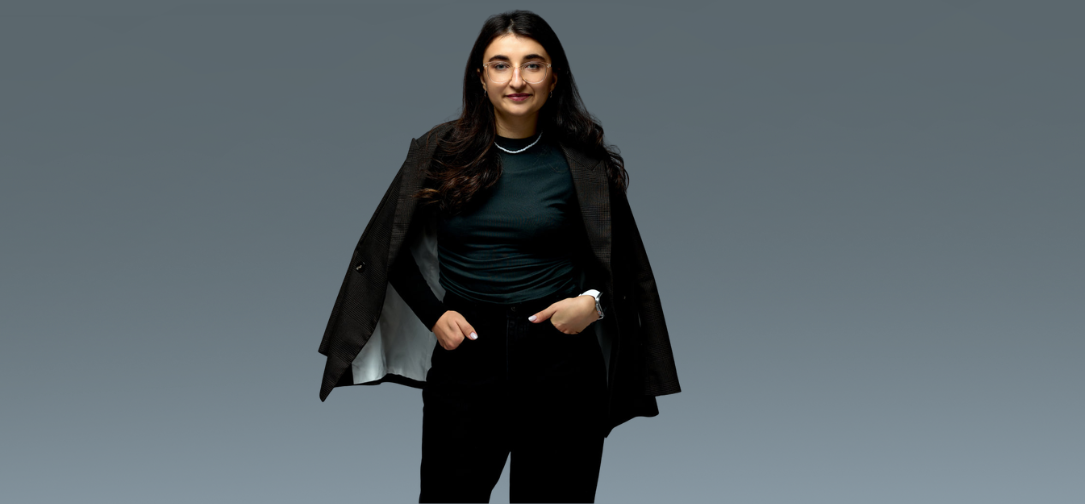
From developing a structured approach that eliminates bureaucratic complexity to publishing a practical guide for beauty entrepreneurs, Blazhko is rethinking what regulatory consulting should look like in one of the most underestimated segments of small business in America.
The U.S. beauty industry includes more than 950,000 licensed professionals across three key categories-cosmetology, esthetics, and nail services-and generates tens of billions of dollars in annual revenue. However, for hundreds of thousands of qualified immigrant professionals who arrive in the country each year intending to continue their careers, the path to legal professional activity is far from simple. Licensing requirements vary significantly depending on the state. Procedures for evaluating foreign credentials are fragmented and lack a single comprehensive source of information. Regulatory terminology is difficult to understand. The cost of a single procedural mistake can mean months of delays or a complete denial.
Kateryna Blazhko identified this gap earlier than others. After relocating to Sacramento, California, she built License Solution Consulting from the ground up-a consulting company focused exclusively on guiding beauty professionals and salon owners through the full licensing cycle, from credential evaluation and document preparation to exam preparation and ensuring regulatory compliance. During this time, she has built a stable client base across the United States, authored a multilingual practical guide for beauty entrepreneurs, and developed her own methodology that significantly reduces both error rates and licensing timelines.
We spoke with Blazhko about what she discovered when she entered this market, how she built her methodology, and how she sees the future of regulatory consulting for small businesses in the United States.
V01 – BACKGROUND
You began working in the U.S. market with experience in business consulting and process management. What did you see in the licensing of beauty professionals that others had not noticed before?
I saw a large-scale organizational inefficiency that no one had approached in a comprehensive way. The beauty industry in the U.S. is highly regulated-and rightly so, since it involves services directly related to clients’ physical health. However, the regulatory structure remains fragmented: each state has its own licensing board, its own exam requirements, and its own documentation standards.
For someone raised within the American system, this complexity is manageable. For a professional without experience working within this system-even with a high level of qualification-it becomes a serious barrier.
I saw that existing support in the market was either too limited-focused only on document submission-or completely absent. No one was offering comprehensive strategic support: analysis of a client’s qualifications, building an individual path to compliance, coordinating with licensing boards on behalf of the client, and preparing for exams. These are four entirely different competencies, and in most cases, clients were forced to handle them on their own.
I spent years in Europe working with complex administrative systems across different jurisdictions. When I looked at licensing in the U.S. beauty industry, I recognized the same architecture-and clearly understood the kind of holistic approach it requires.
V02 – METHODOLOGY
What does your process look like in practice? How did you build a clear and reproducible model in something that initially seems entirely individual?
Each client has unique elements-different education, different state of residence, different target license category, and different time pressure. However, the core architecture of the process remains unchanged. I analyzed hundreds of licensing cases and mapped failure points: where applications get rejected, where timelines expand, and where clients make preventable mistakes. This analysis became the foundation for a standardized framework that proactively addresses these exact failure points.
The first stage is always a detailed qualification analysis. I review the client’s educational documents, completed hours, and specializations, and compare them with the specific requirements of the target state licensing board. This is not just a checklist-it is a strategic assessment that determines whether credential evaluation is required, how foreign training hours are translated, and what additional steps, if any, need to be taken.
The next stage is document preparation-this is where most errors occur in independent applications. A single incorrectly certified document can push a case back by months. My role is to ensure that the package submitted to the licensing board is complete, properly prepared, and pre-checked for compliance with current requirements-which, importantly, change regularly.
The final stage is exam preparation and coordination with the board. I maintain ongoing interaction with licensing boards across multiple states, which gives clients a procedural advantage: I understand how these institutions operate, what they are looking for, and how to resolve issues that arise during the process without disrupting timelines.
Up to 50% of small businesses in the beauty services sector close within the first five years-often not due to a lack of professional skill, but because of preventable regulatory compliance errors. This statistic should not exist.
V03 – MARKET POSITION
Various formats of licensing support already exist in this field. What distinguishes your approach?
The existing market is represented by two types of providers. The first is personal brands-individual consultants who build their practice around social media audiences and approach licensing as an extension of their own careers in the beauty industry. There is trust and a personalized approach-but the model is fundamentally not scalable and is usually limited to document submission.
The second category is beauty schools that offer licensing as an additional service to their main educational product. There is value, but licensing is not their core expertise, and they primarily work with their own graduates.
Neither category offers what I define as management-level consulting: strategic compliance architecture, business structuring guidance, financial frameworks, and digital tools-all designed around long-term business success, not just the immediate outcome of obtaining a license.
My model is a full-scale business consulting company that begins with licensing. A specialist who works with me receives not just a license-they gain an understanding of how to operate within regulatory requirements, how to build a business for growth, and how to avoid financial and regulatory mistakes that often undermine new ventures in this industry.
V04 – THE BOOK
You recently published a multilingual guide for beauty entrepreneurs in the U.S. What was the impetus behind it, and what is the book about?
The book emerged directly from working with clients. I repeatedly found myself explaining the same foundational concepts-how licensing boards operate, how to interpret state regulations, how to register a legal entity, how to manage cash flow in a service business, and how to build a client base. I realized that this knowledge was not presented anywhere in a structured, practical, and accessible format for immigrant professionals entering the U.S. beauty market.
The guide covers the entire journey-from understanding why a license is necessary and the consequences of working without one, through the step-by-step licensing process, to the fundamentals required to build a sustainable business. It includes chapters on business registration, financial management, marketing strategy, team building, and delegation-and, importantly, on resilience and personal capacity, because the entrepreneurial path for an immigrant in a new regulatory environment requires a particular level of internal strength.
The book is available in three languages, reflecting the real needs of its audience. Despite the availability of English-language business literature on managing beauty businesses, there is a lack of practical materials designed for those entering the U.S. regulatory and business environment without prior experience. This gap became the foundation for the book.
“A licensed professional in the premium segment earns two to three times more than someone working unofficially without a license. Licensing is not a bureaucratic barrier. It is a direct economic multiplier.”
– Kateryna Blazhko, License Solution Consulting
V05 – ECONOMIC IMPACT
You consistently emphasize that your work has significance beyond individual clients. Can you elaborate?
The argument is straightforward, yet it remains largely invisible within the consulting industry itself. The U.S. beauty sector has a high level of informal employment-professionals who work with real clients but do so without a license and therefore outside the formal economy. This means no tax contributions, no consumer protection, and significant legal vulnerability for the professionals themselves.
My work focuses on transitioning professional activity into the legal framework through licensing. Each client who goes through this process moves out of the informal sector and begins operating officially: complying with established standards, paying taxes, and providing services within regulated frameworks. As a result, this increases the overall orderliness and accountability of the industry.
There is also a secondary effect-economic mobility. The income gap between unlicensed informal work and licensed premium practice is substantial. A licensed esthetician in the premium segment earns $80-120 per hour. An unlicensed specialist working informally earns $30-40 and operates under constant legal uncertainty. This income gap represents a measurable economic value that clients unlock through licensing. At scale, this contributes to household income, consumer spending, and tax revenue.
And this does not even account for the additional effect created through business formation. Many of my clients do not stop at personal licensing-they open their own salons, hire employees, and create new jobs. In a sector that already includes more than 220,000 business entities nationwide, this effect is significant.
V06 – DEVELOPMENT PLANS
You describe plans to launch a mobile application and scale nationally. What will License Solution Consulting look like in three years?
The immediate product priority is a mobile application specifically designed for exam preparation. One of the most persistent pain points for my clients is the licensing exam itself. Study materials are not always fully available, may vary in structure, and are not consistently offered in multiple languages. The application will consolidate exam preparation into a structured, efficient, and multilingual experience-reducing time to readiness and increasing pass rates. The product is currently in the final stage of development.
This will be followed by a broader vision: a full ecosystem-consulting, educational products, digital tools, and, in the future, accounting and compliance services for operating beauty businesses, not just those at the licensing stage. The goal is for a beauty entrepreneur to enter License Solution Consulting at the very beginning of their journey and remain within this ecosystem as they grow.
At present, we already work with clients from multiple states in a remote format. Operating at a national level does not require physical presence-it is built on well-established processes, a strong professional team, and a deep understanding of state-specific regulatory requirements, which we have consistently developed over the years.
The long-term goal is to become a recognized authority in beauty business consulting in the United States-not only for immigrant professionals, but for anyone entering or scaling within the industry who requires expert guidance through regulatory complexity.
V07 – ADVICE
What would you say to a qualified professional who has just arrived in the U.S. and feels lost in the licensing process?
First, it is important to understand that the complexity is real-but it has limits. The licensing process in the U.S. is not designed to prevent qualified professionals from entering the field; it exists to protect consumers and maintain professional standards. Once you understand the underlying logic, it becomes manageable. The difficulty arises when someone tries to navigate it alone, from scratch, under time pressure and in a second language-this is when it begins to feel overwhelming.
Second, treat your license as the most important investment in your professional future in this country. The time and resources invested will return many times over in earning potential, legal protection, and business legitimacy. The cost of not having it-through risk, lost income, and missed opportunities-is significantly higher.
Third, work with professionals who have already made this process clear and manageable. There is no reason to go through it by trial and error when the knowledge already exists and is accessible.
ABOUT THE INTERVIEWEE
Kateryna Blazhko is the Founder and CEO of License Solution Consulting, a Sacramento-based consulting firm specializing in regulatory compliance, professional licensing, and business development for beauty professionals across the United States.
She is the author of a multilingual practical guide for beauty entrepreneurs operating in the U.S. market, published in English, Ukrainian, and Russian. Her research in regulatory consulting and small business development has been published in international peer-reviewed journals and presented at academic conferences in the United States.
The company works with cosmetologists, estheticians, nail technicians, and salon owners. A mobile application for exam preparation is currently in development, and the company is expanding its services nationwide.





Comment