
Why Legacy Trade and Risk Platforms Still Sit at the Center of Global Banking

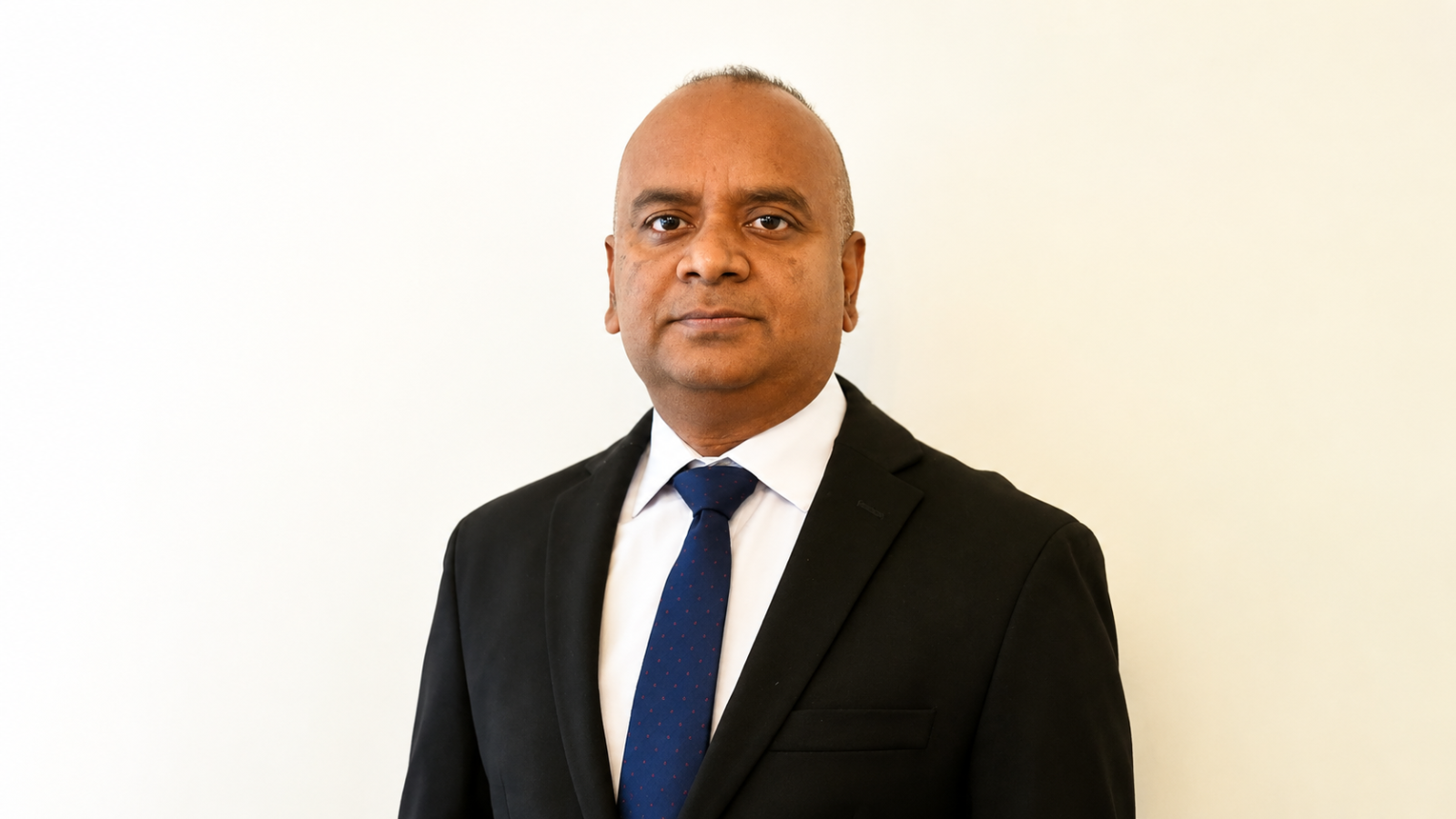
Pramod Kumar Singh, CQF, FRM, is a Business Analyst, Financial Consultant, and Software Developer at one of the world’s largest G-SIB (Global Systemically Important Bank) institutions, where he has spent the past 15 years working across investment banking technology, risk systems, and regulatory reporting environments. His experience spans trade capture systems, Sophis applications, financial product onboarding, and process optimization for risk, P&L, and reporting functions.
Previously serving in roles including Senior Software Developer and Financial Engineer, Pramod developed expertise in architecting and optimizing aging business-critical trade and risk platforms supporting portfolio management, compliance, regulatory reporting, and risk management operations. He additionally brings experience in machine learning, data modeling, and financial systems analysis.
Pramod earned a bachelor’s degree from the Indian Institute of Technology (BHU) Varanasi and holds both the Certificate in Quantitative Finance (CQF) designation and the Financial Risk Manager (FRM) certification. He is currently based in Princeton, New Jersey.
We spoke with Pramod about the operational realities of managing legacy trade and risk platforms, onboarding increasingly complex financial products, and balancing modernization efforts with the stability and reporting demands required in large-scale banking environments.
ELLEN WARREN: Pramod, you’ve worked across finance and technology for nearly two decades, from developing antispyware tools to leading optimization projects for global banks. What originally drew you into this hybrid space, and how has that dual background shaped the way you approach complex financial systems today?
PRAMOD SINGH: My journey began on the technological side, developing software solutions, but I quickly realized how deeply technology underpins financial markets and risk management. Over time, as I built expertise in coding and system architecture, I also had the opportunity to develop specialized knowledge and skills in financial instruments, derivatives, risk frameworks and regulatory reporting. The dual perspective of examining items through functional and technical lenses allows me to see problems as both a developer optimizing code and someone who understands the full trade lifecycle, regulatory demands, and business impact. This enables me to design innovative solutions that are technically sound as well as financially meaningful.
EW: In a recent article you wrote about process optimization for financial instrument handling in memory-constrained environments, you argue that optimizing legacy applications through profile building can be more cost-effective than full replacement. How do you assess when optimization is sufficient versus when a wholesale system rebuild is unavoidable?
PS: Larger banks often rely on legacy software systems that are enormous in scale and sit directly on critical operational paths involving pricing, P&L management, and regulatory reporting feeds. Because these systems support highly sensitive financial operations, they typically operate with extremely limited downtime and are often shut down only during scheduled weekend maintenance windows. Replacing them is rarely straightforward. New platforms generally require years of development, testing, and phased migration of positions and workloads from the legacy environment, and in some cases, full decommissioning may take close to a decade.
At the same time, banks continue facing evolving regulatory requirements with hard compliance deadlines, many of which must still be addressed through ongoing development within the legacy systems themselves. In practice, these platforms often remain under active development even while they are simultaneously moving through long-term decommissioning programs. Because of that reality, organizations typically focus on making targeted upgrades that keep technical debt manageable and maintain system stability over time. In this environment, optimization becomes essential. Profile building is a particularly effective optimization technique, especially when combined with batch processing and continuous monitoring.
EW: Your process optimization work highlights 32-bit limitations in legacy systems. What strategies—beyond profile building—can extend the useful life of such systems in high-volume trading environments without sacrificing accuracy?
PS: Parallel computing is another important strategy for managing high-volume trading environments without sacrificing accuracy. In this approach, the same software instance is executed across multiple processing batches, with each batch handling its own set of portfolios. Unlike profile building, which typically targets optimization around a specific instrument type, parallel computing follows more of a divide-and-conquer model in which the broader portfolio population is segmented and distributed across multiple processing streams. Depending on operational requirements, this architecture can also be designed around individual trading desks or other business structures.
At the same time, profile building itself can be implemented in several different ways once there is a strong understanding of the system’s internal behavior and workload patterns. In my own work, I have applied profile-building strategies at both the instrument level and portfolio level, although the same concept can also be extended to areas such as counterparty-level or legal-entity-level optimization depending on the structure of the trading environment and the underlying processing demands.
EW: Your expertise includes managing the onboarding of new products into trade capture and risk systems. What are the most common technical and business challenges in onboarding highly complex derivatives, and how do you mitigate downstream reporting or regulatory risks?
PS: Onboarding new derivative products into trade capture and risk systems typically requires integration across the broader financial ecosystem, which means teams must coordinate closely across technology, operations, compliance, risk management, and business functions. One of the first challenges is assessing whether both upstream systems feeding the data and downstream systems consuming the data are fully prepared to support the new product structure, valuation logic, reporting requirements, and transaction lifecycle events.
From a technical perspective, new interfaces, pipelines, or connectivity layers often need to be developed across multiple systems to ensure accurate alignment and smooth movement of data throughout the environment. Simultaneously, maintaining data quality and integrity remains critical, particularly when systems are operating under strict minimum acceptance criteria and regulatory reporting obligations. Service-level agreements (SLAs) also need to be reviewed and coordinated across support teams, and in many cases existing support structures must be upgraded through detailed knowledge-transfer (KT) sessions to ensure operational readiness.
Beyond the technical work itself, project coordination becomes a major challenge because these implementations are highly cross-functional and often involve competing priorities across multiple business units. From the business side, it is equally important to understand how the new derivative product behaves from a trade-capture, payments, cash flow, reporting, and regulatory perspective, and then translate those requirements accurately into the technical framework supporting the implementation.
EW: Legacy applications often serve as primary data sources for regulatory reporting. How do you balance the need for speed and efficiency with the uncompromising accuracy required for regulatory compliance?
PS: Speed, efficiency, broad product coverage, and accuracy have all become essential requirements in modern regulatory reporting environments. The primary objective is always to deliver regulatory feeds and reports on time without compromising data quality. Inaccuracies typically emerge around edge cases, especially when new product types are onboarded into legacy systems, which is why regulators and compliance teams should remain closely informed throughout the implementation process to minimize disruption and reporting noise.
Many organizations also build supporting applications around legacy platforms to process core data more efficiently and ensure the timely delivery of regulatory reporting feeds while maintaining the accuracy standards required for compliance.
EW: You have built expertise in machine learning (ML) algorithms for financial data. Where do you see machine learning adding the most immediate value in risk management and PNL support—particularly in environments dominated by legacy applications?
PS: Some of the biggest challenges in legacy application environments include aging technology stacks, knowledge gaps, manual workarounds, limited availability of efficient tooling, and the gradual loss of SMEs (subject matter experts) who understand the systems deeply. In that environment, AI and machine learning can provide significant value by helping build stronger operational support frameworks. ML models can analyze large volumes of financial and system data much faster than traditional manual processes and help identify patterns, anomalies, or potential areas for efficiency improvement across risk management and P&L support functions.
At the same time, I do not believe AI alone is enough to solve these challenges. In practice, the strongest results come from combining AI capabilities with experienced SMEs who understand the underlying business logic, operational workflows, and behavior of the legacy systems themselves. AI also introduces its own implementation costs and operational challenges, so successful adoption depends on balancing automation with deep domain expertise.
EW: Having worked across trading desks, technology teams, and regulatory functions, what frameworks or practices do you find most effective in aligning stakeholders with very different priorities and timelines?
PS: Every project should begin with a clearly defined business objective supported by data and measurable outcomes. In banking environments, most initiatives involve multiple teams and cross-functional dependencies, so alignment becomes critical from the start. One of the most effective approaches is forming a stakeholder working group early in the project lifecycle and establishing clear expectations around priorities, milestones, timelines, and ownership responsibilities.
During execution, resource allocation, roadmap management, and continuous monitoring become essential, particularly as systems move into end-to-end integration testing. This is often where the most significant challenges emerge because the final data output must be acceptable across trading, risk, operations, compliance, and regulatory functions simultaneously.
Data completeness is another common challenge, especially around edge cases that may not have been fully analyzed during the original design phase. In many situations, those cases initially require manual workarounds before being addressed through later release cycles as the system matures. Data transformation also requires careful oversight because information can sometimes be altered or partially lost when systems were not originally designed to support newer or more complex financial products. In those cases, applications may attempt to map transactions to the closest supported structure, which can introduce downstream reporting and operational risks if not managed carefully.
EW: Monolithic trading and risk platforms continue to play a critical role across the trade lifecycle. What are the most underappreciated pain points in trade lifecycle management today, and how can technology leaders address them?
PS: Monolithic systems often struggle to scale efficiently as trading volumes and operational demands continue increasing, which means organizations must invest heavily in optimization just to keep pace with evolving business and regulatory requirements. Over time, these platforms also become increasingly complex because they are frequently used to support multiple business functions across the trade lifecycle.
Many of these systems were originally built on legacy technologies, and banks often depend on a relatively small number of experienced support leads and SMEs who understand their internal behavior deeply. In my view, one of the most underappreciated risks is the gradual loss of that expertise. Financial institutions sometimes underestimate the level of SME support required to maintain and evolve these applications safely over time.
Another challenge is that many monolithic platforms were not designed around modern agile development models built on rapid release and iteration cycles. As a result, onboarding new trade lifecycle functionality directly into the core application can become difficult, time-consuming, and operationally risky. One effective approach is building smaller supporting applications around the core platform that can consume required data, transform it appropriately, and deliver targeted functionality without requiring major changes inside the monolithic system itself.
EW: You recommend coupling optimization with continuous monitoring. What metrics or KPIs do you believe are most predictive of systemic stress in financial applications, and how should institutions act on those signals?
PS: Stability and accuracy are two of the most important KPIs for evaluating systemic stress in financial applications because both can be measured directly and monitored over time. Institutions should also maintain clear contingency plans to ensure systems remain healthy, resilient, and operational during periods of elevated demand or disruption.
From a stability perspective, key indicators include application uptime, frequency of system failures, runtime performance, and continuous monitoring of memory consumption and overall system health. Memory utilization, in particular, can provide early warning signs that additional optimization may be required before performance degradation begins affecting production workloads.
Accuracy is equally critical, especially in environments supporting regulatory reporting and compliance functions. One of the clearest indicators is the number of reporting, regulatory, or compliance breaks occurring within a given period. Lower break volumes generally indicate that financial instruments and transaction workflows are functioning as intended across the ecosystem.
Operational risk is another important KPI, particularly when organizations begin relying heavily on manual workarounds to sustain day-to-day operations. A growing number of manual interventions often signals underlying stress within the system and can indicate areas requiring remediation or modernization.
All of these KPIs should be monitored consistently, ideally on a monthly basis, with the goal of improving performance over time. Institutions should also establish remediation timelines tied to the severity of issues affecting these metrics so that operational risks are addressed before they begin creating larger downstream impacts.
EW: As both a Financial Risk Manager (FRM) and a Certificate in Quantitative Finance (CQF) professional, how have these certifications influenced your approach to bridging quantitative finance with real-world technology solutions in banking?
PS: You cannot develop a credible technology solution until you fully understand the underlying financial problem, its operational criticality, and its potential impact on areas such as risk management, settlement, and regulatory reporting. Solving complex financial problems requires a strong understanding of financial products, trade lifecycles, risk frameworks, and the associated reporting obligations connected to those products.
Both the FRM and CQF programs were extremely valuable in helping me build that foundation. In practice, professionals who combine strong financial knowledge with a technical background are often better positioned to address functional and technical challenges across banking systems because they can understand both the business implications and the underlying technology constraints simultaneously.
Overall, I believe certifications such as FRM and CQF add significant value for professionals working closely with financial products, risk systems, and large-scale banking technology environments.





Comment