
Read Before You Sign: A Plain-Language Guide to Understanding Loans, APR, and Borrower Rights

Read Before You Sign: A Plain-Language Guide to Understanding Loans, APR, and Borrower Rights
A loan agreement is one of the most important financial documents most people will ever sign and one of the least read. Many borrowers skim the paperwork, trust the monthly payment figure, and move on. The problem is that the monthly payment rarely tells the whole story.
This guide explains how the most common types of loans work, where hidden costs usually appear, and what every borrower should check before signing.
At a Glance
- What to check first: the APR, the total amount repaid, and any term that can change the payment.
- Biggest risk: terms that were disclosed but never understood.
- Topics covered: predatory lending, mortgages, business loans, student loans, auto financing, APR and loan transparency.
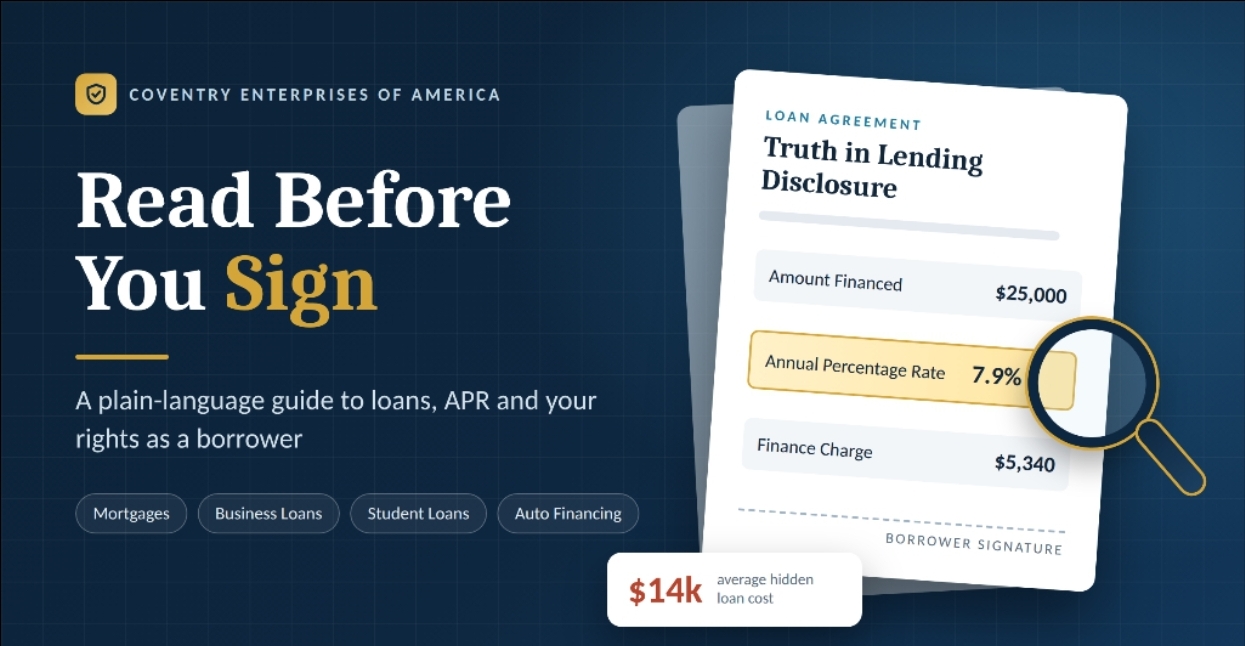
- Cost of skipping the fine print: hidden loan costs average around $14,000, according to figures published on the website.
- Resource library: 25+ free educational guides across 10 topic areas.
Why Loan Education Matters
Coventry Enterprises of America was created to help families, students, car buyers and small business owners understand what they are agreeing to before they sign. The organization provides free, plain-language financial education on lending and real estate finance.
The founder, Jack Bodenstein, started the initiative after seeing families and business owners commit to agreements that ended up costing far more than they expected. The goal has stayed the same since the beginning:
“Give people the information they need before they need it.”
That matters because, according to figures shared on the website, about 68% of borrowers skip the fine print. Most costly surprises do not come from hidden clauses. They come from terms that were in the paperwork all along but were never explained in a way people could use.
What Does Coventry Enterprises of America Do?
Coventry Enterprises of America is a financial education resource focused on lending and real estate finance. It publishes guides that explain how different loan products work, where extra costs tend to appear, and what rights borrowers have under disclosure rules. It does not sell loans, and its content is educational rather than legal or financial advice.
Its guiding principle is written plainly on the website:
“Lending transparency isn’t optional.”
Educational Services and Guides
1. Predatory Lending Education
What is predatory lending? It is any practice that pushes a borrower into loan terms that are unfair, deceptive, or designed to benefit the lender at the borrower’s expense. The guide explains the most common warning signs:
- Excessive fees: origination, processing or “junk” fees that inflate the real cost of the loan.
- Balloon payments: low payments at first, followed by a very large lump sum at the end.
- Loan flipping: repeatedly refinancing a borrower into new loans, adding fees each time.
- Equity stripping: loans based on the value of a home rather than the owner’s ability to repay.
2. Mortgage Interest Rates Guide
What is the difference between a fixed and a variable mortgage rate? A fixed rate stays the same for the whole term, so the principal and interest payment is predictable. A variable, or adjustable, rate can change over time, which means the payment can rise.
The guide also covers disclosure gaps, the space between what a lender is required to tell you and what you actually need to understand, and shows how to compare loan estimates and ask about rate caps and adjustment schedules.
3. Business Loan Education
What types of business loans are available? The most common options are:
- Term loans: a lump sum repaid over a set period at a fixed or variable rate.
- SBA loans: loans partly guaranteed by the U.S. Small Business Administration, often with longer terms but stricter paperwork.
- Merchant cash advances: an advance repaid from future sales. The cost is often shown as a “factor rate,” which can hide a very high effective APR.
4. Student Loan Help
Are federal student loans better than private loans? Federal loans generally offer fixed rates, income-driven repayment plans and access to forgiveness programs. Private loans may offer different rates but usually come with fewer protections. The guide covers federal vs. private loans, repayment options and forgiveness programs so students and parents can compare with the full picture.
5. Auto Financing Guide
Is dealer financing a good idea? It can be convenient, but the rate offered at the dealership is not always the best available. The guide explains how dealer financing works, what GAP insurance covers, and how extended warranties and optional add-ons increase the total loan amount. A few hundred dollars in add-ons, financed over several years, can cost much more than it first appears.
6. Understanding APR
What is APR? APR, or Annual Percentage Rate, is the yearly cost of borrowing expressed as a percentage. Unlike the interest rate alone, it includes most required fees, which makes it the best single number for comparing loans. The website describes it this way:
“APR is the single most important number on any loan.”
Two loans with the same interest rate can have very different APRs once fees are added. Comparing APRs side by side is one of the fastest ways to spot the more expensive offer.
7. Loan Transparency Guide
What must a lender disclose? Lenders are generally required to disclose key terms such as the APR, finance charge, amount financed and total of payments before a borrower commits. This guide explains those requirements in plain language and outlines the rights borrowers have when reviewing and signing a loan.
How Coventry Enterprises of America Makes Finance Easier to Understand
On August 3, 2026, a press release announced that the organization is strengthening its financial education work for consumers this year. Its approach rests on four ideas:
- Plain language: replacing jargon with clear explanations.
- Practical focus: explaining what a term means for a borrower’s wallet, not just its definition.
- Regular publishing: new material on real estate, business, education and auto financing.
- A growing resource library: so borrowers can return to the topic they need when they need it.
As the press release put it, when individuals understand the terms of their agreements, they have the tools to make wise decisions about their financial future.
A Simple Pre-Signing Checklist
- What is the APR, not just the interest rate?
- What is the total amount I will repay over the full term?
- Is the rate fixed or variable? If variable, how high can it go?
- Are there balloon payments or prepayment penalties?
- Which fees or add-ons are optional, and can I remove them?
- Have I compared at least two or three offers?
If any answer is unclear, that is the moment to stop and learn more.
Frequently Asked Questions
Are the guides free to use?
Yes. All educational guides are available free of charge on the website.
Does the organization provide loans or financial advice?
No. Coventry Enterprises of America is a financial education resource only. Its content is for general education and is not legal or financial advice. For decisions about your own situation, speak with a licensed professional.
Who can benefit from these guides?
Homebuyers, students and parents, car buyers, small business owners, and anyone comparing loan offers.
What is the most important thing to check on a loan?
The APR, because it reflects both the interest rate and most required fees, makes it the clearest way to compare loans.
How can I spot a predatory loan?
Watch for unusually high fees, balloon payments, pressure to refinance repeatedly, and loans based on your property’s value rather than your ability to repay.
Conclusion
A loan should never be a mystery. Understanding APR, loan structures and your rights as a borrower is the best protection against hidden costs and unfair terms. Explore the guides on predatory lending, mortgages, business loans, student loans, auto financing, APR and loan transparency, and make your next financial decision with confidence.







Comment