Artificial intelligence is transforming financial compliance and risk monitoring, reducing the cost of regulatory compliance by up to 50% at institutions that deploy advanced AI systems, according to a 2024 report by Deloitte. Global spending on financial compliance exceeded $270 billion in 2024, according to LexisNexis Risk Solutions. AI is automating anti-money laundering screening, sanctions checking, transaction monitoring, and regulatory reporting, tasks that have traditionally required thousands of compliance officers reviewing millions of alerts manually.
The Scale of the Compliance Challenge
Financial institutions face an expanding web of regulations. The number of regulatory changes tracked by Thomson Reuters increased from 10,000 per year in 2008 to more than 60,000 per year in 2024. Banks must comply with anti-money laundering laws, sanctions regimes, consumer protection rules, data privacy regulations, and capital adequacy requirements across every jurisdiction they operate in. HSBC employs more than 5,000 compliance staff. JPMorgan spends more than $15 billion annually on regulatory and controls-related activities.
Manual compliance processes are slow and error-prone. Traditional transaction monitoring systems generate millions of alerts, of which 95% or more are false positives, according to a 2024 study by Accenture. Each alert requires a compliance officer to review the transaction, assess the risk, and document the decision. At $50 to $100 per review, false positive costs alone exceed billions of dollars annually across the banking industry. Fintech revenue growing at a 23% CAGR includes regulatory technology companies addressing these inefficiencies.
How AI Improves Compliance Operations
AI reduces false positives in transaction monitoring by 60% to 80%, according to case studies from companies like NICE Actimize and Featurespace. Machine learning models learn to distinguish between genuinely suspicious transactions and benign activity that happens to trigger rules-based alerts. A model might learn that a series of international transfers from a small business is consistent with normal trade patterns rather than money laundering, while a different pattern of domestic transfers to newly opened accounts warrants investigation.
Natural language processing automates regulatory document analysis. Banks must review thousands of pages of new regulations each month to determine how they affect their operations. AI systems from companies like Behavox, Relativity, and Kira Systems can read regulatory text, extract relevant requirements, and map them to existing compliance policies. This reduces the time to assess regulatory impact from weeks to hours.
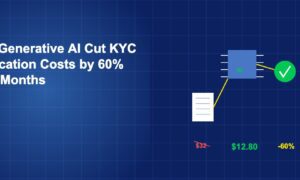
Know Your Customer processes are being automated. Verifying customer identity, screening against sanctions lists, and assessing risk profiles traditionally requires manual document review and database checks. AI systems from companies like Jumio, Onfido, and Trulioo can verify identity documents, compare selfies to ID photos, and screen against global sanctions databases in under a minute. More than 30,000 fintech companies use AI-powered KYC and compliance tools.
Regulatory Technology Companies Leading the Market
ComplyAdvantage, valued at more than $1.4 billion, provides AI-powered sanctions screening and transaction monitoring to more than 1,000 financial institutions. The company’s machine learning models update in real time as new sanctions and enforcement data becomes available, eliminating the delays that characterise traditional watchlist screening.
Chainalysis provides blockchain-specific compliance tools used by more than 500 government agencies and financial institutions. As crypto adoption grows, compliance teams need to monitor blockchain transactions alongside traditional payments. Chainalysis’s AI identifies patterns associated with illicit activity across more than 40 blockchain networks.
Behavox uses AI to monitor employee communications for compliance violations. The system analyses emails, chat messages, voice calls, and trading activity to detect insider trading, market manipulation, and other misconduct. Several major investment banks have deployed Behavox across their trading floors. Fintech companies capturing banking revenues include a growing number of compliance technology providers.
Impact and Outlook
AI compliance tools are saving banks billions in operating costs while improving detection rates. Standard Chartered reported that AI reduced its false positive rate in transaction monitoring by 70%, freeing compliance staff to focus on genuinely suspicious activity. ING Bank deployed an AI system that reduced alert volumes by 60% while increasing the detection of truly suspicious transactions.
Regulatory agencies themselves are adopting AI. The SEC uses machine learning to analyse trading patterns and detect market manipulation. The UK’s FCA uses AI to process the 100,000 regulatory submissions it receives annually. Singapore’s MAS has built an AI-powered supervisory technology platform.
The compliance technology market is expected to exceed $50 billion by 2028, according to Grand View Research. The growth from 20 to over 300 fintech unicorns includes regulatory technology companies that are making compliance faster, cheaper, and more effective through AI.