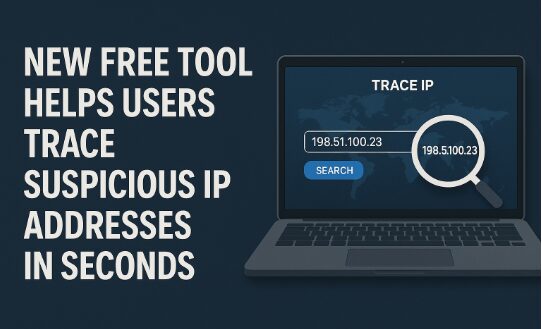
Online security threats grow daily. Hackers use fake IP addresses to hide their tracks. Now users can fight back with a new free IP lookup tool that reveals hidden information in seconds.
What Makes This Tool Special
The new IP lookup service works fast. Users simply enter an IP address and get results instantly. The tool shows location data, internet service provider details, and ownership information.
Many people receive suspicious emails or notice odd website visits. This tool helps them check where these connections come from. Small business owners use it to protect their websites. Parents check unfamiliar IP addresses that contact their home networks.
How It Works
The process takes three simple steps. First, users visit the lookup website. Next, they paste the suspicious IP address into the search box. Finally, they click search and review the results.
The tool connects to public databases worldwide. These databases store information about IP address assignments. The service pulls this data together in one place. Users see results without jumping between multiple websites.
Real-World Applications
Sarah runs a small online store. She noticed unusual login attempts from foreign countries. The IP lookup tool helped her identify the exact locations. She then blocked those ranges to protect her business.
Tech support teams use similar tools daily. When customers report problems, technicians check IP addresses for clues. The free service saves companies money on expensive security software.
Cybersecurity experts recommend regular IP checking. Businesses should monitor their network logs. Home users can check suspicious email sources. The practice helps catch threats early.
Privacy and Safety Features
The lookup tool respects user privacy. It doesn’t store search queries or track users. The service works through encrypted connections. Personal information stays safe during searches.
Users can check unlimited IP addresses for free. No registration is required. The tool works on phones, tablets, and computers. Most results appear in under two seconds.
Beyond Basic Lookups
Advanced users find extra value in detailed reports. The tool shows network ranges owned by companies. It identifies data centers and cloud services. Some results include abuse contact information.
Government agencies and law enforcement use IP data for investigations. Journalists track sources for stories. Researchers study internet traffic patterns. The applications span many fields.
According to the Cybersecurity and Infrastructure Security Agency, IP address tracking helps identify malicious activity. Organizations should monitor their networks regularly. Free tools make this protection accessible to everyone.
Getting Started
The tool requires no setup or software downloads. Users access it through any web browser. The interface works well for beginners and experts alike. Clear labels guide users through each step.
Results include maps showing approximate locations. Technical details appear in easy-to-read formats. Users can copy information for reports or documentation. The service handles both IPv4 and IPv6 addresses.
Industry Impact
Free IP lookup tools change how people handle security. Small businesses gain enterprise-level capabilities. Home users can investigate threats themselves. The barrier to network security drops significantly.
Traditional security services cost hundreds monthly. This free alternative provides similar basic functions. More people can now protect themselves online. The trend toward free security tools continues growing.
Tips for Best Results
Check multiple IP addresses when investigating threats. Single lookups might miss coordinated attacks. Save results from suspicious addresses for future reference. Share findings with your internet service provider when needed.
Remember that IP addresses can change frequently. Mobile connections often use different addresses each session. The tool shows current ownership information. Historical data might not always be available.
Some IP addresses belong to legitimate services. Cloud platforms and content delivery networks use many different ranges. Don’t assume all foreign IP addresses are threats. Context matters when interpreting results.
Future Developments
The service continues adding new features. Recent updates include mobile app versions. Enhanced reporting options help business users. The team works on real-time threat intelligence integration.
User feedback drives improvement priorities. Popular requests include bulk lookup capabilities. Export functions for security reports are in development. The free service model will continue.
Frequently Asked Questions
Q: Is the IP lookup tool really free? A: Yes, the basic service is completely free. Users can perform unlimited lookups without payment or registration.
Q: How accurate is the location information? A: Location data is approximate, usually accurate to the city level. Rural areas may show broader regions due to limited data.
Q: Can I use this tool for commercial purposes? A: The free tool allows commercial use for basic lookups. Heavy commercial usage may require contacting the service provider.
Q: Does the tool work with all types of IP addresses? A: Yes, it supports both IPv4 and IPv6 address formats commonly used on the internet.
Q: How often is the database information updated? A: The service updates its databases regularly, typically within 24-48 hours of official changes.
Q: Can I trace my own IP address? A: Yes, you can look up any IP address, including your own current address for verification.
Q: What should I do if I find suspicious IP addresses? A: Document the findings and report them to your internet service provider or relevant authorities if criminal activity is suspected.
Q: Are there any legal restrictions on IP address lookups? A: Looking up public IP information is legal in most jurisdictions, but users should comply with local laws and use the information responsibly.