As AI workloads drive higher power density and operational complexity, mission-critical data-center engineering professional Raja Kumara Swamy Donthula is examining how commissioning discipline, digital-twin simulation, and human-supervised Agentic AI can strengthen next-generation data-center resilience without displacing established engineering controls.
Artificial intelligence is often discussed through the lens of models, accelerators, software platforms, and computing performance. Yet every AI workload ultimately depends on physical infrastructure that must continuously deliver power, remove heat, maintain redundancy, and respond predictably to changing operating conditions.
Medium- and low-voltage distribution systems, transformers, switchgear, uninterruptible power supplies (UPS), batteries, generators, automatic transfer switches (ATS), cooling infrastructure, monitoring platforms, controls, and protection systems all contribute to keeping critical computing environments available. As AI workloads become more power-intensive and dynamic, the engineering challenge is no longer only about adding capacity. It is increasingly about preserving the relationships among power, cooling, redundancy, protection, controls, commissioning evidence, and operator decision-making.
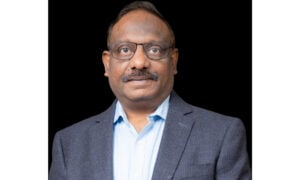
For Raja Kumara Swamy Donthula, a mission-critical data-center electrical/MEP engineering and commissioning professional with more than two decades of international experience across EMEA, APAC, and the Americas, this intersection between physical infrastructure and intelligent technology has become an important area of professional and research interest.
His experience spans engineering, design and technical review, project management, construction coordination, commissioning, and operational readiness. His work has included projects involving major technology and data-center organizations such as Equinix, Oracle Cloud Infrastructure, Google, Meta, and QTS.
Rather than viewing these experiences as isolated projects, Raja Kumara Swamy Donthula approaches mission-critical infrastructure as a full-life-cycle engineering problem: how design intent becomes a physical installation, how that installation is verified, how systems interact under normal and abnormal operating conditions, and how commissioning evidence supports operational readiness.
Engineering the Full Data-Center Life Cycle
Modern data centers depend on highly specialized engineering disciplines, but reliability ultimately exists at the system level. A design decision can influence constructability; installation quality can affect commissioning results; protection settings and control logic can determine how equipment responds to abnormal conditions; and incomplete testing or documentation can leave risks undiscovered even after a facility appears physically complete.
Raja Kumara Swamy Donthula’s technical background encompasses medium- and low-voltage distribution, transformers, switchgear, UPS and battery systems, standby generators, ATS, power distribution centers, remote power panels, grounding and bonding, electrical power monitoring, building-management interfaces, and multidisciplinary MEP coordination. His work has also involved design reviews, quality assurance and quality control documentation, equipment readiness, functional testing, and integrated systems activities.
Earlier in his career, Raja Kumara Swamy Donthula worked in a client-side project-management capacity on a landing-station and data-center development involving Equinix in Oman. His subsequent work in the United States has continued to focus on hyperscale environments, electrical systems, commissioning readiness, documentation quality, and coordination between technical disciplines.
This full-life-cycle perspective is increasingly relevant as data centers become larger, denser, and more dependent on tightly coordinated electrical, mechanical, control, and operational systems.
Why Commissioning Matters Beyond Equipment Testing
Commissioning is sometimes described as the final stage of construction, but in mission-critical environments its role extends much further. A completed switchgear lineup, for example, still requires verification of protection settings, controls, alarms, communications, and operating sequences. A UPS installation depends not only on the equipment itself but also on battery condition, bypass arrangements, upstream and downstream coordination, monitoring, and operating procedures.
Mechanical and electrical systems also interact during load changes, degraded-capacity scenarios, maintenance activities, and recovery sequences. For Raja Kumara Swamy Donthula, commissioning is therefore the point where design intent has to demonstrate itself under real operating conditions.
“Commissioning is where design intent has to prove itself in the real facility. Documentation, testing, dependencies, and operational readiness matter as much as installation.”
The question is not simply whether an individual piece of equipment passes a test. It is whether the available evidence demonstrates that the complete system can operate reliably within its defined requirements. That distinction becomes increasingly important as AI infrastructure changes the operating environment.
AI Is Changing the Infrastructure Problem
AI training and inference workloads can place significant demands on both electrical and cooling infrastructure. Large accelerator clusters can increase power requirements and heat rejection, while changing computational workloads can introduce more dynamic operating conditions.
For data-center operators, this creates a broader problem than monitoring individual alarms. Electrical capacity, thermal conditions, equipment health, redundancy, maintenance status, commissioning information, and operational constraints can all influence one another.
Traditional building-management systems, electrical power monitoring systems, and data-center infrastructure management platforms remain fundamental to operations. They collect telemetry, display alarms, apply established rules, and support defined control sequences. The opportunity for AI is not to replace those deterministic systems, but to help engineers reason across the information they produce, identify relationships earlier, evaluate competing constraints, and improve the speed and quality of engineering decisions.
That opportunity also introduces a critical question: how can intelligent systems provide useful recommendations without bypassing the engineering constraints that protect mission-critical infrastructure?
Why Agentic AI Must Be Bounded
That question is central to Raja Kumara Swamy Donthula’s current research interests, which include Agentic AI, multi-agent systems, digital twins, predictive maintenance, risk-aware decision support, and intelligent commissioning for mission-critical data centers.
One research direction involves a coordinated multi-agent architecture in which specialized software agents focus on different engineering functions. An electrical-power agent could analyze power-system conditions; a thermal or cooling agent could examine cooling behavior; and other agents could focus on reliability and fault detection, commissioning readiness, safety verification, or overall orchestration.
The important point is that the architecture is bounded. Instead of giving a single AI system unrestricted responsibility, functions are separated and recommendations are checked against operating constraints before any higher-consequence action is considered. The objective is not autonomy for its own sake, but better-supported engineering decisions within clearly defined authority limits.
The practical question is whether AI can help engineers identify patterns earlier, combine information distributed across different systems, evaluate operational scenarios, and present traceable recommendations to qualified personnel.
“Agentic AI should help engineers see problems earlier and coordinate information better, but safety-critical decisions still need engineering limits, verification, and human authority.”
That distinction is especially important in electrical environments, where an apparently beneficial action in one subsystem can create an unacceptable condition elsewhere. A recommendation involving cooling, electrical loading, redundancy, switching, or equipment configuration must therefore be evaluated against the wider operating envelope of the facility.
Human Authority and Decision Traceability
Raja Kumara Swamy Donthula’s research direction places human oversight and engineering constraints at the center of the proposed architecture. High-consequence actions such as electrical switching, generator transfers, ATS commands, or UPS bypass operations should remain subject to defined operating procedures, interlocks, protection requirements, and explicit authorization by qualified personnel.
Another important consideration is decision provenance. For mission-critical infrastructure, operators need to understand what information was used, what condition was identified, what constraints were evaluated, what recommendation was generated, who authorized the action, and what occurred afterward.
This makes explainability more than a software-interface feature. In a mission-critical environment, it becomes part of operational accountability and auditability.
“For mission-critical infrastructure, the goal is not autonomy for its own sake. The goal is better decisions with clear constraints, traceability, and accountability.”
Digital Twins as an Engineering Test Bed
Digital-twin-style simulation provides a practical way to investigate these ideas without immediately applying experimental AI decision-making to physical infrastructure. Controlled simulation environments can reproduce equipment degradation, feeder-loading events, changes in cooling capacity, commissioning dependencies, and other operating conditions under repeatable scenarios.
Different decision strategies can then be compared before they are considered for real-world deployment. For mission-critical systems, this creates a safer research path for examining how multiple AI agents might coordinate information and recommendations while remaining subject to engineering limits.
The distinction between research simulation and field-proven autonomous operation is important. Simulation can provide evidence for further development, but it does not replace site-specific engineering studies, approved operating procedures, physical testing, equipment-specific validation, or commissioning activities. In this context, digital twins are best viewed as controlled engineering test beds for exploring new decision-support concepts, not as substitutes for validation in the real facility.
From Monitoring to Coordinated Intelligence
The broader opportunity is a transition from fragmented monitoring toward coordinated engineering decision support. Predictive-maintenance systems could help identify equipment degradation earlier. Multi-agent systems could connect electrical and thermal information that traditionally exists in separate domains. Digital twins could allow engineers to evaluate potential scenarios before taking action. Intelligent commissioning tools could potentially assist with tracking dependencies, evidence, equipment readiness, and operational status across large numbers of assets.
Yet the effectiveness of these technologies will continue to depend on engineering fundamentals that long predate Agentic AI: data quality, protection philosophy, operating limits, redundancy requirements, commissioning evidence, and human accountability.
AI does not eliminate these requirements. The challenge is to build intelligent systems that operate within them. For Raja Kumara Swamy Donthula, this represents a natural extension of professional work across design intent, construction, testing, commissioning, and operational readiness.
The same data center that must safely deliver power and cooling to increasingly demanding AI workloads may also become an environment in which AI helps engineers understand the infrastructure itself. The emerging model is therefore less about replacing engineers and more about giving them better tools for understanding increasingly interconnected systems.
As data centers evolve to support the next generation of artificial intelligence, the relationship between physical infrastructure and intelligent software will become increasingly important. Electrical engineering, MEP coordination, commissioning, reliability engineering, simulation, and AI decision support are beginning to converge around a common objective: maintaining resilient infrastructure while improving the quality, speed, and traceability of engineering decisions.
The future of intelligent data-center infrastructure may ultimately depend not on how much autonomy AI can achieve, but on how effectively intelligent systems can work within engineering boundaries, provide transparent recommendations, and keep qualified people at the center of high-consequence decisions.
About Raja Kumara Swamy Donthula
Raja Kumara Swamy Donthula is a mission-critical data-center electrical/MEP engineering and commissioning professional with more than 20 years of international experience across EMEA, APAC, and the Americas. His experience spans design, project delivery, construction, commissioning, and operational readiness. His technical background includes MV/LV power distribution, transformers, switchgear, UPS and battery systems, generators, ATS, power monitoring, MEP coordination, and integrated commissioning. His current research interests include Agentic AI, multi-agent systems, digital twins, predictive maintenance, intelligent commissioning, and risk-aware decision support for mission-critical infrastructure.