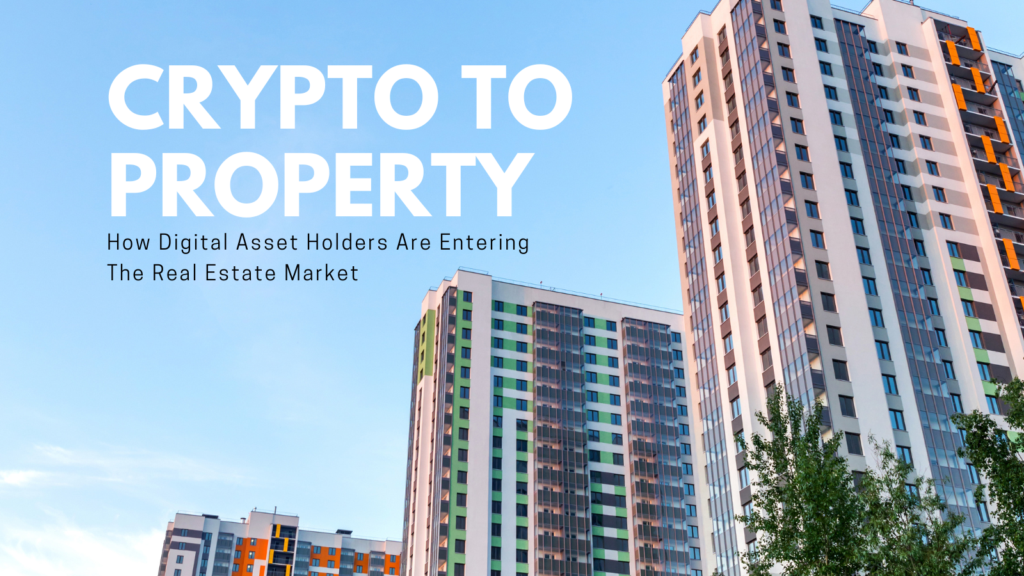
Anyone who has navigated digital assets through an entire market cycle understands that specific moment when screen balances feel overly abstract. Although a portfolio may have expanded significantly, severe price swings in both directions often cause investors to question how much paper wealth is genuinely secure rather than subject to fleeting market sentiment. This realization typically triggers a natural reaction: shifting a portion of volatile digital holdings into a more stable, physical asset whose valuation isn’t constantly fluctuating. When weighing up options for lasting stability, real estate consistently emerges as a leading choice. Property offers unmatched tangibility, generates ongoing utility through occupancy or rental yield, and historically demonstrates far greater stability than digital tokens. Rather than signaling a complete exit from crypto, this move represents a strategy to lock in gains by converting digital success into tangible wealth.
Driven by this logic, an increasing number of investors are turning to real estate, fueling growing demand for purchasing physical property directly with cryptocurrency.
Why holders are moving off-chain
Converting crypto into property stems from a core distinction known to every holder: the difference between an asset that can drop by half in a month and one that generally evolves over years. Bitcoin hit an all-time high above $126,000 in October 2025, dropped approximately a third over the following months, and traded near $79,000 by early September 2026 after climbing nearly 25% in August alone. This isn’t a flaw in the asset; it is simply how it operates. However, that inherent volatility gives investors with significant unrealized gains reason to act, as the rapid swings that built their portfolio can just as quickly erase it before those gains are realized.
Real estate counters that instability not by guaranteeing greater returns, but by offering entirely different characteristics. A residential property isn’t subject to second-by-second repricing, cannot be wiped out in a sudden market panic, and yields ongoing value, whether through personal use or rental income. Its worth is rooted in physical fundamentals like land, location, and the enduring demand for housing, all of which change gradually for reasons unrelated to market psychology. Historical trends reflect this upward trajectory; for instance, Miami single-family home values have surged roughly 159% since 2016. While property markets are not immune to downturns or cooling cycles, their risk profile is strikingly different. Combining a volatile digital position with a steady physical holding creates a far more balanced portfolio than relying on either alone.
Achieving that equilibrium is the primary driver behind moving wealth off-chain. Most crypto investors acquiring real estate are not exiting the digital space entirely; the majority maintain substantial crypto holdings. Instead, they are strategically diversifying, locking in a portion of their digital wealth into a tangible asset that offers practical utility, insurable security, and long-term legacy. Ultimately, buying real estate with crypto is not an exit strategy, but a prudent approach to spreading capital across two distinct asset classes.
Where the money is going
Before selecting a location, it is helpful to note the distinct pattern shared by the prime destinations drawing this capital. Having generated robust growth across several years, each location is entering a more discerning phase, a trend that benefits buyers offering liquidity rather than those speculating on rapid price surges. Furthermore, these regions are heavily characterized by high volumes of global and non-financed buyers, matching the typical profile of digital asset investors.
Key regional highlights include:
- Prague: Outperformed all European hubs in 2025, recording a 14.6% gain in prime property valuations on Knight Frank’s index.
- Lisbon: Exhibits more gradual overall appreciation, yet Portugal continues to rank among Europe’s top choices, backed by steady urban renewal, vibrant tourism, and sustained overseas interest.
- Miami: Remains a primary hub for crypto-derived wealth, with high-end sales increasing over 20% year-over-year moving into 2026; international buyers drove $4.4 billion in South Florida acquisitions in 2025, expanding from $3.1 billion the previous year.
- Dubai: Features a crypto-accommodating legal framework and a market where approximately 86% of deals are completed in cash; classified by Knight Frank as an “emerged” market, projected growth for 2026 ranges between 3% and 10%.
The overarching connection across these destinations is not an absolute assurance of returns, as every market faces moderation following recent peaks. Rather, it lies in how these locations couple proven historical strength with robust international cash demand, streamlining the practicalities of buying a house with crypto.
Turning a balance into a building
Bridging the gap between a digital balance and a physical property deed is simpler today than in years past, though it still demands careful navigation. Typically, crypto holdings are converted into fiat currency shortly before or at closing. This ensures that sellers, legal officials, and property registries conduct business using conventional currency derived from on-chain assets, though direct crypto channels operate in select regions as well. Regardless of the exact pathway, the essential mechanics resemble those of any major cross-border real estate transaction: establishing conversion or settlement terms, providing clear source-of-funds documentation for compliance and anti-money-laundering protocols, and ensuring payments are transferred smoothly and on schedule.
These operational steps frequently present friction points where specialized expertise becomes invaluable. Instead of requiring buyers to independently manage cryptocurrency exchanges, legal conveyancers, and foreign counterparties, specialized concierge platforms like AltProperties streamline conversion, regulatory compliance, and transaction execution into a unified service. This allows buyers and real estate advisors to remain focused on selecting the right asset. The primary advantage lies not in handling impossible tasks, but in delegating complex, multi-step workflows to an experienced team that guides the transaction securely to closing.
Ultimately, these execution processes reinforce the foundational rationale driving the move off-chain. Investors who have navigated entire market volatility cycles often seek to anchor a portion of their capital into tangible assets within resilient, proven real estate markets. Converting digital assets into real property secures lasting ownership in a physical venue that retains its value regardless of crypto market fluctuations. Buying houses with crypto is less about departing from digital assets and more about establishing a stable foothold in an asset class governed by predictable, long-term fundamentals.
For more information about AltProperties, visit www.altpropertiesgroup.com.