
When Astrology Apps Become Conversations: Why Human Readers Still Matter

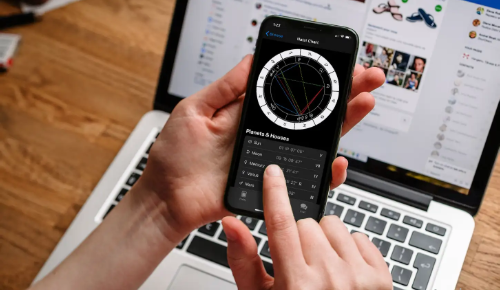
Open most digital astrology products for the first time and the experience feels automated by design. Enter a birth date, add a time and location, wait a moment, and a chart appears. From there come descriptions of personality, relationships, timing or whatever part of the system the user decided to explore.
That kind of instant personalization is one reason astrology moved so easily onto phones. A report that once required an appointment can now appear in seconds.
Yet an interesting thing is happening inside the category: some apps are bringing the human reader back.
Hint, for example, combines automated natal-chart material with one-to-one access to professional astrologers and psychic readers. A user can start with a personalized profile and then ask a real person about something much narrower — a relationship that feels confusing, a career question, a part of the chart they do not understand, or simply an interpretation they want to explore further. The service currently presents these personal readings as its core offering.
In a product category built around personalization, that human layer solves a surprisingly obvious problem.
Software can know the inputs.
It cannot know which question matters most to the person today.
A Personalized Report Still Has to Guess What You Care About
Two people can have equally detailed natal charts and want completely different things from them.
One is curious about relationships. Another has just changed jobs. Someone else is trying to understand why a particular personality description feels nothing like them.
An automated system has to decide what to show first.
A conversation does not.
The user can simply say what is on their mind.
That changes the interaction from receiving information to exploring it.
Hint’s current one-to-one guidance is built around this model. Its astrologers can discuss love, career, life decisions and individual chart questions, while the platform’s automated material provides the broader birth-chart context.
For users, the difference is similar to reading a travel guide versus asking somebody who knows the city where they would go in your exact situation. The guide can contain far more information. The conversation can focus on the part that matters now.
Human Interpretation Becomes More Useful When the Starting Point Is Already Personal
The return of the human astrologer does not mean digital personalization becomes irrelevant.
In fact, the two can work together.
Hint builds its astrology material around a user’s exact birth details and currently offers personalized natal-chart interpretations, compatibility information and daily material alongside its one-to-one readings.
So a conversation does not necessarily have to start with:
“Tell me about myself.”
It can start much further along:
“I keep seeing this theme in my relationship readings. What does it mean?”
Or:
“This section of my natal chart doesn’t sound like me at all.”
Or even:
“I am thinking about changing direction at work. Which parts of the chart would an astrologer look at when discussing that?”
The software provides structure. The human can follow the question.
That division of labor is more interesting than simply replacing an old-fashioned astrology reading with an app.
People Rarely Ask About Life in Neat Categories
Apps like categories.
Love.
Career.
Compatibility.
Personal growth.
Real questions are messier.
A relationship problem can affect work. A career decision may be tied to confidence. Someone asking about compatibility may actually be trying to understand why they keep responding to conflict in the same way.
A human conversation can move between those subjects naturally.
That is especially relevant in astrology because interpretations often connect several parts of a chart rather than treating one placement as an isolated answer.
Hint’s current roster reflects that breadth. Its readers describe backgrounds spanning astrology, natal charts, Tarot, palmistry, numerology, relationship compatibility, family dynamics and relocation astrology.
That does not mean every user needs every method. It means a specific question can determine where the conversation goes instead of forcing the user through a fixed content path.
Sometimes the Most Useful Response Is Another Question
Personalized apps tend to be judged by how confidently they answer.
Human conversations can work differently.
Suppose somebody asks why they keep ending up in the same kind of relationship.
A fixed report might offer an interpretation.
A person can ask:
What do you mean by “the same kind”?
What usually attracts you first?
When does the dynamic start feeling familiar?
Does the pattern appear in friendships too?
Those questions do not magically solve anything. They make the original question more specific.
That can be valuable in any reflective conversation, whether the framework is astrology, journaling or simply talking something through with another person.
The usefulness comes partly from interaction.
An automated paragraph cannot notice which sentence made the user stop and say, “Actually, that’s the part I keep thinking about.”
A human can.
Relationship Questions Show the Difference Clearly
Dating is probably the easiest place to see why a conversation feels different from a report.
Compatibility tools can produce a lot of information, but people rarely want to know only whether two profiles are theoretically compatible.
They want to ask things like:
Why does this person feel easy to talk to but difficult to trust?
Why do we have the same argument?
Why am I drawn to people who need a lot of distance?
Why does this relationship feel completely different from the last one?
Hint currently includes birth-chart compatibility and direct relationship questions within its personal reading experience.
A Reddit discussion about the Hint app captures the kind of reaction that can lead naturally into those questions. The poster had encountered relationship descriptions that felt close enough to recognizable behavior that they wanted other people’s perspective on how much weight to give them.
That is a more interesting moment than simple agreement.
The user has moved from “What does the app say?” to “Why did I react to what it said?”
Digital Guidance Works Best When It Leaves Room for the User
There is a risk whenever a personalized service becomes too authoritative.
If an app or reader presents every interpretation as certainty, the user has less room to think.
Hint explicitly describes its astrological readings as entertainment and says they should not replace professional advice.
That boundary is useful.
An astrologer can discuss a relationship through an astrological framework. A user still decides what the actual relationship is like.
A career reading might suggest themes worth thinking about. It cannot replace examining salary, opportunity, working conditions or professional goals.
A conversation about emotional patterns can feel meaningful without becoming therapy.
The strongest version of personalized guidance gives people language and questions to work with while leaving important decisions where they belong: with the person living the life.
The App Handles Scale; the Reader Handles Specificity
Automated astrology has one huge advantage.
It can generate individualized material for large numbers of people.
A human reader has another.
They can respond to the particular sentence the user just typed.
The combination creates a simple model:
The app can calculate and organize.
The reader can interpret and respond.
The user can question both.
Hint currently describes its automated personalized insights as combining AI with astronomical data based on the user’s birth details, while its human astrologers provide direct one-to-one readings.
Those functions do not have to compete.
Someone may use the automated side most days and talk to an astrologer only occasionally. Another person may care primarily about the conversations and treat the daily material as something extra.
The product can accommodate both behaviors.
Human Readers Also Make Astrology Easier for Beginners
Natal charts can be visually intimidating.
Houses. Aspects. Signs. Planets. Degrees. Different placements appear to interact with one another, and a newcomer may not know which piece deserves attention first.
An automated explanation helps translate the terminology.
A conversation makes it possible to say:
“I don’t understand any of this. Where should I start?”
That is an underrated advantage.
Many digital products become difficult because they expose users to too much information before giving them a mental model for organizing it.
A good reader can narrow the field.
Instead of explaining twenty placements, they can focus on the two or three relevant to the user’s question and explain the vocabulary as it comes up.
For someone exploring astrology casually, that can be more inviting than trying to become an expert before asking anything meaningful.
Different Readers Can Bring Different Lenses
Human interpretation also introduces something software products often try to eliminate: variation.
One reader may focus heavily on relationship dynamics.
Another may work with Tarot alongside astrology.
Someone else may specialize in natal charts, career questions, family patterns or astrocartography.
Hint currently presents individual profiles for its astrologers and readers, including their areas of focus.
For users, this means choosing a reader can become part of the experience.
A person with a career question may not want the same kind of conversation as somebody interested in dating compatibility. Someone curious about relocation may look for a reader comfortable with location-based astrology.
That specialization makes the human layer feel less like generic customer support and more like choosing whose interpretive style fits the question.
Technology Has Not Removed the Appeal of Being Heard
Digital products often begin by automating something people once did with another person.
Then, after the automation becomes efficient, some of them rediscover the value of interaction.
Fitness apps add coaches.
Education platforms add tutors.
Financial tools add access to advisors.
AI products increasingly add human review.
Astrology apps are following a similar pattern.
The chart can be calculated instantly. A personalized report can appear at any hour. None of that removes the very human desire to ask, “Okay, but what does this mean for what I’m dealing with?”
That question is conversational.
It has context.
And often the first answer changes the next question.
Personalization Is Becoming Less About Knowing More and More About Asking Better
There is a tendency to imagine the future of personalized apps as an endless accumulation of user data.
More inputs.
More precise profiles.
More tailored output.
That can make personalization better, but there is another route.
Sometimes the biggest improvement comes from letting the user steer.
A person already knows which part of life feels confusing.
They know which relationship is occupying their thoughts.
They know which career decision has been sitting unresolved for months.
A conversation lets that information enter the experience immediately.
That is why the human astrologer remains relevant even when an app can already generate a detailed personal profile.
The reader does not necessarily have more data.
They have the ability to follow what the user considers important.
For a service like Hint, that creates a much broader identity than “an app that generates horoscopes.”
It becomes a place where automated personalization, natal-chart information and direct human interpretation meet.
And for users who enjoy astrology, the most valuable feature may sometimes be the simplest one: being able to ask a real person the question the algorithm did not know they wanted to ask.





Comment