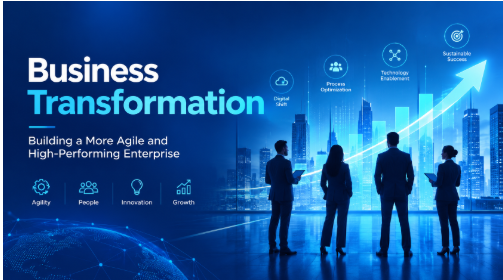
Organizations are under constant pressure to improve efficiency, respond to changing customer expectations, adopt emerging technologies, and create sustainable business value. Business transformation provides a structured approach to redesigning processes, operating models, technology, and organizational capabilities to achieve measurable improvements and support long-term growth.
What Is Business Transformation?
Business transformation involves making significant changes to how an organization operates, delivers value, serves customers, and achieves strategic objectives. Unlike isolated improvement initiatives, transformation takes a holistic view of people, processes, technology, data, and organizational structures to create lasting business performance improvements.
Why Business Transformation Matters
Organizations pursuing transformation can improve operational efficiency, strengthen decision-making, reduce unnecessary complexity, and respond more effectively to market changes. A well-planned transformation also helps align technology investments with business priorities, creating an enterprise that can adapt while maintaining focus on measurable outcomes.
Drivers of Business Transformation
Changing customer expectations, competitive pressures, technology advancements, cost pressures, regulatory requirements, and evolving workforce needs are driving organizations to rethink traditional operating models. Identifying these drivers helps leadership teams establish transformation priorities and determine where fundamental changes can create meaningful business value.
Developing a Business Transformation Strategy
A successful business transformation strategy connects an organization’s vision with practical initiatives, measurable outcomes, investment priorities, and implementation milestones. It establishes a clear direction for transformation while ensuring that individual projects contribute to broader strategic objectives instead of operating as disconnected improvement programs.
Establishing Transformation Priorities
Organizations should evaluate their current capabilities, performance gaps, customer requirements, operational challenges, and technology landscape before defining priorities. This assessment helps leadership identify areas where transformation can have the greatest impact and create a focused roadmap for investment and implementation.
Aligning People, Processes, and Technology
Transformation succeeds when people, processes, and technology evolve together. Organizations should redesign workflows, clarify responsibilities, develop workforce capabilities, and modernize supporting technologies simultaneously. This integrated approach helps prevent technology-led initiatives from becoming disconnected from the operational and organizational changes required to deliver results.
Understanding the Business Transformation Process
The business transformation process typically moves through assessment, strategy development, design, implementation, adoption, and continuous improvement. Establishing clear stages enables organizations to manage complexity, track progress, address risks, and maintain alignment between transformation initiatives and expected business outcomes.
Assessing Current Business Capabilities
A detailed assessment provides visibility into existing processes, operating models, technology, organizational capabilities, and performance. Organizations can identify inefficiencies, duplication, capability gaps, and improvement opportunities, creating a factual baseline that supports transformation planning and helps establish realistic performance targets.
Designing the Future Operating Model
The future operating model defines how the organization should work after transformation. It can address organizational structures, governance, processes, technology, data, roles, and decision rights. Designing this model around strategic priorities creates a clear blueprint for implementing sustainable operational improvements.
Creating a Business Transformation Framework
A business transformation framework provides a structured methodology for coordinating transformation across multiple dimensions. It can bring together strategy, operating model, processes, technology, people, governance, and performance management, giving leadership teams a consistent structure for planning and executing complex transformation programs.
Managing Transformation Across Functions
Large organizations often have transformation opportunities across finance, procurement, HR, IT, supply chain, and shared services. Coordinating initiatives across functions can reduce duplication, improve integration, and create enterprise-wide benefits while ensuring individual business units remain aligned with common strategic objectives.
Establishing Transformation Governance
Strong governance provides accountability for transformation decisions, investments, milestones, risks, and outcomes. Organizations can establish leadership structures, decision-making processes, performance reviews, and escalation mechanisms to maintain momentum and ensure transformation initiatives remain aligned with strategic and financial priorities.
Leveraging Digital Business Transformation
Digital business transformation combines business redesign with modern technologies such as artificial intelligence, automation, cloud platforms, analytics, and digital workflows. Rather than digitizing existing processes without change, organizations can use technology to fundamentally improve how work is performed and how value is delivered.
Integrating Digital Capabilities
Effective integration connects digital technologies with existing business applications, data, processes, and operating models. Organizations can create connected workflows and information flows that reduce manual intervention, improve visibility, and enable employees and leaders to make faster, more informed decisions.
Scaling Digital Transformation
Digital transformation becomes more valuable when successful capabilities can be scaled across the enterprise. Organizations should establish reusable technologies, standardized processes, governance models, and implementation practices that allow digital initiatives to expand while maintaining security, consistency, and alignment with business requirements.
Driving Enterprise Business Transformation
Enterprise business transformation addresses interconnected changes across the organization rather than focusing on individual processes or departments. This approach helps businesses create greater alignment between corporate strategy, operating models, technology investments, workforce capabilities, and customer requirements.
Improving Business Transformation Management
Effective business transformation management requires continuous oversight of initiatives, resources, dependencies, risks, and performance. Leaders can use structured reporting and performance measures to identify challenges early, adjust priorities, and ensure transformation remains focused on measurable business and financial outcomes.
Measuring Transformation Performance
Organizations need clear measures to determine whether transformation is delivering expected value. Metrics can include productivity, cost reduction, process cycle times, service quality, customer experience, revenue impact, and employee adoption. Regular measurement helps leaders identify successful initiatives and areas requiring further improvement.
Benchmarking for Better Transformation Decisions
Business benchmarking gives organizations a structured way to compare performance against relevant peers, industry standards, or leading practices. Benchmarking can reveal performance gaps, highlight improvement opportunities, and establish realistic targets that strengthen the business case for transformation initiatives.
Turning Benchmark Insights Into Action
Benchmarking becomes valuable when organizations translate findings into specific improvement priorities. By identifying gaps in cost, productivity, service quality, process effectiveness, or organizational maturity, leadership teams can prioritize initiatives and develop transformation plans designed around measurable performance improvements.
Accelerate Transformation With Expert Support
Transformation programs can involve significant investments, organizational changes, and technology decisions. Experienced specialists can help organizations identify priorities, develop practical roadmaps, establish governance, and manage implementation while keeping transformation aligned with strategic objectives and measurable business value.
Choosing Business Transformation Services
Business transformation services can support organizations across strategy, operating model design, process improvement, technology enablement, benchmarking, implementation, and performance management. Working with experienced specialists can help businesses navigate complex transformation programs while maintaining focus on outcomes, value realization, and sustainable change.
Building Business Transformation Solutions
Effective business transformation solutions should address specific organizational challenges rather than applying a one-size-fits-all approach. Tailored solutions can combine process redesign, technology modernization, organizational change, analytics, and governance to create practical improvements aligned with each organization’s strategic priorities.
Transform Your Business With The Hackett Group®
Successful transformation requires a clear vision, measurable objectives, disciplined execution, and the ability to continuously adapt. The Hackett Group® helps organizations assess current performance, identify transformation opportunities, benchmark capabilities, develop strategic roadmaps, and implement changes designed to deliver measurable business value.
From operating model redesign and process optimization to digital transformation and enterprise-wide change, organizations can take a structured approach to building more efficient, agile, and high-performing operations. Expert guidance can help leaders move beyond isolated improvement projects and create transformation programs that support sustainable growth.
Ready to accelerate your transformation journey? Partner with experienced transformation specialists to identify performance gaps, define your future-state operating model, prioritize high-impact initiatives, and turn strategic ambitions into measurable business results.