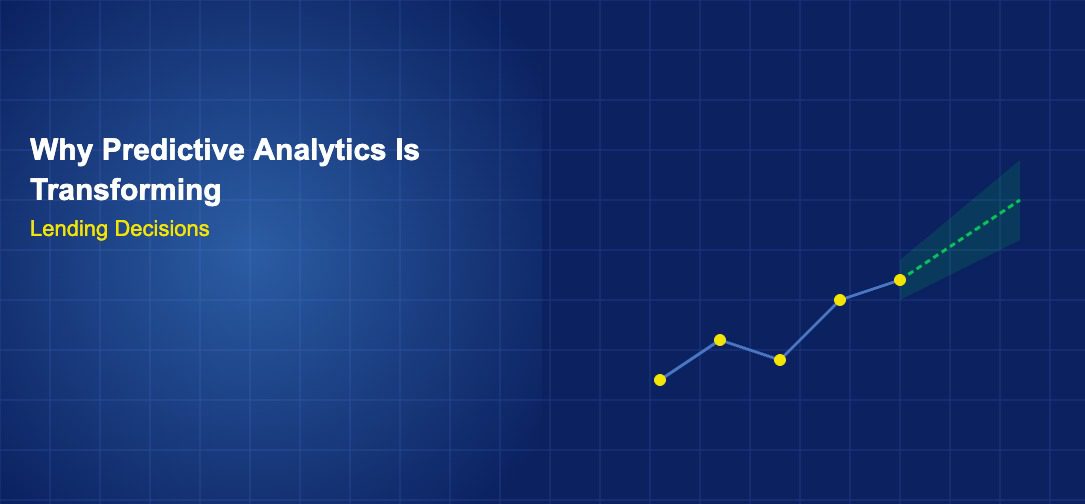
Predictive analytics is transforming lending decisions by enabling lenders to forecast borrower behaviour with greater accuracy than traditional credit scoring. A 2024 study by McKinsey found that lenders using predictive analytics reduce loan losses by 20% to 30% while increasing approval rates by 15% to 25%. Companies like Upstart, Pagaya, and Zest AI have built lending platforms where predictive models process thousands of variables to assess risk, set pricing, and detect fraud before a loan is originated.
How Predictive Analytics Works in Lending
Traditional credit scoring is backward-looking. A FICO score summarises a borrower’s past behaviour. Predictive analytics combines historical patterns with forward-looking indicators: income trajectory, employment stability, spending trends, and macroeconomic conditions. Upstart’s models consider education and employment history alongside credit data, reducing default rates by 75% while approving 27% more borrowers, according to its SEC filings.
Cash flow-based lending uses predictive models to analyse bank transaction data. Instead of relying on a credit score, the model examines actual income deposits, recurring expenses, and savings patterns. Nova Credit and Petal use this approach to serve immigrants and young borrowers who lack traditional credit histories. Fintech revenue growing at a 23% CAGR includes revenue from predictive lending platforms.
Impact on Lending Markets
Predictive analytics expands the addressable market. More than 45 million Americans are “credit invisible,” meaning they lack sufficient credit history for traditional scoring, according to the CFPB. Predictive models using alternative data can assess these borrowers for the first time. In emerging markets, where credit bureau coverage may be below 30%, predictive analytics using mobile phone usage, utility payments, and social data enables lending to previously unbanked populations.
Speed is another advantage. Traditional mortgage approvals take 30 to 45 days. Online lenders using predictive models provide decisions in minutes. Kabbage, now part of American Express, approves small business credit lines in under 10 minutes by analysing bank transactions, accounting data, and business performance metrics in real time. Fintech companies capturing 25% of banking revenues compete primarily on decision speed and accuracy.
Regulatory and Fairness Considerations
The CFPB and EU regulators require that lending decisions be explainable. Predictive models must generate adverse action reasons when declining applications. Zest AI’s ZAML platform provides compliant explanations from complex models. The EU AI Act classifies credit scoring AI as high-risk, requiring transparency and human oversight.
Fairness testing is mandatory. Lenders must demonstrate that predictive models do not discriminate against protected classes. The Federal Reserve found that well-designed AI models actually reduce disparities by considering a wider range of data points. The growth from 20 to over 300 fintech unicorns includes multiple companies whose core advantage is superior predictive analytics. More than 30,000 fintech companies now incorporate some form of predictive analytics into their lending processes.