In most chemical companies, the most valuable asset isn’t the product catalog. It’s the knowledge stored in the minds of senior chemists, formulators, and technical specialists who developed those products over decades. And right now, that knowledge is quietly walking out the door.
A generation of industry experts is nearing retirement, and the remaining commercial teams are stuck waiting hours or even days for technical answers that should only take minutes. In a market where response speed directly impacts revenue, that delay is costing chemical businesses deals they aren’t even aware they’re losing.
Kimia, a startup based in Sydney, launched today with a clear thesis: chemical intelligence should be engineered, not improvised. The company is entering the market as the first AI platform specifically designed for the chemical industry, backed by $7 million in seed funding, a roster of enterprise customers already active on the platform, and a founding team that deeply understands the problem from the inside.
The Problem Incumbents Couldn’t Crack
The chemical industry has always had expertise. What it lacks is the infrastructure to expand it. Technical knowledge resides in proprietary documents, product specifications, and the institutional memory of specialists who often support many customers at once. When a sales team needs a quick answer on compatibility, formulation, or application, they turn to those specialists. And those specialists are already stretched thin.
The results are clear. Research from Velocify shows that responding to a customer inquiry within one minute boosts conversion rates by 391 percent, and 78 percent of buyers pick the first company to respond. In an industry where technical accuracy is essential, chemical companies often have to choose between speed and quality. Kimia is built on the idea that they shouldn’t have to.
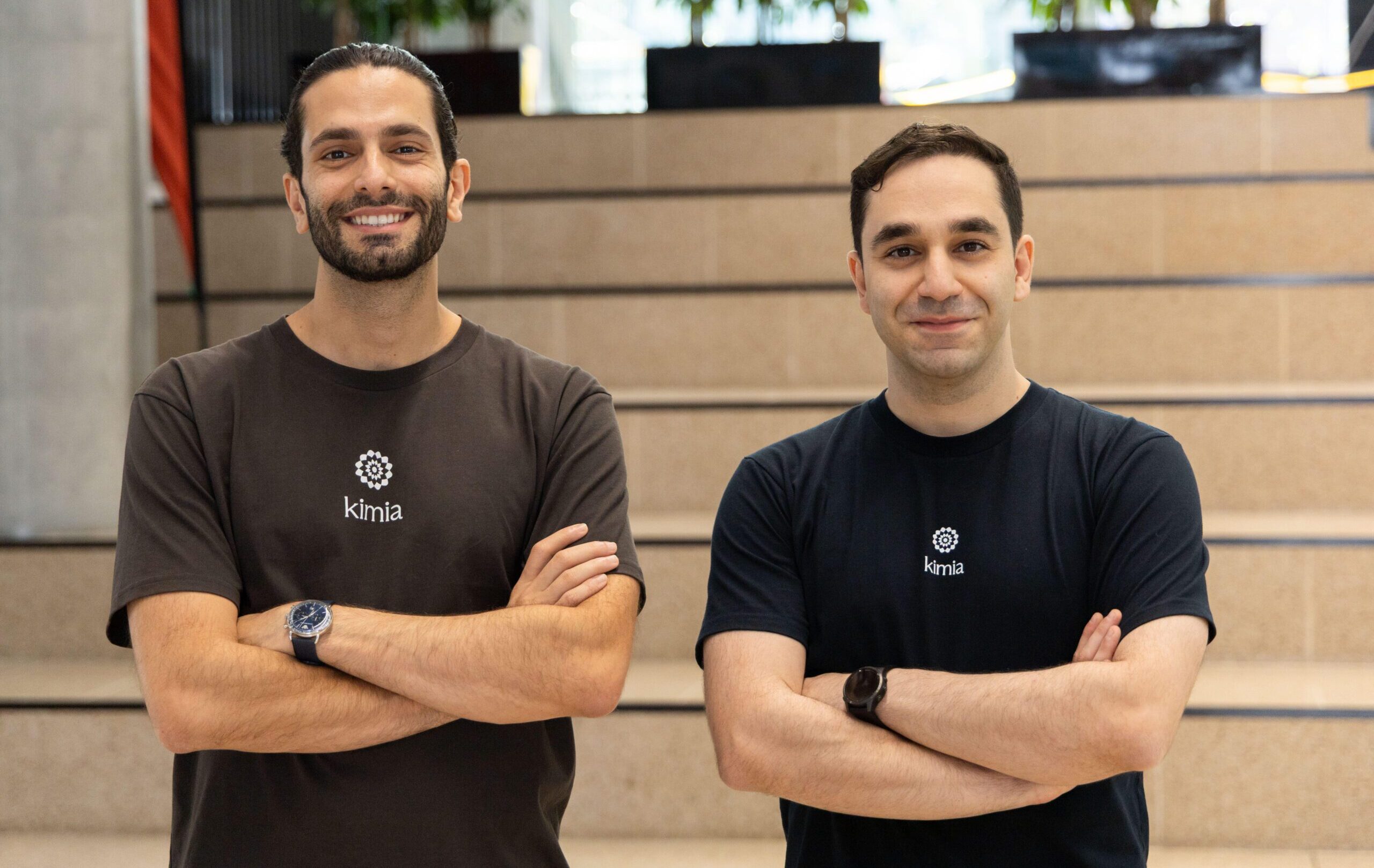
“Chemical businesses are not failing because they lack expertise,” said Farid Mirmohseni, CEO and Co-Founder of Kimia. “They are failing to scale it. What has been missing is a platform built specifically for the chemical industry that converts that expertise into commercial results at the speed the market demands.”
What Chemical Intelligence Actually Means
Kimia is not just a chatbot on top of a product database. The platform uses specialized chemical reasoning related to a company’s existing documentation, product data, and institutional knowledge, then organizes that information around business workflows. Every output can be traced to its source, and if the evidence doesn’t support a recommendation, the system indicates that.
Three features set the platform apart from general-purpose AI tools. First, Kimia genuinely understands chemistry, not just the language of it. Formulation logic, application compatibility, and the technical constraints that influence real-world recommendations are integrated into how the system processes information. Second, the platform relies solely on a company’s own knowledge assets, organized for commercial querying. Third, each output cites its source, providing the technical teams with the auditability they need before trusting AI in customer-facing scenarios.
The human element is also important. Industry veterans, chemists, and formulators work directly with the system to create instructions, encode decision logic, and determine what constitutes a good answer. This marks a significant shift from platforms that treat expert knowledge as a prompt engineering challenge.
“The chemical industry has decades of knowledge trapped in formats commercial teams cannot use,” said Sajjad Azami, CTO and Co-Founder. “Kimia is built to unlock it and put it to work where revenue is actually won or lost: in the conversations between sellers and customers.”
Three Forces Converging at Once
Kimia’s founders are timing this launch to align with a convergence they’ve monitored for years. The increase in large language model capabilities over the past two years has finally enabled the development of AI that can reason about chemical complexity rather than just search it. Simultaneously, the knowledge cliff is arriving faster than most companies expected, with waves of retirements risking decades of formulation and application expertise. Additionally, enterprises across various industries are increasingly replacing generic AI tools with specialized vertical solutions where accuracy and reliability are essential.
For the chemical industry specifically, that shift toward vertical AI is long overdue. The technical complexity of chemical commerce, including multi-variable formulation compatibility, regulatory constraints, and highly specialized application requirements, makes it poorly suited to general-purpose tools trained on generic data.
Enterprise Customers Already Live
Kimia is not entering a market void. The platform is already in use by Bostik, Univar Solutions, and Stahl, supporting various commercial workflows like supplier data management, website search, real-time support for sales teams, and organizational growth without needing extra staff.
Aldric Tourres, Global Director of Digital at Bostik, described the deployment as a strategic partnership: “Kimia has become our partner of choice within Bostik for scaling technical expertise globally. Our customer-facing teams and distributors get immediate, reliable answers, while our internal experts stay focused on high-value work.”
That framing is worth noting. Kimia isn’t positioned as a cost-cutting tool that replaces specialists. It’s positioned as infrastructure that protects specialist time for the work that requires it.
Backed by Airtree, Blackbird, and Skip Capital
The $7 million seed round was led by Airtree Ventures, with participation from Blackbird Ventures and Skip Capital. Having three of Australia’s most active venture firms backing a deep-tech vertical AI company signals strength, especially in a funding environment where conviction capital has become selective.
Kimia states that the capital will speed up enterprise customer onboarding, enhance platform features, and broaden go-to-market reach worldwide in the chemical industry. The company’s onboarding process aims to deliver measurable results within the first few weeks of deployment.
The Bigger Picture
What Kimia is trying to do is not a new idea. The challenge of capturing institutional knowledge before it’s lost has been an issue for companies for decades. What’s different now is the infrastructure that can do it with the level of accuracy needed by technical industries.
If the chemical industry is early, it is not alone. The same knowledge cliff is approaching in pharmaceuticals, materials science, specialty manufacturing, and any field where deep technical expertise has been built over generations. The vertical AI wave Kimia is betting on is not just a go-to-market strategy. It is a recognition that the general-purpose tools of the past five years were never designed to handle the complexity of technical commerce.
Kimia is at kimia.ai.