Choosing a CFD broker usually comes down to a handful of practical questions: Is my money actually safe? Is the platform easy to use day to day? And when something goes wrong, can I actually get a human on the phone? After spending time going through Northern Index‘s platform, account structure, and policies, here’s an honest rundown of where the broker stands out — and what any trader should keep in mind before opening an account.
Who Northern Index Is Built For
Northern Index operates under a Canadian regulatory framework, which shapes a lot of how the broker is run. It follows FINTRAC’s anti-money-laundering and know-your-customer requirements, and client identity verification is taken seriously from the outset — not the fastest onboarding experience if you’re used to accounts that open in ninety seconds, but a reasonable trade-off if you’d rather your broker take compliance seriously than treat it as a formality. The broker’s client base skews toward Canadian and UK traders, with contact numbers and addresses listed for both regions (as well as Australia), which at least gives you a real point of contact rather than a support inbox that disappears into the void.
It’s worth being direct about one thing: FINTRAC registration covers money-transmission and AML obligations. It isn’t the same as a securities regulator approving Northern Index’s trading products or vouching for performance, and Northern Index says as much in its own disclosures. That kind of plain language is a decent signal — brokers that are cagey about what their registration does and doesn’t cover are the ones worth being wary of.
Where the Security Case Holds Up
The parts of Northern Index’s setup that matter most for capital protection are the ones that are easiest to verify and hardest to fake convincingly:
- Segregated client funds. Trading capital is held separately from the company’s operating funds at outside banking institutions. This is the single most important protection a CFD broker can offer, because it’s what keeps your money yours if the company itself runs into trouble.
- Negative balance protection. You can’t lose more than what’s in your account — a real safeguard against the kind of leveraged blowout that has burned traders at less careful brokers.
- Real-time slippage protection, which matters more than it sounds in fast-moving markets, where execution price can drift meaningfully from what you clicked.
None of this eliminates trading risk. It eliminates some structural and counterparty risk, which is a different thing, and worth understanding as different.
The Platform Itself
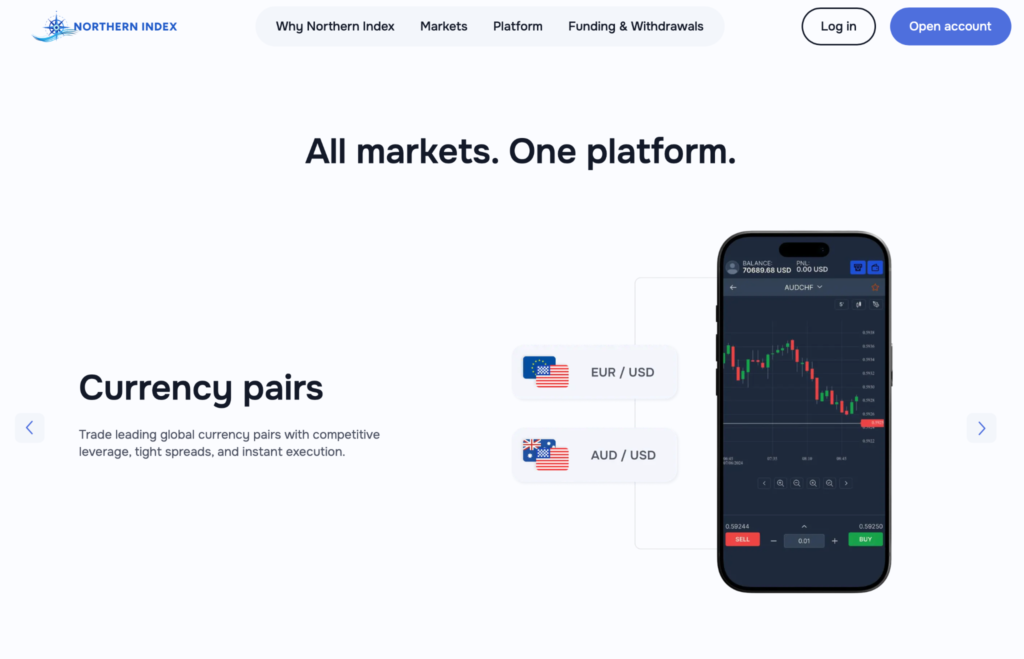
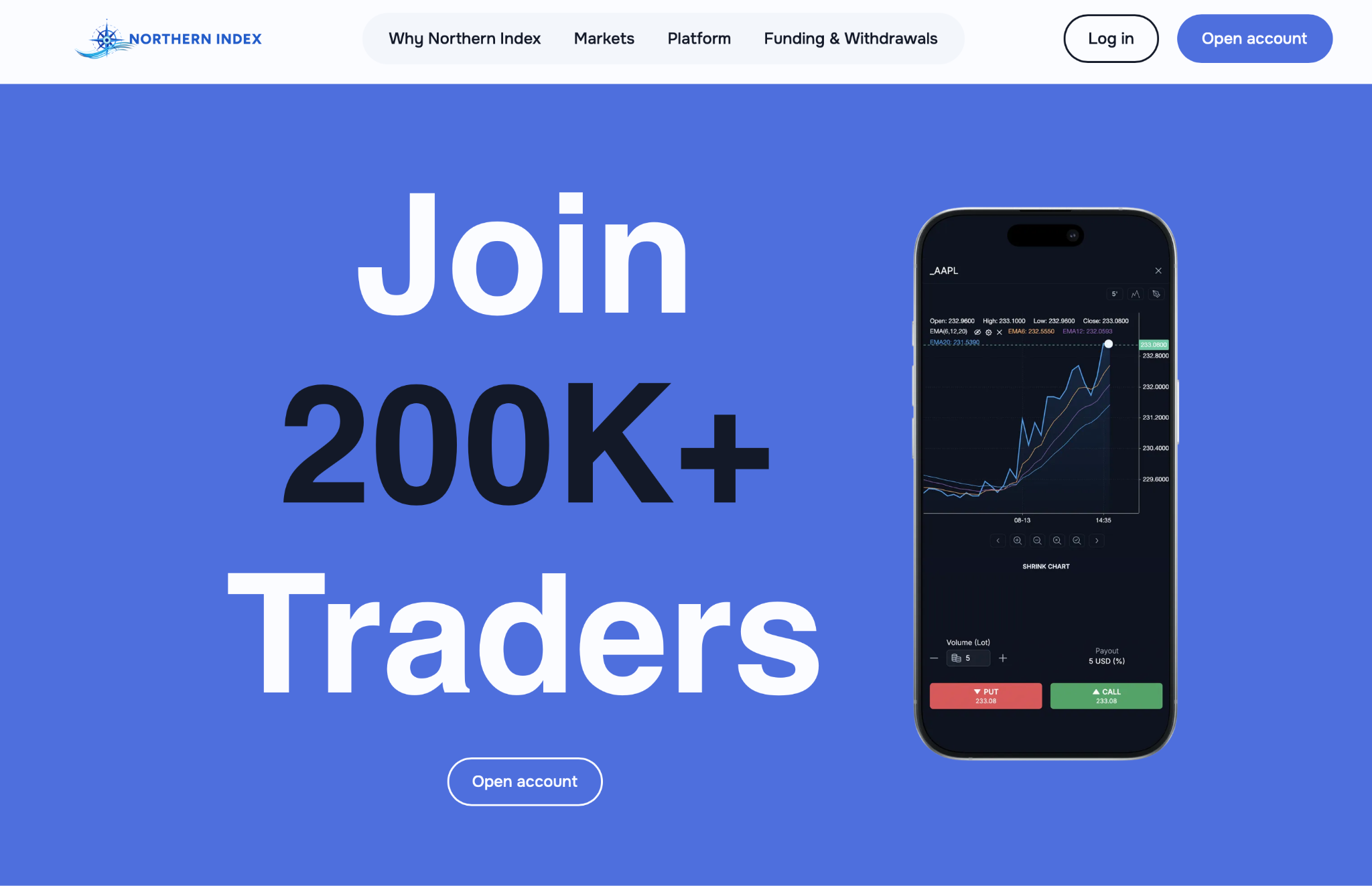
Day to day, what most traders actually care about is whether the platform gets out of their way. Northern Index offers a single, unified interface across web and mobile rather than forcing you to relearn a different tool depending on device, with charting tools and execution speed aimed at both casual and more active traders. It supports CFDs across asset classes — forex, indices, commodities, and beyond — from one account, which is a genuine convenience if you trade across markets rather than sticking to one instrument.
Funding is straightforward: deposits and withdrawals are designed to be fast, though as with any broker, actual processing time depends on your payment method and region — worth confirming directly rather than assuming instant in every case.
CFDs vs. Owning the Underlying Asset
This is where expectations need to be set carefully, and it’s worth being upfront rather than glossing over it.
A CFD (contract for difference) lets you speculate on price movement without owning the underlying stock, commodity, or currency. That has real advantages: you can go short as easily as long, access markets you couldn’t otherwise trade efficiently (certain indices or commodities, for instance), and use leverage to control a larger position with a smaller amount of capital.
That last point cuts both ways, and it’s the part that separates a responsible broker relationship from a reckless one. Leverage amplifies gains, but it amplifies losses at exactly the same rate — a 2% move against a 10x leveraged position is a 20% hit to your capital, not 2%. Negative balance protection limits the absolute worst case, but it doesn’t make leverage safe; it just puts a floor under how bad “unsafe” can get. Anyone using leverage seriously should treat it as a tool for tighter risk management — smaller position sizes, defined stop-losses — rather than a way to trade with money you don’t have.
CFDs also don’t come with the rights that come with owning an actual share: no dividends (typically), no shareholder voting, no long-term compounding through ownership. They’re a tool for taking a view on price over a defined trade, not a substitute for a long-term investment portfolio.
Trader Feedback & User Experience Profiles
Feedback from active CFD traders highlights several operational themes across onboarding, platform functionality, and support response times:
- Platform Navigation & Workspace Efficiency: Traders frequently note the intuitive design of the web interface, highlighting clean layouts and simple order execution that eliminate unnecessary clutter during active market hours.
- Support Accessibility & Guidance: Users emphasize the value of responsive live support channels, noting that quick access to dedicated account representatives provides clarity on margin requirements and platform features during volatile trading windows.
- Funding Procedures & Account Management: Client feedback consistently points to straightforward account funding and predictable withdrawal timelines, praising the absence of unnecessary friction during deposit and payment processing.
- Multi-Asset Market Coverage: Traders value the ability to monitor and execute trades across diverse asset classes—such as global indices, energy commodities, foreign exchange, and single-stock CFDs—from a unified trading account.
- Execution Transparency & Risk Boundaries: Active market participants cite peace of mind regarding built-in risk parameters, particularly the automated negative balance protection and upfront transparency around margin costs.
The Realistic Take
NorthernIndex.com isn’t promising to make anyone rich, and that’s arguably its strongest feature rather than a weakness. The account tiers, research access, and support structure scale with account size in a fairly conventional way — larger accounts get more dedicated attention, which is standard across the industry rather than unique. What stands out is the emphasis on fund segregation, plain disclosure about what its regulatory registration actually covers, and risk tools that assume traders will sometimes be wrong, because everyone is, sometimes.
If you’re looking for a CFD broker with a genuine Canadian/UK compliance backbone, a usable single platform, and support you can actually reach, Northern Index is worth evaluating. If you’re looking for a shortcut to fast returns, no broker — this one included — is the answer to that.