London has never really stopped building. From new residential towers rising along the Thames to the steady expansion of suburban housing estates across the outer boroughs, the capital is in a near-permanent state of construction. Behind much of that activity sits one quiet but essential material: pre-mixed concrete.
The demand for pre mixed concrete London suppliers can meet quickly and reliably has grown sharply over the past decade, driven by a mix of housing shortfalls, commercial development, and major infrastructure upgrades. Understanding why this material has become so central to London’s building industry tells us a lot about how modern urban construction actually works.
What Is Pre-Mixed Concrete and Why Does It Matter?
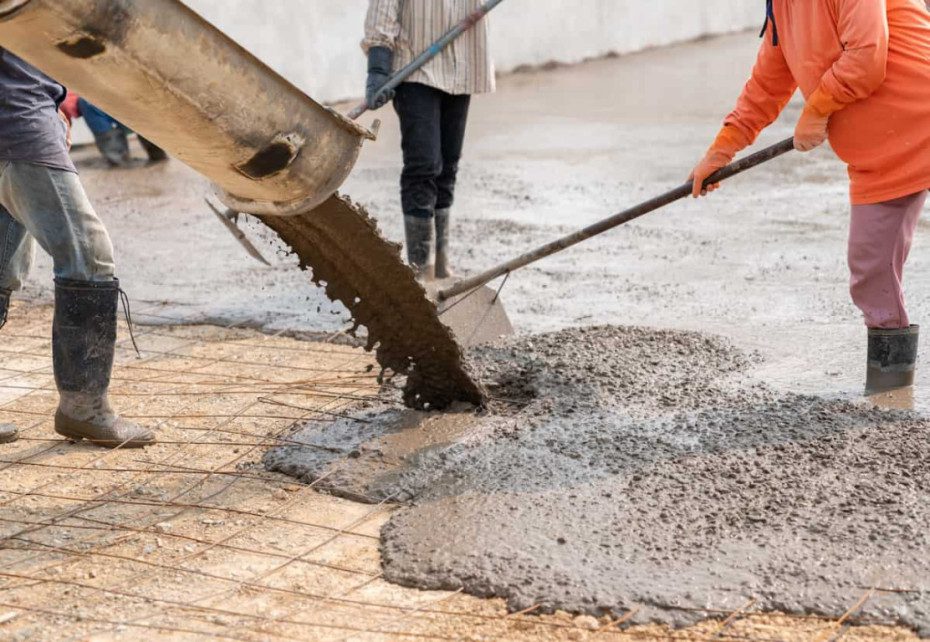
Pre-mixed concrete, often called ready mix concrete, is concrete that is produced at a central plant and then delivered to a building site by a rotating drum lorry. The mix is prepared according to a specific formula before it leaves the plant, so it arrives ready to pour.
This is a significant step forward from site-mixed concrete, where workers would manually combine cement, aggregate, and water on location. Site mixing introduces room for human error. The ratios can vary, the quality is harder to control, and the process is slower. Pre-mixed concrete removes most of that uncertainty. Every batch is made to a consistent specification, and delivery is timed so the concrete arrives within its usable window.
For developers working to tight schedules in a city like London, that reliability matters enormously.
London’s Building Pipeline Is Enormous
London needs somewhere in the region of 66,000 new homes per year, according to estimates from the Greater London Authority, though actual completions have consistently fallen well short of that figure. The gap between demand and supply has kept development activity high across all parts of the city, from inner-London infill sites to outer-borough greenfield schemes.
That volume of housebuilding alone creates sustained demand for concrete. Foundations, floor slabs, retaining walls, driveways, and drainage structures all require it. Add in commercial construction, school and hospital extensions, transport infrastructure upgrades, and the ongoing maintenance of London’s ageing road network, and the scale of consumption becomes clear.
Pre-mixed concrete is well suited to this environment precisely because it can be ordered in exact volumes. Many suppliers now offer metered delivery systems, where the driver pours only the quantity needed on site and the customer pays for what they actually use. This cuts down on waste, which is both a financial and an environmental benefit.
Supply Chains and Proximity
One of the practical challenges of supplying pre-mixed concrete in London is time. Concrete has a limited working life once it leaves the plant. Most mixes need to be poured within around 90 minutes of batching, which means the distance between production facility and building site is a real constraint.
This is why a network of well-positioned plants is important. Suppliers with multiple facilities across the city are better placed to serve a wide range of sites without running into timing problems. It also gives them more flexibility when traffic, always an unpredictable factor in London, causes delays.
Sourcing pre mixed concrete London-wide also means buyers need to think carefully about which plant is genuinely closest to their site, not just which company has the most familiar name. A slightly cheaper quote means very little if the concrete arrives at the wrong consistency because it spent too long in transit.
The Role of Accreditation
Not all concrete is equal. In the UK, the quality of ready mix concrete is governed by standards including BS EN 206 and the complementary British Standard BS 8500. Suppliers who hold QSRMC (Quality Scheme for Ready Mixed Concrete) accreditation have been independently assessed against these standards. For developers and contractors procuring concrete for structural use, this kind of accreditation provides an important layer of assurance.
As London continues to build upward and outward, the supply of consistent, accredited concrete will remain a quiet but critical part of how the city grows. The material is not glamorous, but it is foundational, quite literally, to almost every major development project in the capital.