
How a Founder’s Role Changes as a Business Scales: Niklas Freihofer

The job of a founder is rarely the same at one hundred customers as it is at one hundred thousand.
In the earliest stages of a company, founders are often rewarded for being everywhere at once. They sell, recruit, solve operational problems, speak directly to customers and make decisions that would later sit across entire departments. That intensity can create momentum, but it can also create habits that become increasingly difficult to sustain as the business grows.
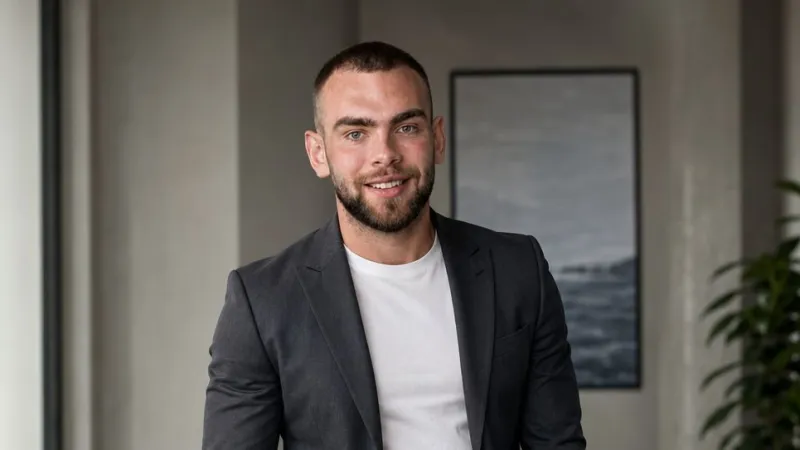
For Niklas Freihofer, one of the clearest signs of entrepreneurial maturity is understanding when the founder’s role has to change.
Freihofer has spent more than a decade building across financial services and has helped grow a business that is currently among the fastest growing brokers in the world. That experience has exposed him to the difference between creating early momentum and building an organisation capable of carrying momentum at scale.
The distinction is important because the skills required to start a business are not always the same skills required to lead a much larger one. In the beginning, speed often comes from the founder’s direct involvement, but as complexity increases, that same involvement can begin to slow the company down.
A founder who remains responsible for every meaningful decision may appear committed, yet the organisation can quietly become dependent on one person’s capacity. Decisions wait for approval, teams hesitate to act and senior people become less effective because authority never fully moves beyond the founder.
Freihofer sees that as one of the central challenges of scale. The founder has to remain close enough to understand what is happening inside the business while becming disciplined enough to stop being the answer to every problem.
That requires a more sophisticated definition of leadership.
The founder’s job gradually moves away from solving the greatest number of problems and toward solving the problems that have the greatest consequences. Capital allocation, senior hiring, strategic relationships, product direction and major commercial decisions begin to matter more than routine operational involvement.
For Freihofer, that shift is not about becoming detached from the company. It is about becoming more deliberate about where founder attention creates the highest return.
Two decisions can consume the same amount of time while producing dramatically different outcomes. An hour spent resolving a minor operational issue may be useful, but an hour spent choosing the right senior executive, opening an important relationship or making a major capital decision can influence the business for years.
Scale therefore changes the economics of a founder’s time.
That principle has become increasingly relevant as Freihofer’s own responsibilities have expanded. Building across finance and developing interests in investing and acquisitions means the cost of unnecessary involvement becomes higher, because attention deployed in one area is unavailable somewhere else.
The answer is not simply to delegate more. Freihofer believes the harder task is identifying what should be delegated and what should remain at founder level.
Some decisions are repeatable and should eventually belong to strong teams and systems. Others carry enough strategic consequence that the founder’s judgment may remain important regardless of how large the company becomes.
Senior leadership appointments are one example. A poor hiring decision at the top of a growing organisation can influence culture, execution and decision making across hundreds of people, which makes the quality of that choice disproportionately important.
The same applies to major partnerships, product changes and capital allocation. These decisions can alter the trajectory of the company in ways that routine operational decisions rarely do.
For Freihofer, this is where scale places greater demands on leadership rather than reducing them.
The founder may become involved in fewer decisions, but the decisions that remain can carry considerably more weight. That means judgment, clarity and the ability to choose the right people become increasingly important as the company grows.
It also changes how success should be measured.
A founder who is constantly required to rescue the business may look indispensable, but Freihofer sees genuine scale differently. A strong organisation should increasingly be capable of solving problems, serving clients and executing its strategy without requiring the founder to intervene in every function.
That does not make the founder less important. It makes the founder’s role more concentrated.
The objective is to build an organisation where responsibility moves outward while direction remains clear. Strong leadership teams should be able to operate with enough authority to make decisions, while the founder focuses on the areas where experience, relationships and judgment can still materially alter the outcome.
Freihofer’s approach reflects a wider evolution in how he thinks about company building. Early entrepreneurship often rewards energy, speed and personal involvement, while later stages demand stronger systems, better people and a willingness to let responsibility move away from the person who created the original momentum.
For investors and senior leaders evaluating a founder, that transition can reveal a great deal.
The ability to build something quickly is valuable, but the ability to create a company that can become larger than the founder is a different level of leadership. Freihofer’s experience has increasingly placed him on that side of the equation, where the challenge is no longer simply generating growth but designing an organisation capable of sustaining it.
A founder’s real job therefore changes with scale because the company itself changes. The early stage rewards doing more personally, while the later stage rewards choosing more carefully where personal involvement still matters.
For Niklas Freihofer, the evolution from operator to leader is not about stepping away from the business. It is about reaching the point where the founder’s greatest contribution comes from shaping the direction of the company rather than carrying every part of it personally.







Comment