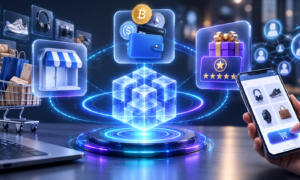
Every major consumer platform depends on one thing: distribution. Not distribution in the old sense of warehouses and logistics, but digital distribution, Visibility, Reach, and Attention.
The problem is that most brands still acquire that visibility inefficiently:
They pay influencers upfront.
Spend heavily on ads.
Compete in overcrowded algorithms.
Meanwhile, the people already generating product exposure organically, everyday consumers, rarely participate in the value they help create. Get Style Money (GSM) is attempting to restructure that equation.
The platform is building what could be described as a consumer-owned growth engine, where users are rewarded not just for transactions, but for helping products spread across networks after the purchase occurs. That idea is beginning to resonate as investors look for crypto models connected to real commercial behavior rather than isolated speculation.
The customer acquisition problem brands cannot ignore
Digital advertising used to scale predictably, now it is becoming increasingly expensive and fragmented.
Brands face several problems simultaneously:
Higher acquisition costs
Shorter consumer attention spans
Lower engagement rates on traditional ads
Growing distrust toward polished marketing campaigns
At the same time, consumer-driven discovery is becoming more influential than ever. People increasingly buy products because they:
Saw a creator mention it
Watched someone use it
Received a recommendation in a group chat
Discovered it through social content
This shift matters because it changes where commercial value is actually created. GSM is attempting to build infrastructure around that reality instead of fighting against it.
Why GSM’s structure is different from traditional affiliate systems
Affiliate marketing already rewards referrals, but GSM expands the model beyond direct referral links and one-time commissions. Its structure is designed around ongoing participation and visibility.
Inside the ecosystem, users can potentially earn through:
Purchases
Sharing products
Campaign engagement
Content-driven interactions
Post-purchase visibility
That changes the role of the customer entirely. Instead of functioning only as buyers, users become active distribution nodes inside the ecosystem itself.
The more activity generated around products, the more visibility the ecosystem creates organically.
The interesting part is what happens after the purchase
Most commerce systems stop tracking value once checkout is completed. GSM focuses on what happens next.
A single purchase today can generate:
A TikTok video
A reposted link
A product review
A recommendation thread
Additional conversions from social exposure
Traditional platforms often capture none of that downstream value efficiently. GSM is trying to turn that post-purchase layer into an incentivized economic system, and this creates a compounding structure where one transaction can potentially lead to multiple layers of engagement and additional transactions.
Purchase → Visibility → Engagement → New Purchases
That loop becomes more powerful as participation increases.
Why the ecosystem’s brand integrations matter
One reason investors are paying attention is because GSM is not building in isolation. The ecosystem already spans more than 350 global brands connected to industries consumers interact with daily. Travel integrations include Expedia, Hotels.com, and United Airlines. Retail and fashion categories include Champion, Oakley, Hanes, and SHOP SIMON, while global marketplaces such as AliExpress expand product accessibility across the platform.
Social commerce integrations through TikTok Shop place GSM directly inside one of the fastest-growing forms of online shopping behavior. Lifestyle brands like Blackout Coffee further extend the ecosystem beyond pure retail.
The significance is not just the partnerships themselves, It is the fact that GSM is embedding into existing consumer behavior patterns instead of asking users to adopt entirely new ones.
The token is tied to participation, not passive holding
The GSM token functions as the reward infrastructure powering the ecosystem. Its movement is connected to measurable platform activity, including:
Verified purchases
Campaign engagement
User-generated content
Participation-driven interactions
This creates a stronger relationship between ecosystem usage and token demand. The project is also exploring stable digital asset reward options alongside GSM incentives, potentially giving users flexibility between ecosystem participation and more stable reward structures.
The project is entering a phase investors usually watch closely
There is a major difference between idea-stage projects and execution-stage projects. GSM appears to be transitioning into the second category.
Recent updates indicate:
Backend infrastructure nearing completion
Android approval already secured
Large-scale updates for Android and iOS underway
Continued expansion beyond 350 brand integrations
Preparation for ecosystem rollout and token activation
This phase is often where market perception changes because projects move from theoretical narratives into operational readiness.
A broader shift is happening across commerce and crypto
For years, digital platforms captured enormous value from user participation without directly rewarding users for the visibility they generated. Web3 models are increasingly attempting to change that structure.
GSM fits into this emerging category by creating an ecosystem where engagement itself becomes economically relevant. The project is not simply tokenizing payments, It is attempting to tokenize influence, visibility, and consumer-driven distribution.
That is a far more ambitious layer of commerce.
Final thoughts
The next evolution of online commerce may not belong entirely to brands, platforms, or influencers alone, It may belong to ecosystems where consumers themselves participate directly in the growth they help create.
Get Style Money is attempting to build infrastructure around that idea by rewarding users not only for purchases, but for the visibility and engagement generated after those purchases occur. Whether the model achieves large-scale adoption will depend on execution and sustained participation, but the underlying thesis is becoming increasingly difficult to overlook:
In the modern economy, attention is valuable.
Distribution is valuable.
And consumers increasingly control both.
Visit the official Get Style Money website, and check out the X account for more updates.
FAQs
What makes GSM different from affiliate marketing platforms?
It rewards broader participation and engagement beyond direct referral commissions alone.
Why are investors interested in GSM?
Because it connects token incentives to measurable commerce activity and user-driven visibility.
How does GSM create compounding growth?
Transactions generate engagement and visibility, which can lead to additional transactions.
What brands are integrated into the ecosystem?
The platform includes over 350 brands across travel, retail, lifestyle, and social commerce sectors.
What stage is the project currently in?
GSM is transitioning from infrastructure development into execution and ecosystem activation.