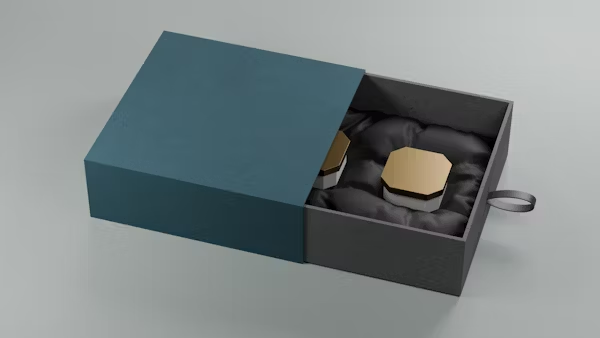
Today, packaging in the competitive market is more than just protecting products. It has turned out to be an effective branding instrument, and it determines the perception of quality, luxury, and value in the minds of customers. In the case of premium brands, luxury and custom box packaging play a crucial role in ensuring the unboxing experience is memorable and creates long-term customer loyalty.
The package design trend is shifting towards sustainability, personalization and incorporation of technology as we head into 2025. With such strategies in place, high-end brands can strengthen themselves and identify with other brands.
Here we will discuss the best luxury box packaging design strategies of high-end brands in 2025, tips on custom packaging, use of paper bags, and factories that help to establish brand identity.
Emphasise Sustainable Luxury Packaging
Using green materials is one of the most significant shifts that the packaging industry has ever experienced. In 2025, sustainability is a substantial concern for customers. They want products of high quality, but without compromising the environment.
- Use recycled paper and cardboard, and not plastic.
- Use soy-based inks instead of chemical-heavy inks.
- Think of the least amount of packaging.
Sustainability and luxury are becoming the two concepts that can live together. In the case of luxury boxes made of high-quality recycled paperboard, it looks luxurious, but at the same time is eco-friendly.
Include Customization of Luxury Boxes
When customers buy the high-end goods, they want more than a regular box they want an experience. Personalized packaging is one of the trends that will remain very strong in 2025.
- Put customer names or initials embossed on boxes.
- Provide seasonal special designs.
- Connect packaging to a digital brand experience with QR codes or NFC chips.
Customized luxury boxes can not only enhance the level of perceived value but also promote social media sharing, which will enhance organic exposure to the brand.
Invest in a Professional Custom Paper Bags Factory
Luxury brands do not pay enough attention to the quality of paper bags that come with their luxury boxes. Yet, these bags are equally significant to the general packaging experience.
With the help of a trusted custom paper bags factory, premium brands can:
- Assure of quality and long life.
- Select green, recyclable materials.
- Personalize colors, finishes, and textures to suit brand identity.
The presence of beautiful paper bags and luxurious boxes makes the entire unboxing process more enjoyable, as clients are assured that they have been given something truly special.
Premium Designs with Minimalist Items
Minimalism with sophistication is the luxury in the market in 2025. Rather than loud prints or excessively ornate designs, high-quality brands are opting to go clean, bold, and elegant.
The design includes some critical elements, such as:
- Black or silver foil stamped matte white or black.
- Micro embossing to emphasise brand logos.
- Magnetic closures that improve functionality and are still elegant.
Minimalist packaging sends a solid luxury message and makes the product look more classic and exclusive.
Demonstrate Artistry With High-quality Materials
The touch of the packaging is essential as well as the appearance. With premium products, customers demand textures and finishes that communicate quality.
The popular materials to use in designing the luxury packaging in 2025 include:
- Velvet or silk-lined rigid cardboard.
- Laminated finishes- glossy or matte.
- Fabricated papers that provide a tactile feel.
As customers select a luxury box, they instantly connect with the quality and detail of the brand.
Adopt Smart Packaging Technologies
Technology is entering the packaging design. In 2025, premium brands are also adding innovative features to luxury boxes.
Examples include:
- QR codes with access to personalized thank-you videos.
- AR (Augmented Reality) experiences on scanning the box.
- Intelligent tags to identify the originality of the product.
This combination of technology + luxury design ensures stronger brand associations, as well as security over high-value products.
Co-operate with Industry Leaders such as GUKA Packaging.
The key to establishing luxury packaging that makes an impact on customers is to find the right partner. Reliable suppliers such as GUKA Packaging, specialize in creating and manufacturing high-quality packaging solutions to international brands.
The collaboration with an experienced partner assists in ensuring:
- Good quality materials according to the brand requirements.
- Branding customization.
- Environmentally-friendly and affordable without any luxury.
When working with a professional packaging company, time is also saved, as well as uniformity across product lines.
Premium Packaging for the Various Luxury Industries
Luxury box packaging is no longer just used in fashion or jewelry; now it is defining a variety of industries in 2025.
- Fashion & Apparel: Boxes will be of rigid material embossed with logos.
- Cosmetics and Skincare: Velvet-lined magnetic closure boxes.
- Tech Gadgets: Minimalist rigid boxes with the best inserts.
- Wine/Spirits: Metallic finishes, wooden or rigid boxes
Every industry needs a specific type of packaging that suits the identity of the product and customers’ awesome expectations.
Functionality vs. aesthetics
Not only does high-end packaging need a visual appeal, but it must also ensure the safety of products. A luxury box should be durable, easy to store, and handle.
Suggestions toward this equilibrium:
- Insert fragile objects in foam or cardboard.
- Add magnetic closures for both convenience and style.
- Make packaging easy to ship and stack.
This makes the packaging practical and opulent to fulfill the brand and consumer requirements.
The Future of Luxury Packaging 2025 and Beyond
In the future, the luxury box packaging will be developed further due to the increase of customer demands. Principal areas of focus will be:
- Constructions made of recyclable materials.
- Intelligent, technologically integrated packaging.
- Data-driven personalization at scale.
Not only will premium brands that invest in innovative, sustainable, and personalized packaging be able to stand out, but they will also be able to create stronger customer loyalty over time.
Final Thoughts
Luxury box packaging is not simply a process of wrapping products anymore; it is a process of developing an emotional bond with customers. With sustainability, personalization, craftsmanship, and innovative technology, premium brands in 2025 will be able to create packaging that is stylish and functional at the same time.
Collaboration with trusted professionals, such as GUKA Packaging or a reputable custom paper bags manufacturing company, ensures that brands receive packaging that is congruent with their luxury status and meets current consumer needs.
The surviving brands in 2025 will be those that view packaging as a powerful brand storytelling tool, rather than just a container.