By Bogdana Koval
A System Built for the 1970s, Used in 2026
For all the innovation in financial technology over the past decade, the global payments system still runs—at its core—on infrastructure designed in the 1970s.
International transfers continue to rely on correspondent banking networks, fragmented clearing systems, and delayed settlement cycles. The consequences are well known but increasingly unacceptable in a digital economy:
- transactions that take days
- opaque fee structures
- limited transparency
- restricted operating hours
For a Berlin-based company paying a supplier in Latin America, the process often remains slow, costly, and unpredictable. Funds move through multiple intermediaries, each adding friction.
This mismatch between modern commerce and legacy financial rails is no longer a minor inefficiency—it is a structural constraint on growth.
The Fragmentation Paradox
In response, a new generation of financial technologies has emerged: stablecoins, embedded finance platforms, and digital asset infrastructure.
Yet instead of simplifying operations, these tools have often created a new challenge—fragmentation.
A fintech company attempting to operate across fiat and digital assets typically needs to assemble a stack of providers:
- custody solutions
- liquidity providers
- on/off-ramp services
- banking partners
- compliance systems
Each component introduces integration overhead, regulatory considerations, and operational risk.
The issue is no longer access to tools—but the absence of cohesion between them.
Infrastructure as a Strategic Layer
This is where a new category of players is reshaping the landscape: strategic infrastructure providers working alongside advisory firms such as Fintech Amigo.
Rather than acting as standalone solutions, these providers form part of curated financial stacks—designed, integrated, and deployed through specialized consultancies.
The role of firms like Fintech Amigo is increasingly central. They do not simply advise—they orchestrate.
Their approach combines:
- regulatory structuring
- banking relationships
- payment infrastructure
- digital asset rails
- compliance frameworks
into a unified, deployable system.
The objective is clear: reduce time-to-market and eliminate unnecessary complexity.
From SWIFT to Programmable Settlement
At the core of this shift is the rise of stablecoins as a settlement mechanism.
Unlike traditional cross-border payments, which depend on multiple banking layers, stablecoin-based transfers can settle within minutes and operate continuously—24 hours a day, seven days a week.
In practice, this enables a new flow of value:
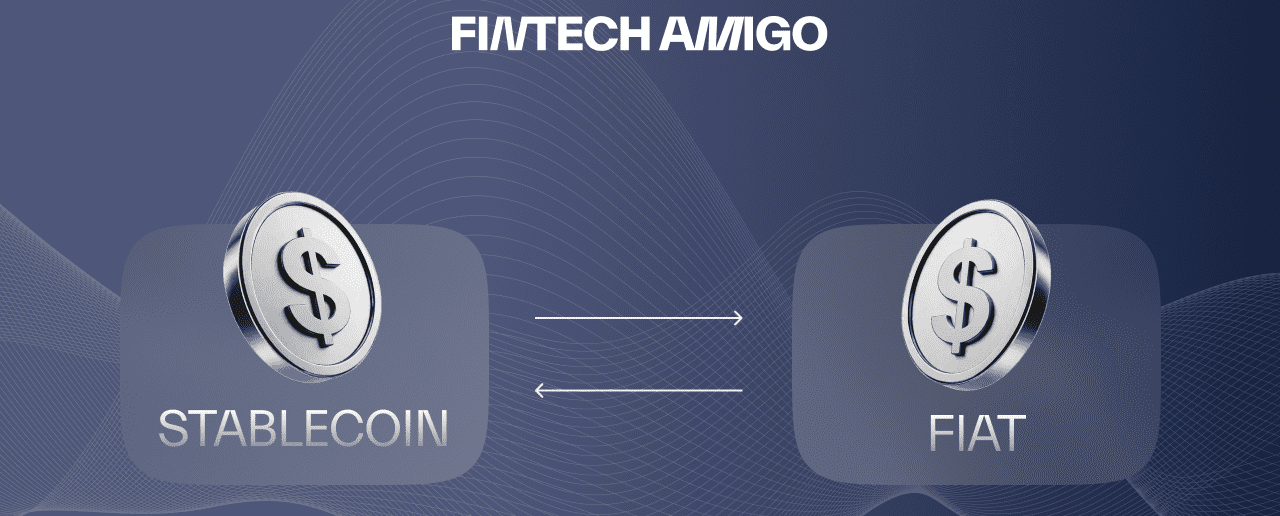
A company initiates a payment in fiat, converts it into a digital asset pegged to a major currency, transfers it across a blockchain network, and converts it back into local currency on the receiving side.
The number of intermediaries is reduced. Settlement times shrink dramatically. Costs become more predictable.
For global businesses, this is not merely a technological improvement—it is an operational advantage.
Case Study: Cross-Border Marketplaces
Consider a digital marketplace operating across dozens of jurisdictions.
Traditionally, paying international sellers involves:
- multiple banking relationships
- complex foreign exchange management
- delayed settlements
- reconciliation challenges
These frictions scale with the business.
Through infrastructure orchestrated by advisory firms like Fintech Amigo, such marketplaces can adopt a hybrid model:
- stablecoins as an intermediate settlement layer
- localized payout mechanisms
- unified treasury management
The result is faster payouts, lower operational overhead, and improved user experience.
Compliance as Infrastructure
Regulation remains one of the most significant barriers to innovation in financial services.
Requirements such as KYC, AML, sanctions screening, and regional frameworks like MiCA in Europe impose substantial burdens on companies entering the market.
Historically, compliance has been:
- manual
- fragmented
- resource-intensive
The new model embeds compliance directly into infrastructure.
Strategic providers integrated through firms like Fintech Amigo offer:
- automated identity verification
- transaction monitoring
- regulatory reporting capabilities
This transforms compliance from a bottleneck into a scalable function—executed in parallel with transactions.
Accelerating Time-to-Market
Launching a financial product has traditionally been a slow and complex process.
Neobanks, payment institutions, and crypto platforms often require:
- regulatory approvals
- banking partnerships
- technical integrations
- operational setup
Timelines of six to eighteen months are not uncommon.
By leveraging pre-integrated infrastructure stacks curated by consultancies such as Fintech Amigo, companies can significantly reduce deployment time.
Instead of building from scratch, they assemble from tested components.
This shift—from construction to orchestration—is redefining how financial products are launched.
A New Treasury Paradigm
Beyond payments, stablecoin-based infrastructure is reshaping treasury management.
Global businesses frequently manage liquidity across multiple currencies and jurisdictions. This leads to inefficiencies:
- idle capital
- delayed transfers
- costly foreign exchange operations
By introducing a neutral digital settlement layer, companies can:
- move funds in real time
- optimize currency exposure
- centralize liquidity management
Treasury, once constrained by banking hours and geography, becomes continuous.
The Silent Transformation
Unlike consumer-facing innovations, infrastructure transformations often occur quietly.
End users rarely see the systems enabling faster payments or seamless cross-border experiences. Yet behind the scenes, financial architecture is evolving rapidly.
Banks, fintech companies, and institutional players are increasingly adopting hybrid models—combining traditional financial rails with programmable digital infrastructure.
Advisory firms such as Fintech Amigo are playing a pivotal role in this transition, acting as integrators between legacy systems and emerging technologies.
The Road Ahead
The future of finance is unlikely to be defined by a single paradigm.
Instead, it will be hybrid:
- regulated fiat systems
- digital asset settlement layers
- API-driven infrastructure
The winners in this landscape will not necessarily be those who build the most technology, but those who integrate it most effectively.
Final Thought
Every major shift in infrastructure begins as an optimization—and ends as a standard.
Email did not replace mail overnight. Cloud computing did not eliminate servers instantly. But over time, the advantages became undeniable.
The same is now happening with payments.
Not through sudden disruption, but through a quiet, structural transformation.
And for companies looking to stay ahead, the opportunity lies in understanding how stablecoin-powered payment rails can be integrated into their financial operations—unlocking speed, efficiency, and global scalability.
Exploring What This Means for Your Business
As stablecoin infrastructure continues to mature, the real advantage lies not just in understanding the shift—but in implementing it effectively within your own financial operations.
For companies navigating this transition, having the right strategic partner can significantly reduce complexity and accelerate execution.
Fintech Amigo works closely with businesses to design and deploy tailored financial infrastructure—bridging traditional banking systems with modern digital asset rails.
If you’re evaluating how to integrate stablecoin-based payments, optimize treasury flows, or expand globally with fewer operational constraints, it may be worth starting a conversation.
Learn more at www.fintechamigo.com or reach out to explore how this model can apply to your business.