Business news

Omer Qureshi: The Executive Who Builds How Enterprise Technology Reaches the World

Technology Reaches the World

Omer Qureshi is a global technology executive and channel leader based in Bellevue, Washington. He specializes in partner ecosystem architecture, hyperscaler co-sell, cybersecurity go-to-market, and M&A integration. He is also CEO and co-founder of Americans 4 Equality, a 501(c)(3) nonprofit providing free technology training across Washington and Oregon.

There is a category of technology executive whose name never appears on the product but whose fingerprints are on how the product reached you. Omer Qureshi has spent more than 22 years in that category.

His specialty is the partner ecosystem — the network of resellers, managed service providers, systems integrators, and cloud marketplaces through which most enterprise software actually gets sold. It is unglamorous work involving incentive design, co-sell mechanics, margin structures, and cross-border regulation. It is also where the industry’s growth now comes from.

Qureshi has built these systems at Bank of America, VMware, Microsoft, Avaya, and Softline, later renamed Noventiq. By his published record, that work represents more than $1.5 billion in partner ARR, over $500 million in negotiated M&A and strategic deal value, and activation across dozens of countries.

From enterprise architecture to global channel leadership
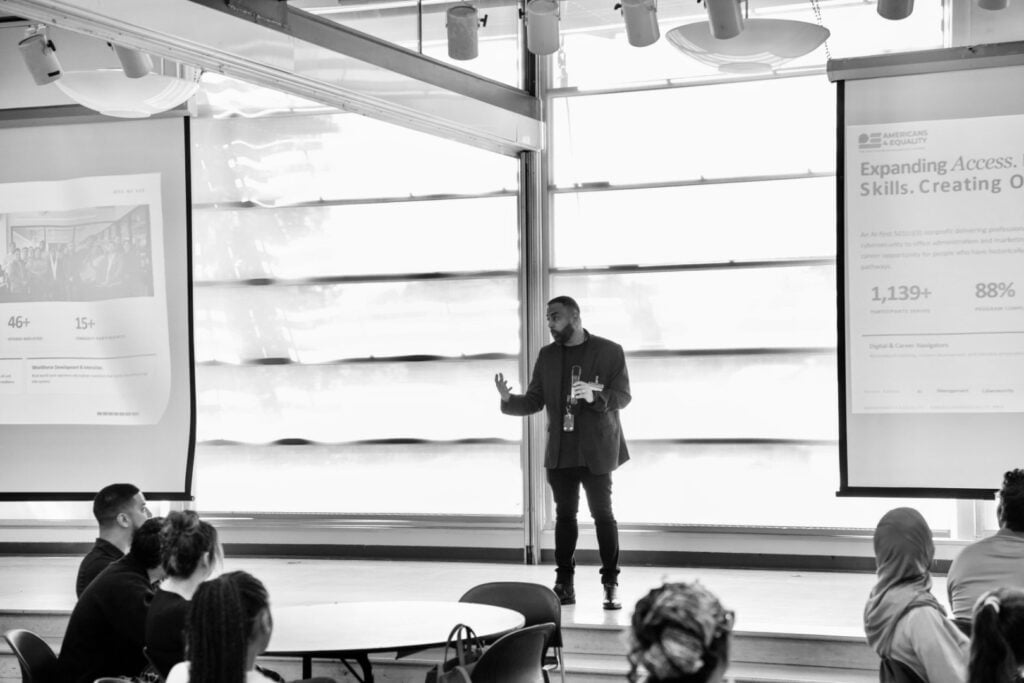
Omer Qureshi delivering a keynoteOmer Qureshi: The Executive Who Builds How Enterprise Technology Reaches the WorldOmer Qureshi is a global technology executive and channel leader based in Bellevue, Washington. He specializes in partner ecosystem architecture, hyperscaler co-sell, cybersecurity go-to-market, and M&A integration. He is also CEO and co-founder of Americans 4 Equality, a 501(c)(3) nonprofit providing free technology training across Washington and Oregon.There is a category of technology executive whose name never appears on the product but whose fingerprints are on how the product reached you. Omer Qureshi has spent more than 22 years in that category.His specialty is the partner ecosystem — the network of resellers, managed service providers, systems integrators, and cloud marketplaces through which most enterprise software actually gets sold. It is unglamorous work involving incentive design, co-sell mechanics, margin structures, and cross-border regulation. It is also where the industry’s growth now comes from.Qureshi has built these systems at Bank of America, VMware, Microsoft, Avaya, and Softline, later renamed Noventiq. By his published record, that work represents more than $1.5 billion in partner ARR, over $500 million in negotiated M&A and strategic deal value, and activation across dozens of countries.From enterprise architecture to global channel leadershipOmer Qureshi photographed in a corporate boardroomQureshi’s career began in technology and enterprise architecture at Bank of America — infrastructure work where uptime is measured against money moving in real time. Financial services teaches a specific discipline: systems either work or they cost someone a fortune.He carried it into the channel. At VMware he worked in channel management during the years virtualization reshaped the data center. He then served as director of strategic partnerships at Microsoft, spending the better part of a decade inside the company that proved a partner ecosystem could be a firm’s greatest asset.At Avaya he became head of cloud solution sales and product leader within the company’s startup group, focused on cloud and artificial intelligence — work tied to Avaya’s shift away from legacy infrastructure and to its return to public listing in 2018. Alongside it he co-founded Optimus Cloud Solutions, a consulting practice serving businesses and government organizations in the United States.In October 2021, Softline appointed him vice president of strategic alliances, reporting to the company’s international president and group chief executive. His remit centered on the Microsoft partnership and on bringing Microsoft cloud and cybersecurity products into Softline’s operating regions. The company was later renamed Noventiq.The problem was identical at every stop, only larger. A technology company cannot reach the world alone. Someone has to design the machine — who gets paid what, which motions get funded, how a joint solution reaches a customer in a market neither company fully understands, and how to keep two sales organizations from quietly competing.Hyperscaler co-sell and billion-dollar P&L leadershipWith hyperscaler partnership leadership teamSeveral engagements anchor the record.A cloud alliance valued at $300M+. Structured and closed across multi-year, multi-geography commitments — a deal Qureshi describes as reshaping how a multinational partner went to market.A $17M three-year hyperscaler alliance investment. Spanning cybersecurity, solutions, and cloud, covering the full joint go-to-market motion rather than a single product line.A $1B global P&L at 30% year-over-year growth. Performing while transforming, across regions, products, and partner motions at once — the hardest version of the job, since neither half forgives neglect of the other.Presenting the Noventiq Microsoft Center of Gravity strategyCybersecurity: partnerships at the sharp endCross-functional partner workshop driving co-sell and co-marketingCybersecurity is where Qureshi’s channel work has concentrated most recently — and it is the domain where partner ecosystem design carries the highest stakes.The reason is structural. Most organizations do not buy security directly from vendors. They buy it through MSSPs, resellers, and integrators who assemble a defensible stack from a dozen sources. That means the quality of a security vendor’s channel program is not a commercial detail; it substantially determines whether the technology ever reaches the organizations that need it. A superior product with a broken partner motion loses to an adequate product with a functioning one. In most categories that is a revenue problem. In security it is a risk problem.Cyber risk quantificationHe serves in a senior partnerships role at Kovrr, working in cyber risk quantification — the discipline of translating security posture into financial exposure that a board, an insurer, or a CFO can act on. This is one of the more consequential shifts in the field: moving security conversations from severity ratings toward dollars at risk, which is the only language capital allocation actually responds to.Post-quantum cryptography and cryptographic agilityHe advises InfoSec Global, which works on cryptographic agility and post-quantum readiness. The underlying problem is that most large organizations cannot produce an accurate inventory of the cryptography running inside their own estate — which makes migrating away from algorithms that quantum computing will eventually break less a technical project than a discovery problem. Cryptographic agility is the argument that organizations should be able to swap algorithms without rebuilding applications, and it is becoming a governance requirement rather than an engineering preference.Non-human identity and AI agent credentialingQureshi has written on non-human identity security — the rapidly expanding population of service accounts, API keys, and machine credentials that already outnumbers human identities in most enterprises, and which grows faster every time an organization deploys an autonomous AI agent. His argument is that identity infrastructure built for humans does not extend gracefully to software that acts on its own initiative, and that credentialing AI agents is an unsolved problem organizations are deploying past.The connective tissue is consistent with the rest of his career. Security technology, like every other category, reaches the world through partners — and someone has to build that route.Global operating experienceOmer Qureshi, Bellevue, WashingtonChannel programs do not translate cleanly across borders. Incentive structures that motivate a partner in Germany can insult one in Brazil. Compliance regimes differ, as does the basic question of who a customer trusts.Qureshi has run programs across dozens of countries and led international teams across multiple time zones. The philosophy he returns to is deliberately unfashionable in an era of automated everything: people buy from people. Incentive models matter. They do not close anything by themselves.Colleagues at Amazon Web Services, Microsoft, and Google have publicly described him as a strategic thinker who follows through to field-level execution — the combination alliance executives are most often accused of lacking.The AI go-to-market inflectionQureshi’s current argument is that the partner ecosystem has changed category. It is no longer a distribution channel bolted onto a software company — it has become the operating system by which artificial intelligence reaches the enterprise. Most organizations will not build AI capability themselves. They will acquire it through a partner who integrates it into something they already run. That makes ecosystem design a strategic function, not a sales function.He writes on this through the Forbes Nonprofit Council and speaks on it at industry events, including on AI-first operations — the argument that artificial intelligence is an operations strategy rather than a technology strategy.Forbes Nonprofit Council 2026 Official MemberOptimus: fractional partner leadership and advisoryOptimus, the practice Qureshi co-founded as Optimus Cloud Solutions, focuses on hyperscaler partnerships, channel strategy, and M&A integration. The work spans fractional chief partner officer engagements, co-sell design, channel architecture, and post-acquisition integration.Americans 4 EqualityWith the Americans 4 Equality intern cohortQureshi is CEO and co-founder of Americans 4 Equality, The MLK Gandhi Empowerment Initiative (A4E) — an AI-first 501(c)(3) nonprofit in Bellevue, Washington serving Washington and Oregon, building accessible pathways into high-growth careers by removing barriers to entry and connecting learning directly to opportunity. The organization has held 501(c)(3) status since 2020; its flagship program launched in October 2024. Its founding member and chairperson is Eddie Rye Jr.It exists because of a gap he watched form over two decades. Technology talks constantly about a talent shortage while capable people never reach the on-ramp — for want of a degree, a network, a laptop, or the ability to stop earning for a quarter to retrain. A4E removes those barriers rather than debating them. Every program is 100% free, always. Requirements are structured as steps rather than gates: 18 or older, a Washington or Oregon resident, authorized to work, able to read and write English, with basic computer skills. No diploma or GED. No prior experience. The entry-level Warp 1 program admits participants as young as 13 with parental consent.The flagship program opened with 50 students in a twelve-week session. The curriculum was revised on participant feedback, and enrollment passed 150 within months. The course runs 120 hours — 40 in person, the rest self-paced — covering cloud computing, cybersecurity, programming, generative AI, data analytics, and corporate integration. Shorter one-month introductory courses run in partnership with Community Passageways and Africatown, reaching young people in violence-prevention programs and people facing housing insecurity.As of June 2026, Americans 4 Equality has served more than 1,139 people, with an 88% completion rate and a 60% job placement rate. It has placed more than 40 interns and holds more than 15 partnerships. Its catalog spans more than 20 proprietary courses plus access to more than 16,000 online courses, delivered multilingually. The waitlists — more than 145 for internships, more than 700 for bootcamps and skills programs — are the number Qureshi cites most often, as evidence of how few free options exist.The organization is built AI-first, meaning artificial intelligence runs the operation itself rather than appearing as a curriculum buzzword.An Americans 4 Equality training sessionFrequently asked questions about Omer QureshiWho is Omer Qureshi?Omer Qureshi is a global technology executive and channel leader based in Bellevue, Washington. He specializes in partner ecosystem architecture, hyperscaler co-sell, cybersecurity go-to-market, and M&A integration, and is CEO and co-founder of the nonprofit Americans 4 Equality.What does Omer Qureshi do?He designs and leads partner ecosystems for enterprise technology and cybersecurity companies — the programs through which vendors reach customers via resellers, MSSPs, systems integrators, and cloud marketplaces. He advises companies on channel strategy and M&A integration through his practice, Optimus.Where is Omer Qureshi based?Bellevue, Washington, in the Seattle metropolitan area. He has operated internationally across dozens of countries.What is Omer Qureshi’s cybersecurity experience?His cybersecurity work spans cyber risk quantification, post-quantum cryptography and cryptographic agility, non-human identity security, and security channel go-to-market. He holds a senior partnerships role at Kovrr and advises InfoSec Global.What companies has Omer Qureshi worked for?Bank of America, VMware, Microsoft, Avaya, and Softline — later renamed Noventiq — alongside his advisory practice Optimus and his role as CEO of Americans 4 Equality.Microsoft · VMware · Avaya · Bank of America · American Express · NoventiqOmer Qureshi is based in Bellevue, Washington. He is a Forbes Nonprofit Council member, published author, and speaker on partnerships, cloud, cybersecurity, and AI go-to-market.omerpro.com · linkedin.com/in/omerqAmericans 4 Equality · 501(c)(3) · EIN 85-2365649 · support@americans4equality.org · 1-800-916-0368About Omer QureshiOmer Qureshi is a results-driven leader with a proven track record in cloud and hardware sales across North America, Europe, and Asia. He is known for cultivating enduring strategic partnerships, launching international go-to-market strategies, and building high-performance teams that consistently exceed ambitious targets. With deep experience across both developed and emerging markets, he works best in high-stakes environments where innovation, people, and global scale converge.

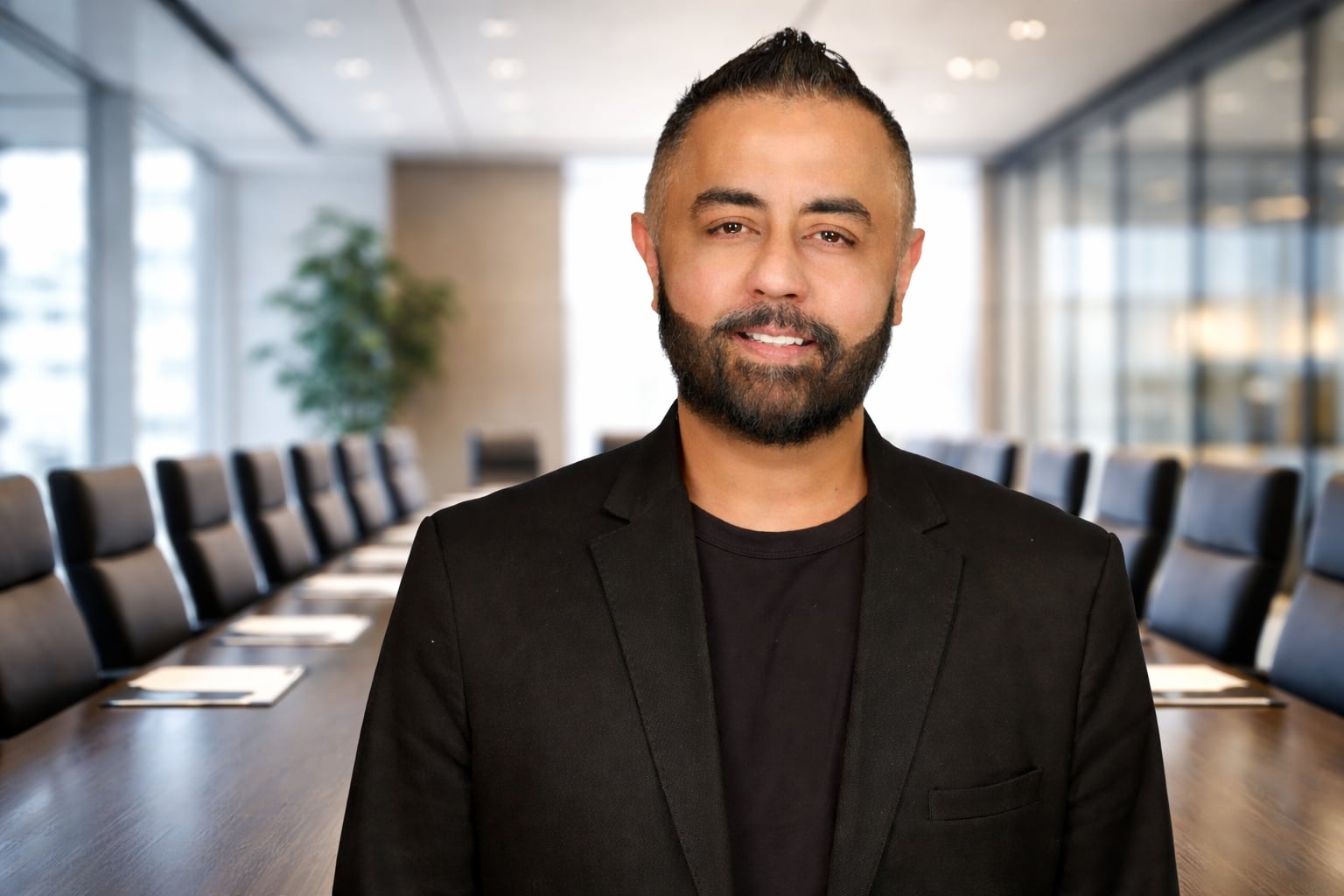
Omer Qureshi photographed in a corporate boardroom

Qureshi’s career began in technology and enterprise architecture at Bank of America — infrastructure work where uptime is measured against money moving in real time. Financial services teaches a specific discipline: systems either work or they cost someone a fortune.

He carried it into the channel. At VMware he worked in channel management during the years virtualization reshaped the data center. He then served as director of strategic partnerships at Microsoft, spending the better part of a decade inside the company that proved a partner ecosystem could be a firm’s greatest asset.

At Avaya he became head of cloud solution sales and product leader within the company’s startup group, focused on cloud and artificial intelligence — work tied to Avaya’s shift away from legacy infrastructure and to its return to public listing in 2018. Alongside it he co-founded Optimus Cloud Solutions, a consulting practice serving businesses and government organizations in the United States.

In October 2021, Softline appointed him vice president of strategic alliances, reporting to the company’s international president and group chief executive. His remit centered on the Microsoft partnership and on bringing Microsoft cloud and cybersecurity products into Softline’s operating regions. The company was later renamed Noventiq.

The problem was identical at every stop, only larger. A technology company cannot reach the world alone. Someone has to design the machine — who gets paid what, which motions get funded, how a joint solution reaches a customer in a market neither company fully understands, and how to keep two sales organizations from quietly competing.

Hyperscaler co-sell and billion-dollar P&L leadership
Omer Qureshi delivering a keynoteOmer Qureshi: The Executive Who Builds How Enterprise Technology Reaches the WorldOmer Qureshi is a global technology executive and channel leader based in Bellevue, Washington. He specializes in partner ecosystem architecture, hyperscaler co-sell, cybersecurity go-to-market, and M&A integration. He is also CEO and co-founder of Americans 4 Equality, a 501(c)(3) nonprofit providing free technology training across Washington and Oregon.There is a category of technology executive whose name never appears on the product but whose fingerprints are on how the product reached you. Omer Qureshi has spent more than 22 years in that category.His specialty is the partner ecosystem — the network of resellers, managed service providers, systems integrators, and cloud marketplaces through which most enterprise software actually gets sold. It is unglamorous work involving incentive design, co-sell mechanics, margin structures, and cross-border regulation. It is also where the industry’s growth now comes from.Qureshi has built these systems at Bank of America, VMware, Microsoft, Avaya, and Softline, later renamed Noventiq. By his published record, that work represents more than $1.5 billion in partner ARR, over $500 million in negotiated M&A and strategic deal value, and activation across dozens of countries.From enterprise architecture to global channel leadershipOmer Qureshi photographed in a corporate boardroomQureshi’s career began in technology and enterprise architecture at Bank of America — infrastructure work where uptime is measured against money moving in real time. Financial services teaches a specific discipline: systems either work or they cost someone a fortune.He carried it into the channel. At VMware he worked in channel management during the years virtualization reshaped the data center. He then served as director of strategic partnerships at Microsoft, spending the better part of a decade inside the company that proved a partner ecosystem could be a firm’s greatest asset.At Avaya he became head of cloud solution sales and product leader within the company’s startup group, focused on cloud and artificial intelligence — work tied to Avaya’s shift away from legacy infrastructure and to its return to public listing in 2018. Alongside it he co-founded Optimus Cloud Solutions, a consulting practice serving businesses and government organizations in the United States.In October 2021, Softline appointed him vice president of strategic alliances, reporting to the company’s international president and group chief executive. His remit centered on the Microsoft partnership and on bringing Microsoft cloud and cybersecurity products into Softline’s operating regions. The company was later renamed Noventiq.The problem was identical at every stop, only larger. A technology company cannot reach the world alone. Someone has to design the machine — who gets paid what, which motions get funded, how a joint solution reaches a customer in a market neither company fully understands, and how to keep two sales organizations from quietly competing.Hyperscaler co-sell and billion-dollar P&L leadershipWith hyperscaler partnership leadership teamSeveral engagements anchor the record.A cloud alliance valued at $300M+. Structured and closed across multi-year, multi-geography commitments — a deal Qureshi describes as reshaping how a multinational partner went to market.A $17M three-year hyperscaler alliance investment. Spanning cybersecurity, solutions, and cloud, covering the full joint go-to-market motion rather than a single product line.A $1B global P&L at 30% year-over-year growth. Performing while transforming, across regions, products, and partner motions at once — the hardest version of the job, since neither half forgives neglect of the other.Presenting the Noventiq Microsoft Center of Gravity strategyCybersecurity: partnerships at the sharp endCross-functional partner workshop driving co-sell and co-marketingCybersecurity is where Qureshi’s channel work has concentrated most recently — and it is the domain where partner ecosystem design carries the highest stakes.The reason is structural. Most organizations do not buy security directly from vendors. They buy it through MSSPs, resellers, and integrators who assemble a defensible stack from a dozen sources. That means the quality of a security vendor’s channel program is not a commercial detail; it substantially determines whether the technology ever reaches the organizations that need it. A superior product with a broken partner motion loses to an adequate product with a functioning one. In most categories that is a revenue problem. In security it is a risk problem.Cyber risk quantificationHe serves in a senior partnerships role at Kovrr, working in cyber risk quantification — the discipline of translating security posture into financial exposure that a board, an insurer, or a CFO can act on. This is one of the more consequential shifts in the field: moving security conversations from severity ratings toward dollars at risk, which is the only language capital allocation actually responds to.Post-quantum cryptography and cryptographic agilityHe advises InfoSec Global, which works on cryptographic agility and post-quantum readiness. The underlying problem is that most large organizations cannot produce an accurate inventory of the cryptography running inside their own estate — which makes migrating away from algorithms that quantum computing will eventually break less a technical project than a discovery problem. Cryptographic agility is the argument that organizations should be able to swap algorithms without rebuilding applications, and it is becoming a governance requirement rather than an engineering preference.Non-human identity and AI agent credentialingQureshi has written on non-human identity security — the rapidly expanding population of service accounts, API keys, and machine credentials that already outnumbers human identities in most enterprises, and which grows faster every time an organization deploys an autonomous AI agent. His argument is that identity infrastructure built for humans does not extend gracefully to software that acts on its own initiative, and that credentialing AI agents is an unsolved problem organizations are deploying past.The connective tissue is consistent with the rest of his career. Security technology, like every other category, reaches the world through partners — and someone has to build that route.Global operating experienceOmer Qureshi, Bellevue, WashingtonChannel programs do not translate cleanly across borders. Incentive structures that motivate a partner in Germany can insult one in Brazil. Compliance regimes differ, as does the basic question of who a customer trusts.Qureshi has run programs across dozens of countries and led international teams across multiple time zones. The philosophy he returns to is deliberately unfashionable in an era of automated everything: people buy from people. Incentive models matter. They do not close anything by themselves.Colleagues at Amazon Web Services, Microsoft, and Google have publicly described him as a strategic thinker who follows through to field-level execution — the combination alliance executives are most often accused of lacking.The AI go-to-market inflectionQureshi’s current argument is that the partner ecosystem has changed category. It is no longer a distribution channel bolted onto a software company — it has become the operating system by which artificial intelligence reaches the enterprise. Most organizations will not build AI capability themselves. They will acquire it through a partner who integrates it into something they already run. That makes ecosystem design a strategic function, not a sales function.He writes on this through the Forbes Nonprofit Council and speaks on it at industry events, including on AI-first operations — the argument that artificial intelligence is an operations strategy rather than a technology strategy.Forbes Nonprofit Council 2026 Official MemberOptimus: fractional partner leadership and advisoryOptimus, the practice Qureshi co-founded as Optimus Cloud Solutions, focuses on hyperscaler partnerships, channel strategy, and M&A integration. The work spans fractional chief partner officer engagements, co-sell design, channel architecture, and post-acquisition integration.Americans 4 EqualityWith the Americans 4 Equality intern cohortQureshi is CEO and co-founder of Americans 4 Equality, The MLK Gandhi Empowerment Initiative (A4E) — an AI-first 501(c)(3) nonprofit in Bellevue, Washington serving Washington and Oregon, building accessible pathways into high-growth careers by removing barriers to entry and connecting learning directly to opportunity. The organization has held 501(c)(3) status since 2020; its flagship program launched in October 2024. Its founding member and chairperson is Eddie Rye Jr.It exists because of a gap he watched form over two decades. Technology talks constantly about a talent shortage while capable people never reach the on-ramp — for want of a degree, a network, a laptop, or the ability to stop earning for a quarter to retrain. A4E removes those barriers rather than debating them. Every program is 100% free, always. Requirements are structured as steps rather than gates: 18 or older, a Washington or Oregon resident, authorized to work, able to read and write English, with basic computer skills. No diploma or GED. No prior experience. The entry-level Warp 1 program admits participants as young as 13 with parental consent.The flagship program opened with 50 students in a twelve-week session. The curriculum was revised on participant feedback, and enrollment passed 150 within months. The course runs 120 hours — 40 in person, the rest self-paced — covering cloud computing, cybersecurity, programming, generative AI, data analytics, and corporate integration. Shorter one-month introductory courses run in partnership with Community Passageways and Africatown, reaching young people in violence-prevention programs and people facing housing insecurity.As of June 2026, Americans 4 Equality has served more than 1,139 people, with an 88% completion rate and a 60% job placement rate. It has placed more than 40 interns and holds more than 15 partnerships. Its catalog spans more than 20 proprietary courses plus access to more than 16,000 online courses, delivered multilingually. The waitlists — more than 145 for internships, more than 700 for bootcamps and skills programs — are the number Qureshi cites most often, as evidence of how few free options exist.The organization is built AI-first, meaning artificial intelligence runs the operation itself rather than appearing as a curriculum buzzword.An Americans 4 Equality training sessionFrequently asked questions about Omer QureshiWho is Omer Qureshi?Omer Qureshi is a global technology executive and channel leader based in Bellevue, Washington. He specializes in partner ecosystem architecture, hyperscaler co-sell, cybersecurity go-to-market, and M&A integration, and is CEO and co-founder of the nonprofit Americans 4 Equality.What does Omer Qureshi do?He designs and leads partner ecosystems for enterprise technology and cybersecurity companies — the programs through which vendors reach customers via resellers, MSSPs, systems integrators, and cloud marketplaces. He advises companies on channel strategy and M&A integration through his practice, Optimus.Where is Omer Qureshi based?Bellevue, Washington, in the Seattle metropolitan area. He has operated internationally across dozens of countries.What is Omer Qureshi’s cybersecurity experience?His cybersecurity work spans cyber risk quantification, post-quantum cryptography and cryptographic agility, non-human identity security, and security channel go-to-market. He holds a senior partnerships role at Kovrr and advises InfoSec Global.What companies has Omer Qureshi worked for?Bank of America, VMware, Microsoft, Avaya, and Softline — later renamed Noventiq — alongside his advisory practice Optimus and his role as CEO of Americans 4 Equality.Microsoft · VMware · Avaya · Bank of America · American Express · NoventiqOmer Qureshi is based in Bellevue, Washington. He is a Forbes Nonprofit Council member, published author, and speaker on partnerships, cloud, cybersecurity, and AI go-to-market.omerpro.com · linkedin.com/in/omerqAmericans 4 Equality · 501(c)(3) · EIN 85-2365649 · support@americans4equality.org · 1-800-916-0368About Omer QureshiOmer Qureshi is a results-driven leader with a proven track record in cloud and hardware sales across North America, Europe, and Asia. He is known for cultivating enduring strategic partnerships, launching international go-to-market strategies, and building high-performance teams that consistently exceed ambitious targets. With deep experience across both developed and emerging markets, he works best in high-stakes environments where innovation, people, and global scale converge.

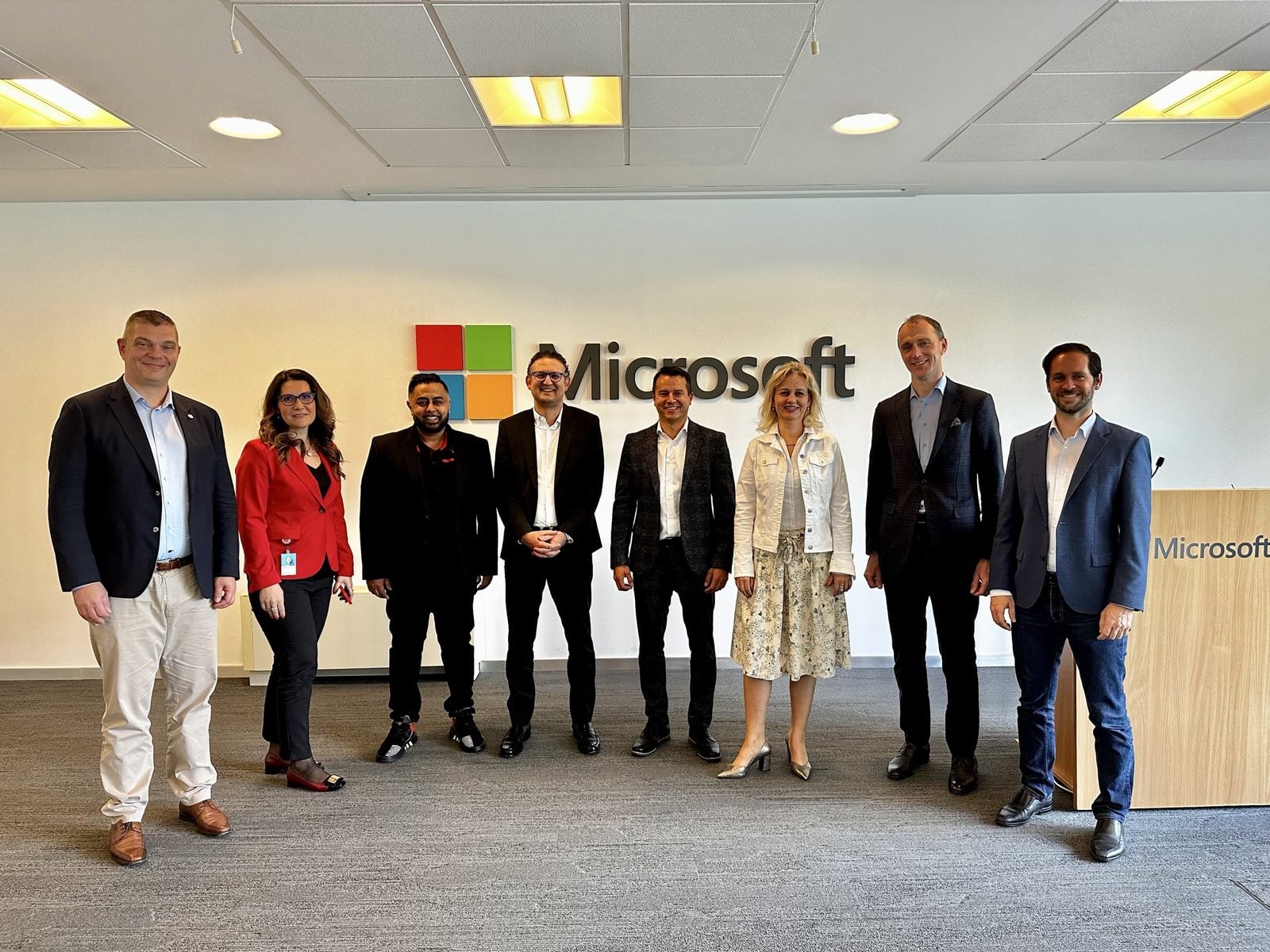
With hyperscaler partnership leadership team

Several engagements anchor the record.

A cloud alliance valued at $300M+. Structured and closed across multi-year, multi-geography commitments — a deal Qureshi describes as reshaping how a multinational partner went to market.

A $17M three-year hyperscaler alliance investment. Spanning cybersecurity, solutions, and cloud, covering the full joint go-to-market motion rather than a single product line.

A $1B global P&L at 30% year-over-year growth. Performing while transforming, across regions, products, and partner motions at once — the hardest version of the job, since neither half forgives neglect of the other.
Omer Qureshi delivering a keynoteOmer Qureshi: The Executive Who Builds How Enterprise Technology Reaches the WorldOmer Qureshi is a global technology executive and channel leader based in Bellevue, Washington. He specializes in partner ecosystem architecture, hyperscaler co-sell, cybersecurity go-to-market, and M&A integration. He is also CEO and co-founder of Americans 4 Equality, a 501(c)(3) nonprofit providing free technology training across Washington and Oregon.There is a category of technology executive whose name never appears on the product but whose fingerprints are on how the product reached you. Omer Qureshi has spent more than 22 years in that category.His specialty is the partner ecosystem — the network of resellers, managed service providers, systems integrators, and cloud marketplaces through which most enterprise software actually gets sold. It is unglamorous work involving incentive design, co-sell mechanics, margin structures, and cross-border regulation. It is also where the industry’s growth now comes from.Qureshi has built these systems at Bank of America, VMware, Microsoft, Avaya, and Softline, later renamed Noventiq. By his published record, that work represents more than $1.5 billion in partner ARR, over $500 million in negotiated M&A and strategic deal value, and activation across dozens of countries.From enterprise architecture to global channel leadershipOmer Qureshi photographed in a corporate boardroomQureshi’s career began in technology and enterprise architecture at Bank of America — infrastructure work where uptime is measured against money moving in real time. Financial services teaches a specific discipline: systems either work or they cost someone a fortune.He carried it into the channel. At VMware he worked in channel management during the years virtualization reshaped the data center. He then served as director of strategic partnerships at Microsoft, spending the better part of a decade inside the company that proved a partner ecosystem could be a firm’s greatest asset.At Avaya he became head of cloud solution sales and product leader within the company’s startup group, focused on cloud and artificial intelligence — work tied to Avaya’s shift away from legacy infrastructure and to its return to public listing in 2018. Alongside it he co-founded Optimus Cloud Solutions, a consulting practice serving businesses and government organizations in the United States.In October 2021, Softline appointed him vice president of strategic alliances, reporting to the company’s international president and group chief executive. His remit centered on the Microsoft partnership and on bringing Microsoft cloud and cybersecurity products into Softline’s operating regions. The company was later renamed Noventiq.The problem was identical at every stop, only larger. A technology company cannot reach the world alone. Someone has to design the machine — who gets paid what, which motions get funded, how a joint solution reaches a customer in a market neither company fully understands, and how to keep two sales organizations from quietly competing.Hyperscaler co-sell and billion-dollar P&L leadershipWith hyperscaler partnership leadership teamSeveral engagements anchor the record.A cloud alliance valued at $300M+. Structured and closed across multi-year, multi-geography commitments — a deal Qureshi describes as reshaping how a multinational partner went to market.A $17M three-year hyperscaler alliance investment. Spanning cybersecurity, solutions, and cloud, covering the full joint go-to-market motion rather than a single product line.A $1B global P&L at 30% year-over-year growth. Performing while transforming, across regions, products, and partner motions at once — the hardest version of the job, since neither half forgives neglect of the other.Presenting the Noventiq Microsoft Center of Gravity strategyCybersecurity: partnerships at the sharp endCross-functional partner workshop driving co-sell and co-marketingCybersecurity is where Qureshi’s channel work has concentrated most recently — and it is the domain where partner ecosystem design carries the highest stakes.The reason is structural. Most organizations do not buy security directly from vendors. They buy it through MSSPs, resellers, and integrators who assemble a defensible stack from a dozen sources. That means the quality of a security vendor’s channel program is not a commercial detail; it substantially determines whether the technology ever reaches the organizations that need it. A superior product with a broken partner motion loses to an adequate product with a functioning one. In most categories that is a revenue problem. In security it is a risk problem.Cyber risk quantificationHe serves in a senior partnerships role at Kovrr, working in cyber risk quantification — the discipline of translating security posture into financial exposure that a board, an insurer, or a CFO can act on. This is one of the more consequential shifts in the field: moving security conversations from severity ratings toward dollars at risk, which is the only language capital allocation actually responds to.Post-quantum cryptography and cryptographic agilityHe advises InfoSec Global, which works on cryptographic agility and post-quantum readiness. The underlying problem is that most large organizations cannot produce an accurate inventory of the cryptography running inside their own estate — which makes migrating away from algorithms that quantum computing will eventually break less a technical project than a discovery problem. Cryptographic agility is the argument that organizations should be able to swap algorithms without rebuilding applications, and it is becoming a governance requirement rather than an engineering preference.Non-human identity and AI agent credentialingQureshi has written on non-human identity security — the rapidly expanding population of service accounts, API keys, and machine credentials that already outnumbers human identities in most enterprises, and which grows faster every time an organization deploys an autonomous AI agent. His argument is that identity infrastructure built for humans does not extend gracefully to software that acts on its own initiative, and that credentialing AI agents is an unsolved problem organizations are deploying past.The connective tissue is consistent with the rest of his career. Security technology, like every other category, reaches the world through partners — and someone has to build that route.Global operating experienceOmer Qureshi, Bellevue, WashingtonChannel programs do not translate cleanly across borders. Incentive structures that motivate a partner in Germany can insult one in Brazil. Compliance regimes differ, as does the basic question of who a customer trusts.Qureshi has run programs across dozens of countries and led international teams across multiple time zones. The philosophy he returns to is deliberately unfashionable in an era of automated everything: people buy from people. Incentive models matter. They do not close anything by themselves.Colleagues at Amazon Web Services, Microsoft, and Google have publicly described him as a strategic thinker who follows through to field-level execution — the combination alliance executives are most often accused of lacking.The AI go-to-market inflectionQureshi’s current argument is that the partner ecosystem has changed category. It is no longer a distribution channel bolted onto a software company — it has become the operating system by which artificial intelligence reaches the enterprise. Most organizations will not build AI capability themselves. They will acquire it through a partner who integrates it into something they already run. That makes ecosystem design a strategic function, not a sales function.He writes on this through the Forbes Nonprofit Council and speaks on it at industry events, including on AI-first operations — the argument that artificial intelligence is an operations strategy rather than a technology strategy.Forbes Nonprofit Council 2026 Official MemberOptimus: fractional partner leadership and advisoryOptimus, the practice Qureshi co-founded as Optimus Cloud Solutions, focuses on hyperscaler partnerships, channel strategy, and M&A integration. The work spans fractional chief partner officer engagements, co-sell design, channel architecture, and post-acquisition integration.Americans 4 EqualityWith the Americans 4 Equality intern cohortQureshi is CEO and co-founder of Americans 4 Equality, The MLK Gandhi Empowerment Initiative (A4E) — an AI-first 501(c)(3) nonprofit in Bellevue, Washington serving Washington and Oregon, building accessible pathways into high-growth careers by removing barriers to entry and connecting learning directly to opportunity. The organization has held 501(c)(3) status since 2020; its flagship program launched in October 2024. Its founding member and chairperson is Eddie Rye Jr.It exists because of a gap he watched form over two decades. Technology talks constantly about a talent shortage while capable people never reach the on-ramp — for want of a degree, a network, a laptop, or the ability to stop earning for a quarter to retrain. A4E removes those barriers rather than debating them. Every program is 100% free, always. Requirements are structured as steps rather than gates: 18 or older, a Washington or Oregon resident, authorized to work, able to read and write English, with basic computer skills. No diploma or GED. No prior experience. The entry-level Warp 1 program admits participants as young as 13 with parental consent.The flagship program opened with 50 students in a twelve-week session. The curriculum was revised on participant feedback, and enrollment passed 150 within months. The course runs 120 hours — 40 in person, the rest self-paced — covering cloud computing, cybersecurity, programming, generative AI, data analytics, and corporate integration. Shorter one-month introductory courses run in partnership with Community Passageways and Africatown, reaching young people in violence-prevention programs and people facing housing insecurity.As of June 2026, Americans 4 Equality has served more than 1,139 people, with an 88% completion rate and a 60% job placement rate. It has placed more than 40 interns and holds more than 15 partnerships. Its catalog spans more than 20 proprietary courses plus access to more than 16,000 online courses, delivered multilingually. The waitlists — more than 145 for internships, more than 700 for bootcamps and skills programs — are the number Qureshi cites most often, as evidence of how few free options exist.The organization is built AI-first, meaning artificial intelligence runs the operation itself rather than appearing as a curriculum buzzword.An Americans 4 Equality training sessionFrequently asked questions about Omer QureshiWho is Omer Qureshi?Omer Qureshi is a global technology executive and channel leader based in Bellevue, Washington. He specializes in partner ecosystem architecture, hyperscaler co-sell, cybersecurity go-to-market, and M&A integration, and is CEO and co-founder of the nonprofit Americans 4 Equality.What does Omer Qureshi do?He designs and leads partner ecosystems for enterprise technology and cybersecurity companies — the programs through which vendors reach customers via resellers, MSSPs, systems integrators, and cloud marketplaces. He advises companies on channel strategy and M&A integration through his practice, Optimus.Where is Omer Qureshi based?Bellevue, Washington, in the Seattle metropolitan area. He has operated internationally across dozens of countries.What is Omer Qureshi’s cybersecurity experience?His cybersecurity work spans cyber risk quantification, post-quantum cryptography and cryptographic agility, non-human identity security, and security channel go-to-market. He holds a senior partnerships role at Kovrr and advises InfoSec Global.What companies has Omer Qureshi worked for?Bank of America, VMware, Microsoft, Avaya, and Softline — later renamed Noventiq — alongside his advisory practice Optimus and his role as CEO of Americans 4 Equality.Microsoft · VMware · Avaya · Bank of America · American Express · NoventiqOmer Qureshi is based in Bellevue, Washington. He is a Forbes Nonprofit Council member, published author, and speaker on partnerships, cloud, cybersecurity, and AI go-to-market.omerpro.com · linkedin.com/in/omerqAmericans 4 Equality · 501(c)(3) · EIN 85-2365649 · support@americans4equality.org · 1-800-916-0368About Omer QureshiOmer Qureshi is a results-driven leader with a proven track record in cloud and hardware sales across North America, Europe, and Asia. He is known for cultivating enduring strategic partnerships, launching international go-to-market strategies, and building high-performance teams that consistently exceed ambitious targets. With deep experience across both developed and emerging markets, he works best in high-stakes environments where innovation, people, and global scale converge.

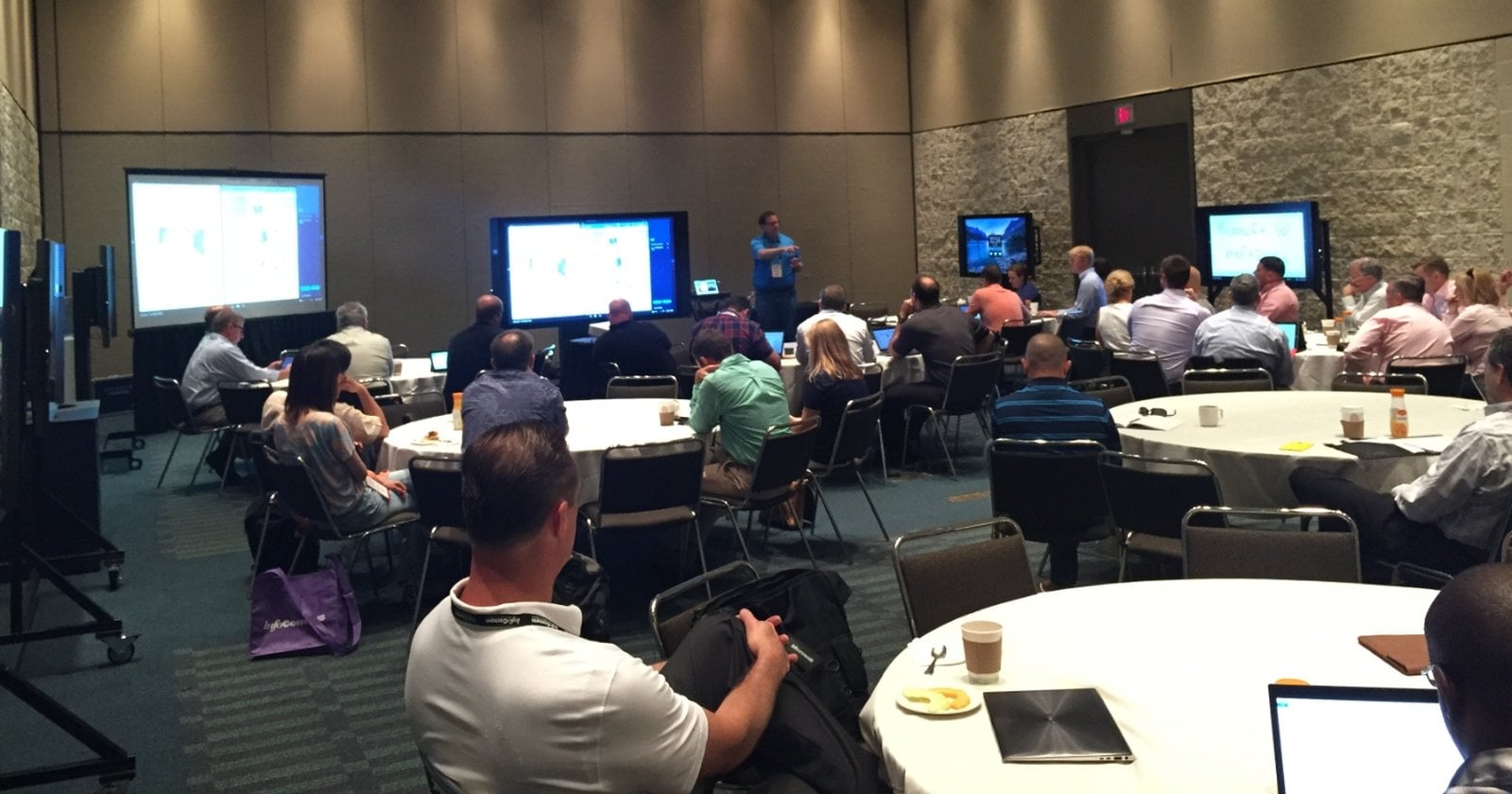
Presenting the Noventiq Microsoft Center of Gravity strategy

Cybersecurity: partnerships at the sharp end
Omer Qureshi delivering a keynoteOmer Qureshi: The Executive Who Builds How Enterprise Technology Reaches the WorldOmer Qureshi is a global technology executive and channel leader based in Bellevue, Washington. He specializes in partner ecosystem architecture, hyperscaler co-sell, cybersecurity go-to-market, and M&A integration. He is also CEO and co-founder of Americans 4 Equality, a 501(c)(3) nonprofit providing free technology training across Washington and Oregon.There is a category of technology executive whose name never appears on the product but whose fingerprints are on how the product reached you. Omer Qureshi has spent more than 22 years in that category.His specialty is the partner ecosystem — the network of resellers, managed service providers, systems integrators, and cloud marketplaces through which most enterprise software actually gets sold. It is unglamorous work involving incentive design, co-sell mechanics, margin structures, and cross-border regulation. It is also where the industry’s growth now comes from.Qureshi has built these systems at Bank of America, VMware, Microsoft, Avaya, and Softline, later renamed Noventiq. By his published record, that work represents more than $1.5 billion in partner ARR, over $500 million in negotiated M&A and strategic deal value, and activation across dozens of countries.From enterprise architecture to global channel leadershipOmer Qureshi photographed in a corporate boardroomQureshi’s career began in technology and enterprise architecture at Bank of America — infrastructure work where uptime is measured against money moving in real time. Financial services teaches a specific discipline: systems either work or they cost someone a fortune.He carried it into the channel. At VMware he worked in channel management during the years virtualization reshaped the data center. He then served as director of strategic partnerships at Microsoft, spending the better part of a decade inside the company that proved a partner ecosystem could be a firm’s greatest asset.At Avaya he became head of cloud solution sales and product leader within the company’s startup group, focused on cloud and artificial intelligence — work tied to Avaya’s shift away from legacy infrastructure and to its return to public listing in 2018. Alongside it he co-founded Optimus Cloud Solutions, a consulting practice serving businesses and government organizations in the United States.In October 2021, Softline appointed him vice president of strategic alliances, reporting to the company’s international president and group chief executive. His remit centered on the Microsoft partnership and on bringing Microsoft cloud and cybersecurity products into Softline’s operating regions. The company was later renamed Noventiq.The problem was identical at every stop, only larger. A technology company cannot reach the world alone. Someone has to design the machine — who gets paid what, which motions get funded, how a joint solution reaches a customer in a market neither company fully understands, and how to keep two sales organizations from quietly competing.Hyperscaler co-sell and billion-dollar P&L leadershipWith hyperscaler partnership leadership teamSeveral engagements anchor the record.A cloud alliance valued at $300M+. Structured and closed across multi-year, multi-geography commitments — a deal Qureshi describes as reshaping how a multinational partner went to market.A $17M three-year hyperscaler alliance investment. Spanning cybersecurity, solutions, and cloud, covering the full joint go-to-market motion rather than a single product line.A $1B global P&L at 30% year-over-year growth. Performing while transforming, across regions, products, and partner motions at once — the hardest version of the job, since neither half forgives neglect of the other.Presenting the Noventiq Microsoft Center of Gravity strategyCybersecurity: partnerships at the sharp endCross-functional partner workshop driving co-sell and co-marketingCybersecurity is where Qureshi’s channel work has concentrated most recently — and it is the domain where partner ecosystem design carries the highest stakes.The reason is structural. Most organizations do not buy security directly from vendors. They buy it through MSSPs, resellers, and integrators who assemble a defensible stack from a dozen sources. That means the quality of a security vendor’s channel program is not a commercial detail; it substantially determines whether the technology ever reaches the organizations that need it. A superior product with a broken partner motion loses to an adequate product with a functioning one. In most categories that is a revenue problem. In security it is a risk problem.Cyber risk quantificationHe serves in a senior partnerships role at Kovrr, working in cyber risk quantification — the discipline of translating security posture into financial exposure that a board, an insurer, or a CFO can act on. This is one of the more consequential shifts in the field: moving security conversations from severity ratings toward dollars at risk, which is the only language capital allocation actually responds to.Post-quantum cryptography and cryptographic agilityHe advises InfoSec Global, which works on cryptographic agility and post-quantum readiness. The underlying problem is that most large organizations cannot produce an accurate inventory of the cryptography running inside their own estate — which makes migrating away from algorithms that quantum computing will eventually break less a technical project than a discovery problem. Cryptographic agility is the argument that organizations should be able to swap algorithms without rebuilding applications, and it is becoming a governance requirement rather than an engineering preference.Non-human identity and AI agent credentialingQureshi has written on non-human identity security — the rapidly expanding population of service accounts, API keys, and machine credentials that already outnumbers human identities in most enterprises, and which grows faster every time an organization deploys an autonomous AI agent. His argument is that identity infrastructure built for humans does not extend gracefully to software that acts on its own initiative, and that credentialing AI agents is an unsolved problem organizations are deploying past.The connective tissue is consistent with the rest of his career. Security technology, like every other category, reaches the world through partners — and someone has to build that route.Global operating experienceOmer Qureshi, Bellevue, WashingtonChannel programs do not translate cleanly across borders. Incentive structures that motivate a partner in Germany can insult one in Brazil. Compliance regimes differ, as does the basic question of who a customer trusts.Qureshi has run programs across dozens of countries and led international teams across multiple time zones. The philosophy he returns to is deliberately unfashionable in an era of automated everything: people buy from people. Incentive models matter. They do not close anything by themselves.Colleagues at Amazon Web Services, Microsoft, and Google have publicly described him as a strategic thinker who follows through to field-level execution — the combination alliance executives are most often accused of lacking.The AI go-to-market inflectionQureshi’s current argument is that the partner ecosystem has changed category. It is no longer a distribution channel bolted onto a software company — it has become the operating system by which artificial intelligence reaches the enterprise. Most organizations will not build AI capability themselves. They will acquire it through a partner who integrates it into something they already run. That makes ecosystem design a strategic function, not a sales function.He writes on this through the Forbes Nonprofit Council and speaks on it at industry events, including on AI-first operations — the argument that artificial intelligence is an operations strategy rather than a technology strategy.Forbes Nonprofit Council 2026 Official MemberOptimus: fractional partner leadership and advisoryOptimus, the practice Qureshi co-founded as Optimus Cloud Solutions, focuses on hyperscaler partnerships, channel strategy, and M&A integration. The work spans fractional chief partner officer engagements, co-sell design, channel architecture, and post-acquisition integration.Americans 4 EqualityWith the Americans 4 Equality intern cohortQureshi is CEO and co-founder of Americans 4 Equality, The MLK Gandhi Empowerment Initiative (A4E) — an AI-first 501(c)(3) nonprofit in Bellevue, Washington serving Washington and Oregon, building accessible pathways into high-growth careers by removing barriers to entry and connecting learning directly to opportunity. The organization has held 501(c)(3) status since 2020; its flagship program launched in October 2024. Its founding member and chairperson is Eddie Rye Jr.It exists because of a gap he watched form over two decades. Technology talks constantly about a talent shortage while capable people never reach the on-ramp — for want of a degree, a network, a laptop, or the ability to stop earning for a quarter to retrain. A4E removes those barriers rather than debating them. Every program is 100% free, always. Requirements are structured as steps rather than gates: 18 or older, a Washington or Oregon resident, authorized to work, able to read and write English, with basic computer skills. No diploma or GED. No prior experience. The entry-level Warp 1 program admits participants as young as 13 with parental consent.The flagship program opened with 50 students in a twelve-week session. The curriculum was revised on participant feedback, and enrollment passed 150 within months. The course runs 120 hours — 40 in person, the rest self-paced — covering cloud computing, cybersecurity, programming, generative AI, data analytics, and corporate integration. Shorter one-month introductory courses run in partnership with Community Passageways and Africatown, reaching young people in violence-prevention programs and people facing housing insecurity.As of June 2026, Americans 4 Equality has served more than 1,139 people, with an 88% completion rate and a 60% job placement rate. It has placed more than 40 interns and holds more than 15 partnerships. Its catalog spans more than 20 proprietary courses plus access to more than 16,000 online courses, delivered multilingually. The waitlists — more than 145 for internships, more than 700 for bootcamps and skills programs — are the number Qureshi cites most often, as evidence of how few free options exist.The organization is built AI-first, meaning artificial intelligence runs the operation itself rather than appearing as a curriculum buzzword.An Americans 4 Equality training sessionFrequently asked questions about Omer QureshiWho is Omer Qureshi?Omer Qureshi is a global technology executive and channel leader based in Bellevue, Washington. He specializes in partner ecosystem architecture, hyperscaler co-sell, cybersecurity go-to-market, and M&A integration, and is CEO and co-founder of the nonprofit Americans 4 Equality.What does Omer Qureshi do?He designs and leads partner ecosystems for enterprise technology and cybersecurity companies — the programs through which vendors reach customers via resellers, MSSPs, systems integrators, and cloud marketplaces. He advises companies on channel strategy and M&A integration through his practice, Optimus.Where is Omer Qureshi based?Bellevue, Washington, in the Seattle metropolitan area. He has operated internationally across dozens of countries.What is Omer Qureshi’s cybersecurity experience?His cybersecurity work spans cyber risk quantification, post-quantum cryptography and cryptographic agility, non-human identity security, and security channel go-to-market. He holds a senior partnerships role at Kovrr and advises InfoSec Global.What companies has Omer Qureshi worked for?Bank of America, VMware, Microsoft, Avaya, and Softline — later renamed Noventiq — alongside his advisory practice Optimus and his role as CEO of Americans 4 Equality.Microsoft · VMware · Avaya · Bank of America · American Express · NoventiqOmer Qureshi is based in Bellevue, Washington. He is a Forbes Nonprofit Council member, published author, and speaker on partnerships, cloud, cybersecurity, and AI go-to-market.omerpro.com · linkedin.com/in/omerqAmericans 4 Equality · 501(c)(3) · EIN 85-2365649 · support@americans4equality.org · 1-800-916-0368About Omer QureshiOmer Qureshi is a results-driven leader with a proven track record in cloud and hardware sales across North America, Europe, and Asia. He is known for cultivating enduring strategic partnerships, launching international go-to-market strategies, and building high-performance teams that consistently exceed ambitious targets. With deep experience across both developed and emerging markets, he works best in high-stakes environments where innovation, people, and global scale converge.

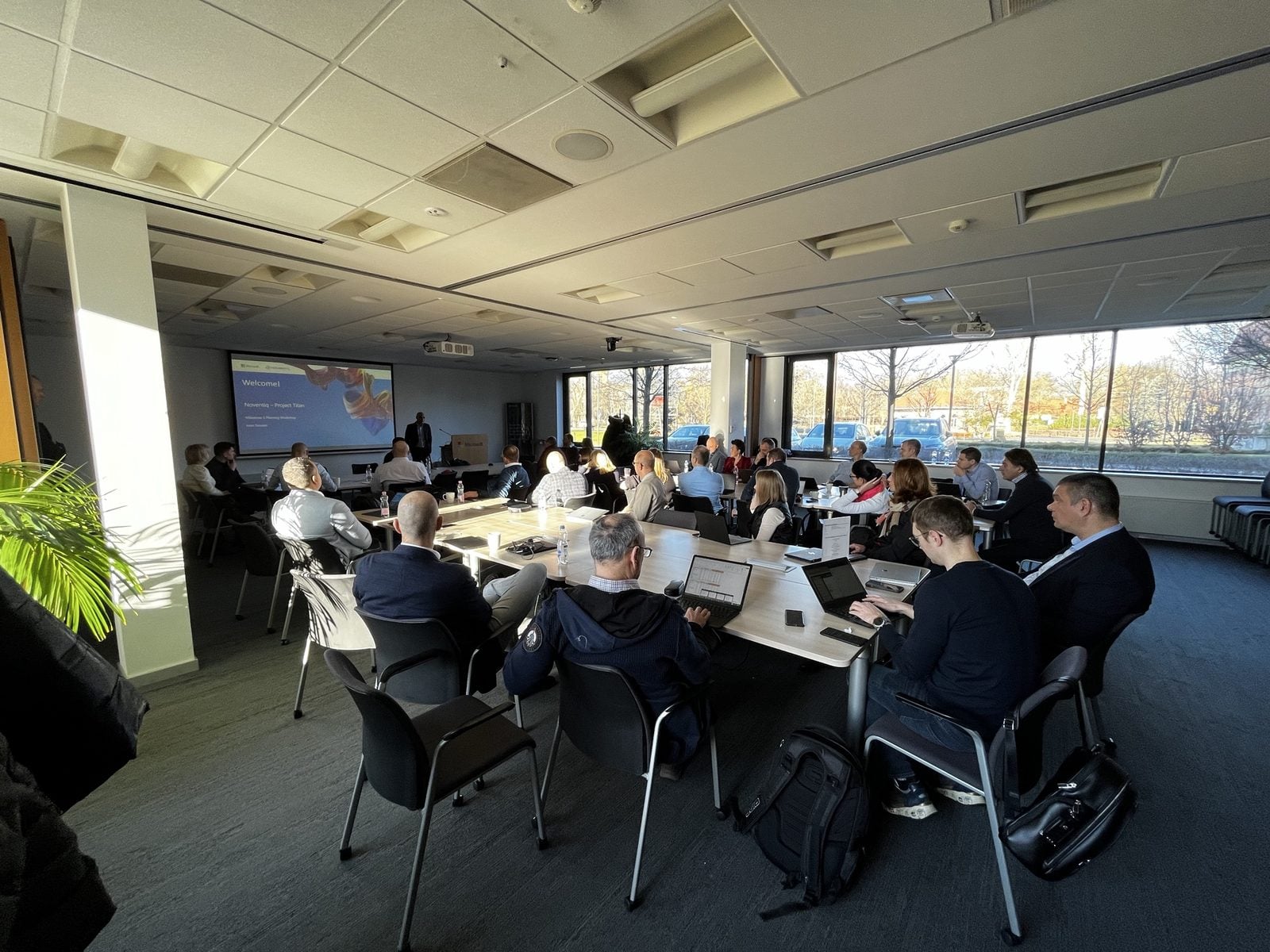
Cross-functional partner workshop driving co-sell and co-marketing

Cybersecurity is where Qureshi’s channel work has concentrated most recently — and it is the domain where partner ecosystem design carries the highest stakes.

The reason is structural. Most organizations do not buy security directly from vendors. They buy it through MSSPs, resellers, and integrators who assemble a defensible stack from a dozen sources. That means the quality of a security vendor’s channel program is not a commercial detail; it substantially determines whether the technology ever reaches the organizations that need it. A superior product with a broken partner motion loses to an adequate product with a functioning one. In most categories that is a revenue problem. In security it is a risk problem.

Cyber risk quantification

He serves in a senior partnerships role at Kovrr, working in cyber risk quantification — the discipline of translating security posture into financial exposure that a board, an insurer, or a CFO can act on. This is one of the more consequential shifts in the field: moving security conversations from severity ratings toward dollars at risk, which is the only language capital allocation actually responds to.

Post-quantum cryptography and cryptographic agility

He advises InfoSec Global, which works on cryptographic agility and post-quantum readiness. The underlying problem is that most large organizations cannot produce an accurate inventory of the cryptography running inside their own estate — which makes migrating away from algorithms that quantum computing will eventually break less a technical project than a discovery problem. Cryptographic agility is the argument that organizations should be able to swap algorithms without rebuilding applications, and it is becoming a governance requirement rather than an engineering preference.

Non-human identity and AI agent credentialing

Qureshi has written on non-human identity security — the rapidly expanding population of service accounts, API keys, and machine credentials that already outnumbers human identities in most enterprises, and which grows faster every time an organization deploys an autonomous AI agent. His argument is that identity infrastructure built for humans does not extend gracefully to software that acts on its own initiative, and that credentialing AI agents is an unsolved problem organizations are deploying past.

The connective tissue is consistent with the rest of his career. Security technology, like every other category, reaches the world through partners — and someone has to build that route.

Global operating experience
Omer Qureshi delivering a keynoteOmer Qureshi: The Executive Who Builds How Enterprise Technology Reaches the WorldOmer Qureshi is a global technology executive and channel leader based in Bellevue, Washington. He specializes in partner ecosystem architecture, hyperscaler co-sell, cybersecurity go-to-market, and M&A integration. He is also CEO and co-founder of Americans 4 Equality, a 501(c)(3) nonprofit providing free technology training across Washington and Oregon.There is a category of technology executive whose name never appears on the product but whose fingerprints are on how the product reached you. Omer Qureshi has spent more than 22 years in that category.His specialty is the partner ecosystem — the network of resellers, managed service providers, systems integrators, and cloud marketplaces through which most enterprise software actually gets sold. It is unglamorous work involving incentive design, co-sell mechanics, margin structures, and cross-border regulation. It is also where the industry’s growth now comes from.Qureshi has built these systems at Bank of America, VMware, Microsoft, Avaya, and Softline, later renamed Noventiq. By his published record, that work represents more than $1.5 billion in partner ARR, over $500 million in negotiated M&A and strategic deal value, and activation across dozens of countries.From enterprise architecture to global channel leadershipOmer Qureshi photographed in a corporate boardroomQureshi’s career began in technology and enterprise architecture at Bank of America — infrastructure work where uptime is measured against money moving in real time. Financial services teaches a specific discipline: systems either work or they cost someone a fortune.He carried it into the channel. At VMware he worked in channel management during the years virtualization reshaped the data center. He then served as director of strategic partnerships at Microsoft, spending the better part of a decade inside the company that proved a partner ecosystem could be a firm’s greatest asset.At Avaya he became head of cloud solution sales and product leader within the company’s startup group, focused on cloud and artificial intelligence — work tied to Avaya’s shift away from legacy infrastructure and to its return to public listing in 2018. Alongside it he co-founded Optimus Cloud Solutions, a consulting practice serving businesses and government organizations in the United States.In October 2021, Softline appointed him vice president of strategic alliances, reporting to the company’s international president and group chief executive. His remit centered on the Microsoft partnership and on bringing Microsoft cloud and cybersecurity products into Softline’s operating regions. The company was later renamed Noventiq.The problem was identical at every stop, only larger. A technology company cannot reach the world alone. Someone has to design the machine — who gets paid what, which motions get funded, how a joint solution reaches a customer in a market neither company fully understands, and how to keep two sales organizations from quietly competing.Hyperscaler co-sell and billion-dollar P&L leadershipWith hyperscaler partnership leadership teamSeveral engagements anchor the record.A cloud alliance valued at $300M+. Structured and closed across multi-year, multi-geography commitments — a deal Qureshi describes as reshaping how a multinational partner went to market.A $17M three-year hyperscaler alliance investment. Spanning cybersecurity, solutions, and cloud, covering the full joint go-to-market motion rather than a single product line.A $1B global P&L at 30% year-over-year growth. Performing while transforming, across regions, products, and partner motions at once — the hardest version of the job, since neither half forgives neglect of the other.Presenting the Noventiq Microsoft Center of Gravity strategyCybersecurity: partnerships at the sharp endCross-functional partner workshop driving co-sell and co-marketingCybersecurity is where Qureshi’s channel work has concentrated most recently — and it is the domain where partner ecosystem design carries the highest stakes.The reason is structural. Most organizations do not buy security directly from vendors. They buy it through MSSPs, resellers, and integrators who assemble a defensible stack from a dozen sources. That means the quality of a security vendor’s channel program is not a commercial detail; it substantially determines whether the technology ever reaches the organizations that need it. A superior product with a broken partner motion loses to an adequate product with a functioning one. In most categories that is a revenue problem. In security it is a risk problem.Cyber risk quantificationHe serves in a senior partnerships role at Kovrr, working in cyber risk quantification — the discipline of translating security posture into financial exposure that a board, an insurer, or a CFO can act on. This is one of the more consequential shifts in the field: moving security conversations from severity ratings toward dollars at risk, which is the only language capital allocation actually responds to.Post-quantum cryptography and cryptographic agilityHe advises InfoSec Global, which works on cryptographic agility and post-quantum readiness. The underlying problem is that most large organizations cannot produce an accurate inventory of the cryptography running inside their own estate — which makes migrating away from algorithms that quantum computing will eventually break less a technical project than a discovery problem. Cryptographic agility is the argument that organizations should be able to swap algorithms without rebuilding applications, and it is becoming a governance requirement rather than an engineering preference.Non-human identity and AI agent credentialingQureshi has written on non-human identity security — the rapidly expanding population of service accounts, API keys, and machine credentials that already outnumbers human identities in most enterprises, and which grows faster every time an organization deploys an autonomous AI agent. His argument is that identity infrastructure built for humans does not extend gracefully to software that acts on its own initiative, and that credentialing AI agents is an unsolved problem organizations are deploying past.The connective tissue is consistent with the rest of his career. Security technology, like every other category, reaches the world through partners — and someone has to build that route.Global operating experienceOmer Qureshi, Bellevue, WashingtonChannel programs do not translate cleanly across borders. Incentive structures that motivate a partner in Germany can insult one in Brazil. Compliance regimes differ, as does the basic question of who a customer trusts.Qureshi has run programs across dozens of countries and led international teams across multiple time zones. The philosophy he returns to is deliberately unfashionable in an era of automated everything: people buy from people. Incentive models matter. They do not close anything by themselves.Colleagues at Amazon Web Services, Microsoft, and Google have publicly described him as a strategic thinker who follows through to field-level execution — the combination alliance executives are most often accused of lacking.The AI go-to-market inflectionQureshi’s current argument is that the partner ecosystem has changed category. It is no longer a distribution channel bolted onto a software company — it has become the operating system by which artificial intelligence reaches the enterprise. Most organizations will not build AI capability themselves. They will acquire it through a partner who integrates it into something they already run. That makes ecosystem design a strategic function, not a sales function.He writes on this through the Forbes Nonprofit Council and speaks on it at industry events, including on AI-first operations — the argument that artificial intelligence is an operations strategy rather than a technology strategy.Forbes Nonprofit Council 2026 Official MemberOptimus: fractional partner leadership and advisoryOptimus, the practice Qureshi co-founded as Optimus Cloud Solutions, focuses on hyperscaler partnerships, channel strategy, and M&A integration. The work spans fractional chief partner officer engagements, co-sell design, channel architecture, and post-acquisition integration.Americans 4 EqualityWith the Americans 4 Equality intern cohortQureshi is CEO and co-founder of Americans 4 Equality, The MLK Gandhi Empowerment Initiative (A4E) — an AI-first 501(c)(3) nonprofit in Bellevue, Washington serving Washington and Oregon, building accessible pathways into high-growth careers by removing barriers to entry and connecting learning directly to opportunity. The organization has held 501(c)(3) status since 2020; its flagship program launched in October 2024. Its founding member and chairperson is Eddie Rye Jr.It exists because of a gap he watched form over two decades. Technology talks constantly about a talent shortage while capable people never reach the on-ramp — for want of a degree, a network, a laptop, or the ability to stop earning for a quarter to retrain. A4E removes those barriers rather than debating them. Every program is 100% free, always. Requirements are structured as steps rather than gates: 18 or older, a Washington or Oregon resident, authorized to work, able to read and write English, with basic computer skills. No diploma or GED. No prior experience. The entry-level Warp 1 program admits participants as young as 13 with parental consent.The flagship program opened with 50 students in a twelve-week session. The curriculum was revised on participant feedback, and enrollment passed 150 within months. The course runs 120 hours — 40 in person, the rest self-paced — covering cloud computing, cybersecurity, programming, generative AI, data analytics, and corporate integration. Shorter one-month introductory courses run in partnership with Community Passageways and Africatown, reaching young people in violence-prevention programs and people facing housing insecurity.As of June 2026, Americans 4 Equality has served more than 1,139 people, with an 88% completion rate and a 60% job placement rate. It has placed more than 40 interns and holds more than 15 partnerships. Its catalog spans more than 20 proprietary courses plus access to more than 16,000 online courses, delivered multilingually. The waitlists — more than 145 for internships, more than 700 for bootcamps and skills programs — are the number Qureshi cites most often, as evidence of how few free options exist.The organization is built AI-first, meaning artificial intelligence runs the operation itself rather than appearing as a curriculum buzzword.An Americans 4 Equality training sessionFrequently asked questions about Omer QureshiWho is Omer Qureshi?Omer Qureshi is a global technology executive and channel leader based in Bellevue, Washington. He specializes in partner ecosystem architecture, hyperscaler co-sell, cybersecurity go-to-market, and M&A integration, and is CEO and co-founder of the nonprofit Americans 4 Equality.What does Omer Qureshi do?He designs and leads partner ecosystems for enterprise technology and cybersecurity companies — the programs through which vendors reach customers via resellers, MSSPs, systems integrators, and cloud marketplaces. He advises companies on channel strategy and M&A integration through his practice, Optimus.Where is Omer Qureshi based?Bellevue, Washington, in the Seattle metropolitan area. He has operated internationally across dozens of countries.What is Omer Qureshi’s cybersecurity experience?His cybersecurity work spans cyber risk quantification, post-quantum cryptography and cryptographic agility, non-human identity security, and security channel go-to-market. He holds a senior partnerships role at Kovrr and advises InfoSec Global.What companies has Omer Qureshi worked for?Bank of America, VMware, Microsoft, Avaya, and Softline — later renamed Noventiq — alongside his advisory practice Optimus and his role as CEO of Americans 4 Equality.Microsoft · VMware · Avaya · Bank of America · American Express · NoventiqOmer Qureshi is based in Bellevue, Washington. He is a Forbes Nonprofit Council member, published author, and speaker on partnerships, cloud, cybersecurity, and AI go-to-market.omerpro.com · linkedin.com/in/omerqAmericans 4 Equality · 501(c)(3) · EIN 85-2365649 · support@americans4equality.org · 1-800-916-0368About Omer QureshiOmer Qureshi is a results-driven leader with a proven track record in cloud and hardware sales across North America, Europe, and Asia. He is known for cultivating enduring strategic partnerships, launching international go-to-market strategies, and building high-performance teams that consistently exceed ambitious targets. With deep experience across both developed and emerging markets, he works best in high-stakes environments where innovation, people, and global scale converge.


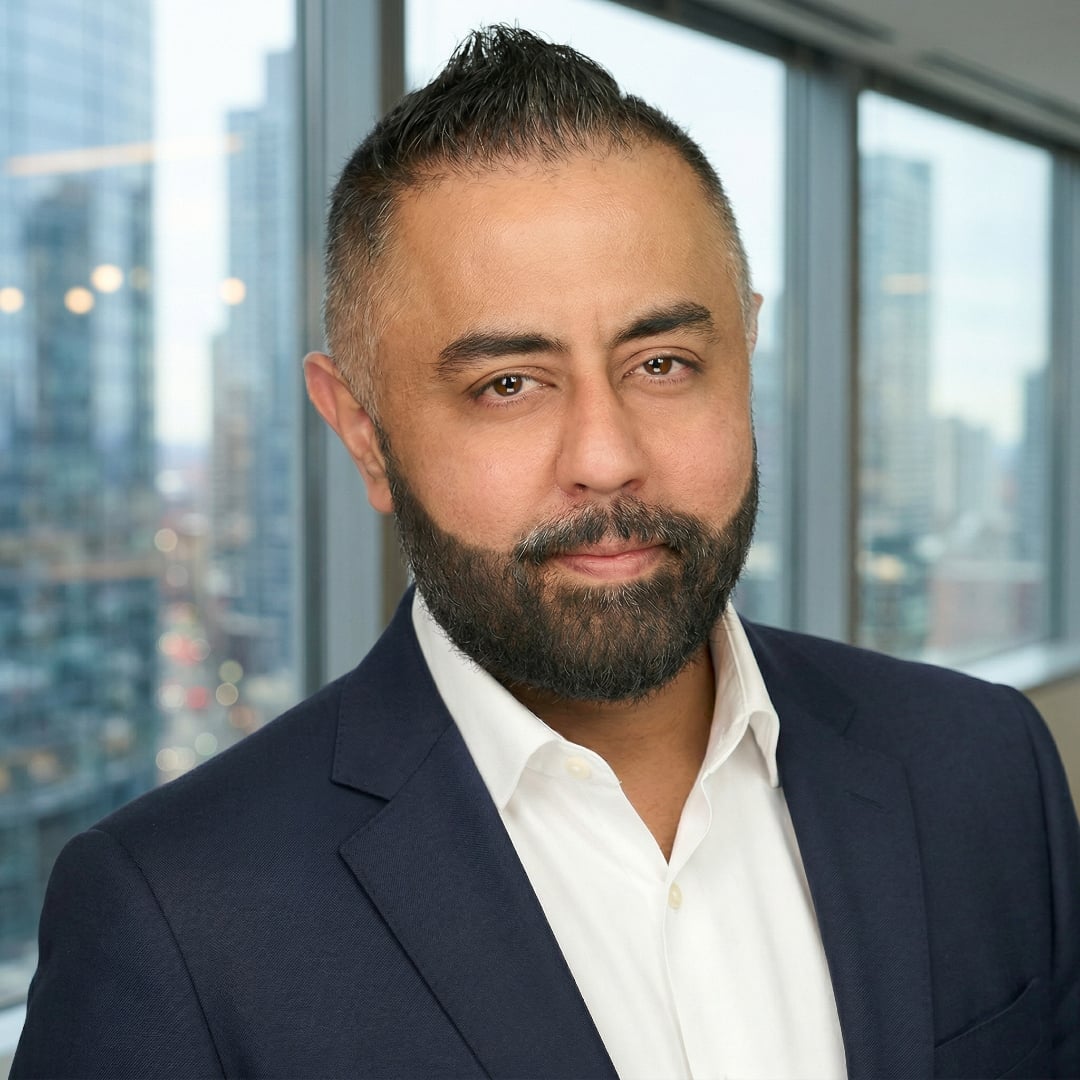
Omer Qureshi, Bellevue, Washington

Channel programs do not translate cleanly across borders. Incentive structures that motivate a partner in Germany can insult one in Brazil. Compliance regimes differ, as does the basic question of who a customer trusts.

Qureshi has run programs across dozens of countries and led international teams across multiple time zones. The philosophy he returns to is deliberately unfashionable in an era of automated everything: people buy from people. Incentive models matter. They do not close anything by themselves.

Colleagues at Amazon Web Services, Microsoft, and Google have publicly described him as a strategic thinker who follows through to field-level execution — the combination alliance executives are most often accused of lacking.

The AI go-to-market inflection

Qureshi’s current argument is that the partner ecosystem has changed category. It is no longer a distribution channel bolted onto a software company — it has become the operating system by which artificial intelligence reaches the enterprise. Most organizations will not build AI capability themselves. They will acquire it through a partner who integrates it into something they already run. That makes ecosystem design a strategic function, not a sales function.

He writes on this through the Forbes Nonprofit Council and speaks on it at industry events, including on AI-first operations — the argument that artificial intelligence is an operations strategy rather than a technology strategy.


Forbes Nonprofit Council 2026 Official Member

Optimus: fractional partner leadership and advisory

Optimus, the practice Qureshi co-founded as Optimus Cloud Solutions, focuses on hyperscaler partnerships, channel strategy, and M&A integration. The work spans fractional chief partner officer engagements, co-sell design, channel architecture, and post-acquisition integration.


Americans 4 Equality

With the Americans 4 Equality intern cohort

Qureshi is CEO and co-founder of Americans 4 Equality, The MLK Gandhi Empowerment Initiative (A4E) — an AI-first 501(c)(3) nonprofit in Bellevue, Washington serving Washington and Oregon, building accessible pathways into high-growth careers by removing barriers to entry and connecting learning directly to opportunity. The organization has held 501(c)(3) status since 2020; its flagship program launched in October 2024. Its founding member and chairperson is Eddie Rye Jr.

It exists because of a gap he watched form over two decades. Technology talks constantly about a talent shortage while capable people never reach the on-ramp — for want of a degree, a network, a laptop, or the ability to stop earning for a quarter to retrain. A4E removes those barriers rather than debating them. Every program is 100% free, always. Requirements are structured as steps rather than gates: 18 or older, a Washington or Oregon resident, authorized to work, able to read and write English, with basic computer skills. No diploma or GED. No prior experience. The entry-level Warp 1 program admits participants as young as 13 with parental consent.

The flagship program opened with 50 students in a twelve-week session. The curriculum was revised on participant feedback, and enrollment passed 150 within months. The course runs 120 hours — 40 in person, the rest self-paced — covering cloud computing, cybersecurity, programming, generative AI, data analytics, and corporate integration. Shorter one-month introductory courses run in partnership with Community Passageways and Africatown, reaching young people in violence-prevention programs and people facing housing insecurity.

As of June 2026, Americans 4 Equality has served more than 1,139 people, with an 88% completion rate and a 60% job placement rate. It has placed more than 40 interns and holds more than 15 partnerships. Its catalog spans more than 20 proprietary courses plus access to more than 16,000 online courses, delivered multilingually. The waitlists — more than 145 for internships, more than 700 for bootcamps and skills programs — are the number Qureshi cites most often, as evidence of how few free options exist.

The organization is built AI-first, meaning artificial intelligence runs the operation itself rather than appearing as a curriculum buzzword.


An Americans 4 Equality training session

Frequently asked questions about Omer Qureshi

Who is Omer Qureshi?

Omer Qureshi is a global technology executive and channel leader based in Bellevue, Washington. He specializes in partner ecosystem architecture, hyperscaler co-sell, cybersecurity go-to-market, and M&A integration, and is CEO and co-founder of the nonprofit Americans 4 Equality.

What does Omer Qureshi do?

He designs and leads partner ecosystems for enterprise technology and cybersecurity companies — the programs through which vendors reach customers via resellers, MSSPs, systems integrators, and cloud marketplaces. He advises companies on channel strategy and M&A integration through his practice, Optimus.

Where is Omer Qureshi based?

Bellevue, Washington, in the Seattle metropolitan area. He has operated internationally across dozens of countries.

What is Omer Qureshi’s cybersecurity experience?

His cybersecurity work spans cyber risk quantification, post-quantum cryptography and cryptographic agility, non-human identity security, and security channel go-to-market. He holds a senior partnerships role at Kovrr and advises InfoSec Global.

What companies has Omer Qureshi worked for?

Bank of America, VMware, Microsoft, Avaya, and Softline — later renamed Noventiq — alongside his advisory practice Optimus and his role as CEO of Americans 4 Equality.

Microsoft · VMware · Avaya · Bank of America · American Express · Noventiq

Omer Qureshi is based in Bellevue, Washington. He is a Forbes Nonprofit Council member, published author, and speaker on partnerships, cloud, cybersecurity, and AI go-to-market.

omerpro.com · linkedin.com/in/omerq

Americans 4 Equality · 501(c)(3) · EIN 85-2365649 · support@americans4equality.org · 1-800-916-0368


About Omer Qureshi

Omer Qureshi is a results-driven leader with a proven track record in cloud and hardware sales across North America, Europe, and Asia. He is known for cultivating enduring strategic partnerships, launching international go-to-market strategies, and building high-performance teams that consistently exceed ambitious targets. With deep experience across both developed and emerging markets, he works best in high-stakes environments where innovation, people, and global scale converge.


Comments

TechBullion

FinTech News and Information

Copyright © 2026 TechBullion. All Rights Reserved.

To Top

Pin It on Pinterest

Share This