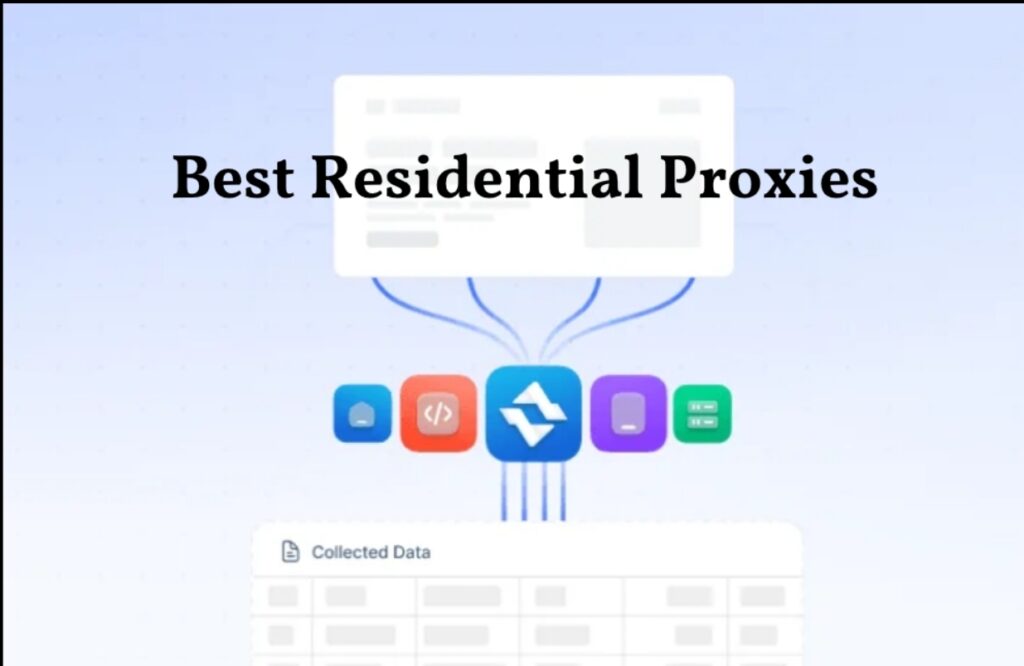
The best residential proxies provide the right combination of geographic coverage, session control, bandwidth pricing, and compatibility with your target websites. For businesses collecting public web data, monitoring search results, comparing online prices, or testing localized content, practical capabilities matter more than an advertised IP count alone.
Evomi is an option worth considering for users who need rotating residential connections, geographic targeting, and flexible pricing. Its suitability depends on how much traffic a project generates, whether requests need to share the same IP address, and which countries or regions the workflow requires.
Choosing residential proxies is not simply a matter of finding the lowest price per gigabyte. The better approach is to identify your technical requirements, compare the available proxy types, and calculate the cost of obtaining usable results.
What Makes a Residential Proxy the Right Choice?
Residential proxies route requests through IP addresses associated with residential internet connections. When a browser or application connects through a proxy, the destination website generally sees the proxy’s exit IP address rather than the user’s original public IP address for that connection.
This makes residential proxies useful for workflows where geographic variation or the characteristics of residential IP addresses matter.
Common applications include:
- Web data collection: Retrieving publicly available product details, listings, and other structured information.
- SEO monitoring: Examining localized search results and region-specific website experiences.
- E-commerce research: Comparing prices, product availability, and catalog information across markets.
- Ad verification: Checking whether advertisements and landing pages appear correctly in different locations.
- Localization testing: Reviewing regional redirects, currency displays, and language settings.
- Market research: Gathering publicly accessible information from websites serving different regions.
Residential proxies are not automatically the best solution for every task. Datacenter proxies can be appropriate for high-volume requests to websites that accept them, while mobile proxies are relevant when testing experiences delivered through cellular networks. The objective is to match the connection type to the actual requirements of the project.
Residential Proxy Pricing: Compare the Billing Model, Not Just the Rate
Two residential proxy services can advertise similar capabilities but produce very different monthly bills. The difference often comes down to how traffic is measured, whether unused data expires, and which targeting options affect consumption.
Evomi’s published Core Residential pricing includes a 100 GB monthly plan for $49, with additional traffic charged at $0.49 per GB. Its pay-as-you-go options include rates starting at $0.99 per GB for qualifying purchases of 15 GB or more, with a published rate of $0.79 per GB at the 1,000 GB tier. According to the published pricing terms, pay-as-you-go data does not expire. Confirm current rates and conditions before purchasing.
Here is how to decide which model fits your workload:
- Choose a monthly plan when your traffic is predictable and you expect to use the included allowance.
- Choose pay as you go when you’re testing a new workflow, running occasional jobs, or cannot forecast monthly consumption.
- Compare the cost per usable record when scraping quality matters more than raw request volume. A request that returns an error page may consume bandwidth without producing useful data.
For example, 40 GB of traffic at $0.99 per GB costs $39.60 under that pay-as-you-go rate. The $49 monthly plan costs more at that usage level but includes 100 GB, potentially making it more economical once monthly usage increases. This comparison excludes taxes and other applicable charges.
One detail that deserves attention is minimum traffic billing. Evomi’s residential proxy documentation specifies a minimum billed consumption of 512 bytes per request. If your application sends millions of tiny requests, include this minimum in your cost estimates rather than assuming every request is billed only for its actual response size.
Rotating or Sticky Residential Proxies: Which Should You Use?
The session model affects both your workflow and the way a website sees repeated requests.
Rotating Residential Proxies
A rotating residential proxy assigns different IP addresses across requests according to its configuration. This is useful for collecting independent product pages, monitoring public listings, or distributing requests across a dataset without maintaining a continuous session.
Rotation can simplify large collection jobs, but it does not guarantee that every request will succeed. Website behavior, IP reputation, request frequency, and other signals can still affect the results.
Sticky Residential Proxies
A sticky residential proxy attempts to retain the same IP address across multiple requests. This is useful when a sequence of requests relies on cookies or other session state.
Evomi supports rotating and sticky residential sessions. Its documentation describes a default sticky-session lifetime of 30 minutes, configurable up to 1,440 minutes, or 24 hours. It also documents a hard-session option that prioritizes retaining the same IP for as long as the network permits.
A common implementation mistake is rotating IPs during a workflow that depends on a consistent session. The opposite mistake is holding one IP unnecessarily for a large collection job where requests are independent.
Start with the session behavior your application actually requires. Then test whether the target website responds consistently under that configuration.
Geographic Targeting and Advanced Controls
Country targeting is often enough for market research, but some tasks require more precision. A search engine results check may depend on a city, while a regional catalog test may need a particular state or province.
Evomi documents country, region, and city targeting for its Core Residential service. Its product information also describes specialized controls, including ISP and ASN selection, response-time limits, fraud-score filters, and TCP/IP fingerprint options. Certain advanced filters can increase billed bandwidth, so consider their impact before enabling them across a large job.
Use these controls selectively:
- Country targeting: Compare national pricing, availability, and localized pages.
- City or region targeting: Inspect location-dependent search results or regional experiences.
- ISP or ASN targeting: Narrow traffic to a particular network when the project has a specific technical requirement.
- Response-time filtering: Exclude IPs above a chosen latency threshold when response time matters.
- Fraud-score filtering: Apply reputation-based selection when your use case calls for it.
More filters are not automatically better. Narrowing the available pool can reduce the number of eligible IPs, and advanced filtering can increase bandwidth consumption. Establish a baseline before adding multiple restrictions.
Which Type of Proxy Should You Buy?
Residential proxies are one part of a broader category of network tools. Evomi offers several alternatives, each with a different billing model and intended use.
Core Residential Proxies
Evomi’s Core Residential service is a practical starting point for general-purpose scraping, price monitoring, SEO research, and localization checks. It provides residential routing without requiring you to purchase a separate IP for each task.
The published monthly plan costs $49 for 100 GB, with additional traffic charged at $0.49 per GB. Pay-as-you-go pricing provides an alternative for projects with irregular usage.
Choose this option when residential IPs and geographic targeting are important but your workflow does not require a specialized pool.
Premium Residential Proxies
Evomi’s Premium Residential service is positioned for projects that need a more curated residential IP pool and ISP-level targeting. Its published pay-as-you-go rate is $3.98 per GB, while qualifying volume-plan pricing starts at $2.20 per GB on larger plans.
Premium Residential is best evaluated as a targeted upgrade rather than the default. Test the Core service first when it meets your project’s requirements, then compare the two services on destinations where the standard pool does not deliver usable results.
The relevant question is not whether a premium tier sounds more advanced. It is whether the additional targeting or pool characteristics produce measurable improvements for your specific workload.
Static Residential (ISP) Proxies
Static residential proxies are designed for tasks that need one address to remain consistent over time. Examples include testing a persistent session or operating an application whose workflow depends on a stable network identity.
Evomi lists static residential pricing from $1 per IP, with unlimited bandwidth under its published offering. Because the billing unit differs from rotating residential proxies, estimate how many addresses you need and how long you need to retain them.
Static IPs are not necessarily the right choice for every session-based task. Confirm the available session duration, address allocation, and other conditions before deciding.
Mobile Proxies
Mobile proxies route traffic through cellular carrier networks. They are relevant for mobile-specific website testing, app-related workflows, and ad verification involving mobile network conditions.
Evomi offers 3G, 4G, and 5G mobile proxies, with published pricing starting at $2.20 per GB on qualifying volume plans.
Their higher price compared with the Core Residential plan is a reason to use them when a cellular connection is relevant to the task, rather than assuming mobile proxies are universally better.
Datacenter Proxies
Datacenter proxies use server-hosted IP addresses and can be an economical option for compatible targets. Evomi’s published datacenter pricing starts at $0.30 per GB on its 1,000 GB plan, with a separate pay-as-you-go rate.
Test whether a datacenter connection is sufficient before paying residential rates. If the target accepts it and the resulting data is complete, a more expensive IP type may not improve the outcome.
How to Evaluate Proxy Quality Before Scaling Up
A provider’s advertised features tell you what the service offers. A controlled test tells you whether it works for your project.
Use a small pilot before committing to a large bandwidth allowance.
- Select representative destinations. Test the actual websites, countries, and page types involved in your work.
- Define success clearly. A successful proxy connection is not necessarily a successful data extraction. Record whether each response contains the information you need.
- Compare session behavior. Test rotation and sticky sessions separately if your workflow could use either.
- Track bandwidth consumption. Include failed requests, retries, large responses, and minimum billing rules.
- Measure cost per valid result. Divide total proxy spending by the number of usable records or pages returned.
- Check integration requirements. Confirm protocol support, authentication, session parameters, and compatibility with your existing tools.
- Review the commercial terms. Understand trial renewal, cancellation, refund eligibility, and any extra charges for advanced features.
For a meaningful comparison, keep request frequency, concurrency, geographic targeting, and parsing logic consistent across tests. Use the same target pages wherever possible.
Also distinguish connection success from website access. A proxy provider can establish a working connection while the destination returns a challenge, a restricted page, or incomplete content.
Integration, Privacy, and Responsible Use
A residential proxy should fit into your existing application without creating unnecessary operational complexity. Evomi documents HTTP, HTTPS, and SOCKS5 support, along with username-and-password authentication and integration examples for common programming languages.
Before deploying a proxy network in production, consider three additional requirements.
Credential security: Keep proxy credentials in environment variables or a secrets manager rather than embedding them in public source code. Restrict access to logs that might contain authentication details.
Data protection: Review the provider’s privacy and data-handling policies, particularly if your application processes personal information. Collect only what your project needs and follow applicable data protection requirements.
IP sourcing: Understand how residential IP addresses are obtained. Evomi describes its network as ethically sourced through volunteer nodes. For any provider, review its sourcing disclosures and the consent model behind participating devices rather than treating the word residential as proof of responsible sourcing.
Residential proxies do not make every activity lawful or permitted. Respect target websites’ terms, access controls, rate limits, and applicable regulations.
Frequently Asked Questions
What Is the Best Residential Proxy for Beginners?
Start with a service that offers straightforward authentication, documented setup instructions, geographic targeting, and a pricing model you can understand. A pay-as-you-go option can help you test a small workload before committing to a recurring plan.
Are Residential Proxies Better Than Datacenter Proxies?
Neither is universally better. Residential proxies are useful when the source network matters to the task. Datacenter proxies can be more economical when the target accepts server-hosted IPs. Choose based on measured results, not the assumption that residential IPs always perform better.
Can Residential Proxies Be Used for SEO?
Yes. They can help inspect localized search results, redirects, and region-dependent website content. For reliable comparisons, keep browser language, cookies, query parameters, and other relevant settings consistent.
Is a Rotating IP Always Necessary?
No. Rotation is useful for independent requests across a dataset, but workflows that depend on persistent cookies or session state may need a sticky or static IP. The correct choice depends on how the application interacts with the destination.
How Much Residential Proxy Bandwidth Do I Need?
Estimate traffic from a representative sample of requests. Include response sizes, retries, failed requests, and any minimum billing rules. Scale the estimate to your expected workload, then leave room for variation rather than buying a large allowance based on request counts alone.
Start With the Requirement, Not the Provider
The best residential proxies for a small SEO project may be entirely different from those needed for a large-scale data pipeline. A useful decision process is straightforward.
- If you need affordable residential traffic for general scraping or geographic testing, evaluate a standard rotating residential plan.
- If the workflow requires a persistent IP, compare static residential pricing and session requirements.
- If a target specifically requires cellular-network testing, consider mobile proxies.
- If a compatible target works with server-hosted IPs, test datacenter proxies before spending more.
- If you need extracted data rather than proxy infrastructure, compare a managed scraping API with the cost of running your own collection system.
For a practical starting point, consider Evomi’s residential proxy options and evaluate the plan against a small, representative workload. Begin with the features you need, measure the cost of usable results, and upgrade to a different pool or proxy type only when your results demonstrate a clear need.
That approach produces a more defensible purchasing decision than choosing a service based on headline IP counts, marketing claims, or the lowest advertised price alone.