
How Free IPTV Apps Enable a Subscription Market Worth Hundreds of Millions in the Netherlands

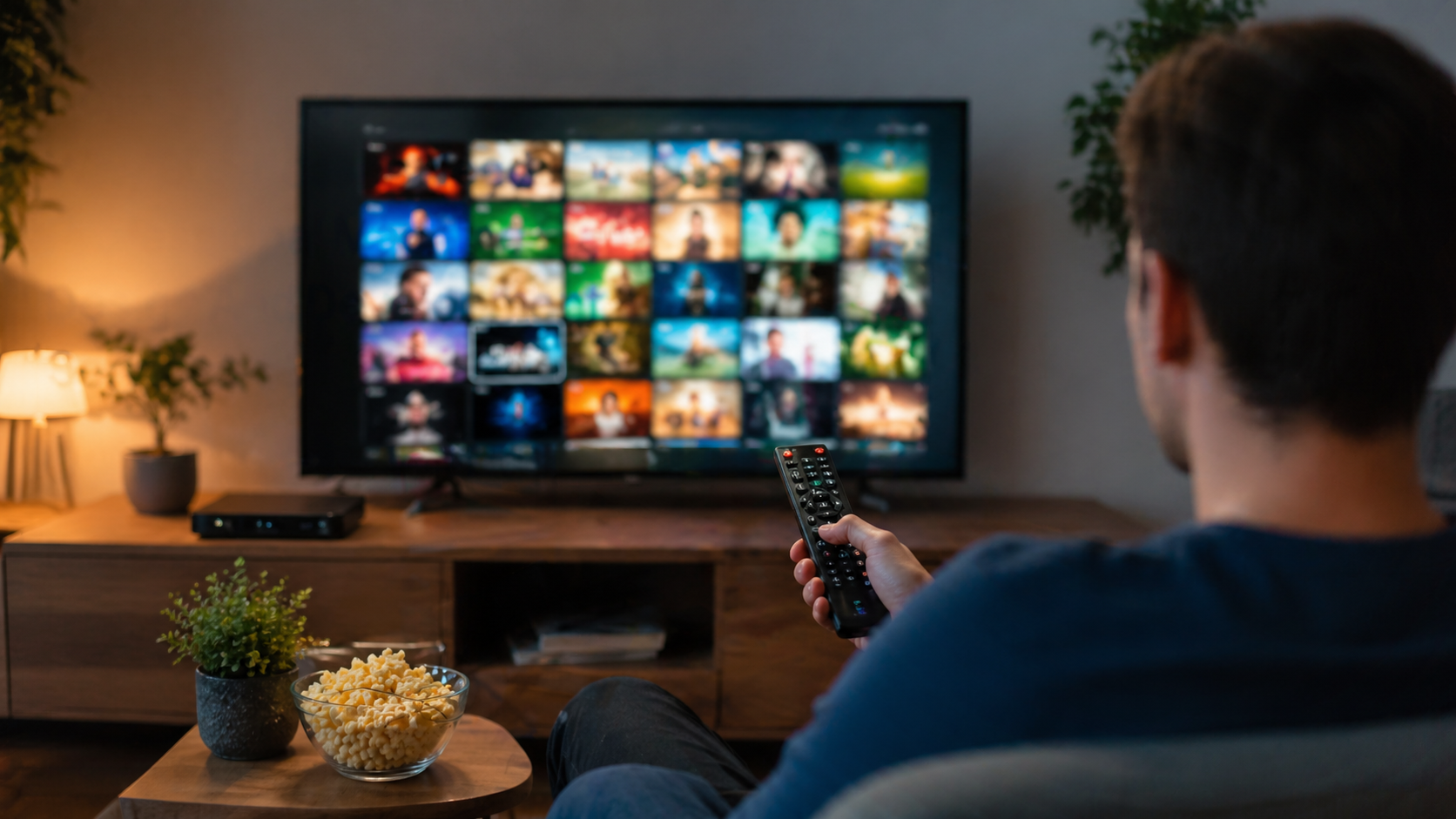
The platform economics behind Dutch IPTV: why IBO Player and similar apps are free, how they enable a premium subscription market, and what this model reveals about the future of television distribution.
There is something economically interesting about the Dutch IPTV market that does not receive much analytical attention: the applications that deliver the television experience to subscribers cost nothing to the end user. IBO Player, available from the Samsung Smart Hub at zero cost. IPTV Smarters Pro, free from the Amazon Appstore. TiviMate, free in its base version. GSE Smart IPTV, free on iOS.
These applications are the interface through which Dutch subscribers access subscriptions costing 15 to 25 euros per month. They handle credential authentication, CDN connection, EPG rendering, channel navigation, and in some cases catch-up and recording functionality. They are, in every practical sense, the consumer-facing product of the IPTV experience. And they are free.
This free-app, paid-subscription architecture is not accidental. It reflects a specific platform economics model that has interesting parallels in other technology markets and that has specific implications for how the Dutch IPTV market is structured and where it is heading.
The Platform Separation Model
The economic structure of Dutch IPTV separates the distribution infrastructure layer from the content delivery layer and from the user interface layer. Each layer has different economics, different competitive dynamics, and different relationships with the others.
The content delivery layer is where subscription revenue flows. IPTV subscription providers (aanbieders) maintain CDN infrastructure, content licensing agreements, customer support operations, and the server infrastructure that authenticates subscribers and delivers stream access. This layer has significant fixed costs and benefits from scale. The revenue model is straightforward: monthly or annual subscriptions, typically 15 to 25 euros per month for the full Dutch channel package.
The user interface layer is where the free apps sit. IBO Player, TiviMate, IPTV Smarters Pro, and their equivalents are interface applications. They connect to the subscription provider’s servers using standard protocols (Xtream Codes API or M3U format), render the channel list and EPG, and handle playback through software video decoders (ExoPlayer or VLC). They do not own content. They do not operate CDN infrastructure. They are software interfaces to services that other entities run.
This separation is what makes the free model sustainable. The interface application does not need to recover content licensing costs or CDN infrastructure costs because it bears none of those costs. Its cost base is software development and maintenance, which can be distributed across a large user base at near-zero marginal cost per additional user. IBO Player IPTV Officieel can offer its application at zero cost because the revenue that sustains the service comes from the subscription layer, not from the application itself.
The Parallel With Other Platform Markets
The free-interface, paid-service model is not unique to Dutch IPTV. It appears across multiple technology market categories where infrastructure providers and interface developers have found different economic roles in the same value chain.
The email client market operates on an identical structure. Outlook, Thunderbird, Spark, and Apple Mail are free interfaces that connect to paid email hosting services (Google Workspace, Microsoft 365, Fastmail). The interface layer does not charge users because its value derives from facilitating access to services that users are paying for at the infrastructure layer. Email client developers monetize through premium features (Spark’s team collaboration layer, Outlook’s Microsoft 365 integration) rather than per-use charges.
The podcast player market provides another comparison. Overcast, Pocket Casts, and Apple Podcasts are free interfaces for podcast content that is itself freely available. The interface layer competes on user experience quality, feature set, and platform availability while the content layer remains monetarily separate. The value to the interface developer comes from user engagement and, in some cases, premium feature monetization.
Dutch IPTV fits this pattern but with a specific characteristic: the interface layer and the subscription layer are often provided by different entities with no formal commercial relationship. A Dutch subscriber to IBO Player IPTV Officieel uses IBO Player (a third-party application) to access their subscription. IBO Player as an application is developed and maintained by a separate team from IBO Player IPTV Officieel as a subscription service. The shared name creates a brand association; the technical implementation is a standard IPTV protocol that any compatible application can access with valid credentials.
What the Free Model Means for Market Structure
The availability of high-quality free IPTV applications has specific structural effects on the Dutch IPTV subscription market.
First, it removes hardware lock-in as a competitive moat. Traditional cable television’s competitive position is partly sustained by the Mediabox hardware rental (approximately 9 euros per month from Ziggo), which creates a physical switching cost: if you leave Ziggo, you return the Mediabox and lose your cable television interface. With IPTV, switching subscription providers requires changing credentials in the same application, a process that takes under two minutes. There is no hardware to return, no installation to schedule, and no device functionality to lose. The switching cost is effectively zero for subscribers who are already using an IPTV application.
Second, it shifts competitive advantage entirely to the service layer. When the interface is free and standardised across providers, Dutch IPTV aanbieders cannot compete on interface quality. They compete on CDN quality (stream reliability at Dutch peak hours), content licensing depth (which channels are included and how completely they are implemented), EPG accuracy, customer support responsiveness, and pricing. All of these are subscription layer characteristics. The market forces that matter are all in the infrastructure.
Third, it creates a highly transparent price comparison market. When the application is free and identical across providers, the monthly subscription price is directly comparable with nothing obscuring the comparison. A Dutch consumer comparing two IPTV aanbieders is comparing 15 euros per month versus 20 euros per month with no hardware cost differential, no application differential, and no bundling complexity. Price transparency in this market is nearly complete, which creates strong downward pressure on subscription pricing and rewards providers who can achieve cost efficiency at the service layer.
IBO Player as Market Infrastructure
Within this platform economics framework, IBO Player occupies a specific and interesting position. The application is available natively on Samsung Smart TVs (via the Samsung Smart Hub, requiring no sideloading), LG Smart TVs (via the LG Content Store), Android devices (via Google Play), and iOS devices (via the App Store). This cross-platform availability on the most common Dutch television viewing devices makes IBO Player the most broadly accessible IPTV application in the Dutch market.
For Dutch consumers choosing their first IPTV subscription, IBO Player’s presence in the Samsung Smart Hub is particularly significant. Samsung is the most popular television brand in Dutch households. The Samsung Smart Hub native installation means that the majority of Dutch living room televisions can access IBO Player without any additional hardware purchase, sideloading procedure, or technical setup beyond the application download. The barrier between ‘considering IPTV’ and ‘watching IPTV’ is a single Smart Hub download and a credential entry.
IBO Player IPTV Officieel has built its service positioning around this infrastructure reality. As a iptv aanbieder specifically oriented toward the Dutch market, it optimises for the viewing scenarios that Dutch consumers on Samsung Smart TVs, LG Smart TVs, and Android devices encounter: Dutch EPG data accuracy with CET timezone handling, regional omroep coverage across all 13 Dutch regional broadcasters, and CDN infrastructure positioned for the Dutch peak viewing patterns (NOS Journaal at 20:00 weekdays, Eredivisie Saturday afternoon kickoffs).
The Premium App Layer: TiviMate as a Different Model
Not all IPTV applications in the Dutch market follow the free model. TiviMate is the primary exception and its business model is instructive.
TiviMate has a free version with basic functionality and a Premium version at 5.99 euros per year, purchased through the TiviMate Companion app on Google Play. TiviMate Premium unlocks the features that differentiate TiviMate from free alternatives: multi-view for simultaneous channel display (the feature Dutch Eredivisie viewers use to watch two matches simultaneously on Saturday afternoon), recording to USB or network storage, multiple playlists for comparing providers, and advanced EPG navigation.
TiviMate’s Premium model demonstrates that application-layer monetization is possible in the Dutch IPTV market when the value proposition is specific and differentiated enough to justify a payment. The multi-view feature in particular has no equivalent anywhere in the Dutch television ecosystem: not on Ziggo, not on any streaming service, not on any other IPTV application. Dutch Eredivisie viewers who want to watch Ajax on ESPN 1 and PSV on ESPN 2 simultaneously will pay 5.99 euros per year for it without significant price resistance.
The contrast between IBO Player’s zero-cost model and TiviMate’s premium model is instructive about where value can be captured in the application layer. Commodity functionality (channel navigation, EPG display, basic playback) cannot support pricing. Genuinely differentiated functionality (multi-view, recording, advanced EPG) can. The market has efficiently separated these: basic IPTV access through free applications, advanced features through a premium tier that the market has validated at 5.99 euros per year.
The Market Economics Going Forward
The Dutch IPTV subscription market’s platform economics create a specific competitive trajectory. As the legitimate subscription segment grows (driven by ACM-documented cable cancellations at 88,000 per quarter), the economics of CDN infrastructure investment improve: more subscribers spread fixed infrastructure costs, enabling quality improvements at the same or lower price points. Providers who made early CDN investments near AMS-IX are in an increasingly strong position as scale justifies the investment.
The application layer will continue its current trajectory: IBO Player, IPTV Smarters Pro, TiviMate, and GSE Smart IPTV are the established applications with broad device coverage and stable user bases. New application entrants face the standard challenge of any platform market: achieving sufficient user base to justify ongoing development investment. The economics favour established applications with existing distribution through device-native app stores.
For Dutch consumers, the practical implication is that the free application layer is a stable feature of the Dutch IPTV market for the foreseeable future. The competitive action is in the subscription layer, where CDN quality, channel coverage, EPG accuracy, and price are the dimensions on which aanbieders compete. Finding a iptv abonnement nederland that performs reliably on the specific devices and connection that a Dutch household uses requires testing those specific quality dimensions through the free trial that legitimate aanbieders offer, using the same free application that will be used after subscribing.
Frequently Asked Questions
Why is IBO Player free for Dutch users?
IBO Player is a software interface application. Its cost base is software development and maintenance, distributed across its user base at near-zero marginal cost per additional user. The subscription revenue that sustains the Dutch IPTV ecosystem flows to subscription providers at the service infrastructure layer, not to application developers at the interface layer. This separation makes the interface layer economically viable as a free product.
What is the difference between IBO Player the app and IBO Player IPTV Officieel the service?
IBO Player as an application is an IPTV player that connects to any compatible IPTV subscription using standard protocols (Xtream Codes or M3U). IBO Player IPTV Officieel is a Dutch subscription service that provides the channel content, CDN infrastructure, EPG data, and customer support. The application can be used with any compatible subscription; the subscription can be accessed through any compatible application.
How does TiviMate Premium justify its 5.99 euros per year cost?
Through genuinely differentiated features that free IPTV applications do not offer: multi-view for displaying up to four channels simultaneously (the primary feature Dutch Eredivisie viewers pay for), recording to local or network storage, multiple playlists for provider comparison, and advanced EPG navigation. These features have no equivalent in the free application tier and sufficient value to the specific viewers who need them to support the premium pricing.
Does switching IPTV providers require buying new hardware?
No. IPTV applications are protocol-agnostic: they connect to any compatible provider using standard credentials. Switching providers requires updating the credentials in the application, a process that takes under two minutes. There is no hardware lock-in, no device requirement change, and no installation procedure associated with switching Dutch IPTV aanbieders.
Why are Dutch IPTV subscription prices relatively stable?
The free, standardised application layer creates near-complete price transparency: Dutch consumers can directly compare subscription prices without hardware cost differentials, application cost differentials, or bundling complexity obscuring the comparison. This transparency creates strong downward pressure on subscription pricing. Providers who reduce prices below their cost of CDN infrastructure and content licensing cannot sustain service quality, creating a natural price floor that the market has established in the 15 to 25 euros per month range for full Dutch packages.
Market analysis based on publicly available Dutch IPTV market data as of April 2026. This does not constitute investment advice.





Comment