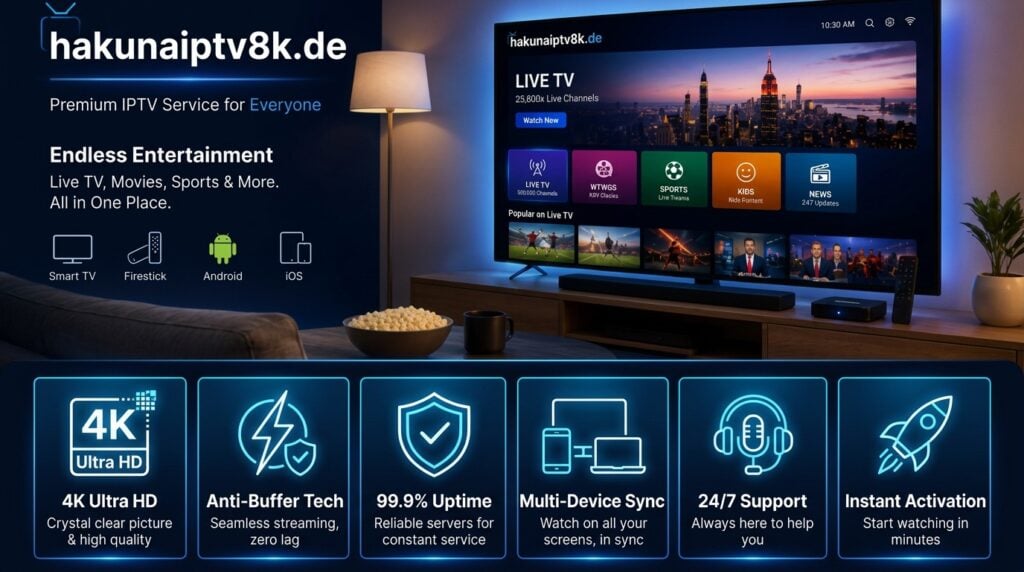
Across Germany and Europe, the television landscape in 2026 is undergoing a long-term structural transition. Traditional cable and satellite broadcasting is steadily losing relevance as consumers adopt internet-based streaming systems that offer greater flexibility, personalization, and cross-device accessibility.
This shift is not a short-term trend but part of a broader digital transformation in media consumption driven by broadband expansion, smart device adoption, and evolving user expectations across European markets.
Recent industry insights, including analyses from digital media publications such as TechBullion, highlight continued growth in IPTV adoption across Europe, particularly in regions with strong fiber-optic infrastructure and high streaming demand.
Understanding IPTV in 2026
IPTV (Internet Protocol Television) is a method of delivering television content over IP-based networks instead of traditional satellite or cable systems.
In practical terms, IPTV enables users to stream:
- Live television channels
- On-demand movies and series
- Time-shifted content (replay and catch-up features)
Unlike legacy broadcasting models, IPTV is built around user control, device flexibility, and adaptive content delivery.
Why IPTV Has Become a Preferred Model
The growing adoption of IPTV in Germany and Europe is driven by several structural advantages:
- Reduced dependency on fixed broadcast schedules
- Competitive pricing compared to traditional TV packages
- Access to HD and 4K streaming quality
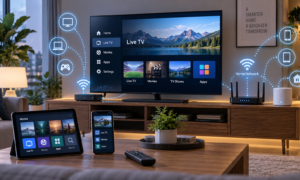
- Multi-device compatibility across smart ecosystems
- On-demand access to global content libraries
These factors align with modern consumption behavior, particularly among younger and mobile-first audiences.
Technical Overview: How IPTV Works
At a system level, IPTV relies on IP-based data transmission:
- The user connects via a stable broadband internet connection
- Content is delivered from IPTV servers through streaming protocols
- Data packets are continuously transmitted and buffered in real time
- The user selects live or on-demand content via an interface
- Video quality is dynamically adjusted based on available bandwidth
This architecture allows IPTV to scale efficiently across multiple devices and network conditions.
IPTV vs Traditional Cable TV (Structural Comparison)
| Category | Cable / Satellite TV | IPTV |
| Delivery Method | Broadcast signal | Internet protocol streaming |
| Setup Process | Hardware installation required | Software-based activation |
| Content Model | Fixed programming schedule | Live + VOD + interactive content |
| Accessibility | Location-dependent | Global access via internet |
| Flexibility | Limited | High adaptability across devices |
| Cost Structure | Higher fixed packages | Flexible subscription models |
Market Shift in Germany and Europe
The transition toward IPTV is particularly visible in major urban centers such as Berlin, Hamburg, Munich, and Frankfurt, where broadband penetration and smart device usage are highest.
Key drivers include:
- Expansion of fiber-optic networks across EU countries
- Increased competition among digital entertainment providers
- Rising consumer preference for personalized content experiences
- Growth of smart TVs and connected home ecosystems
This combination is accelerating the decline of traditional TV infrastructure in favor of internet-based systems.
Industry Perspective
From an industry standpoint, IPTV is increasingly viewed as a foundational layer of modern digital broadcasting rather than an alternative technology.
With improvements in network latency, compression technologies, and adaptive bitrate streaming, IPTV platforms are achieving higher reliability and better user experience consistency than earlier generations of streaming systems.
Further Reading & Technical Context
For readers interested in exploring IPTV infrastructure, deployment models, and streaming architecture in more detail, the following resources provide additional context:
- modern IPTV guide for Germany users
- IPTV Germany streaming resource
These references help contextualize how IPTV integrates into broader digital media ecosystems in Europe.
Future Outlook (2027 and Beyond)
The next evolution phase of IPTV in Europe is expected to focus on:
- AI-driven content recommendation systems
- Enhanced adaptive streaming optimization
- Integration with smart home and IoT ecosystems
- Improved ultra-low latency streaming for live events and sports
As infrastructure continues to evolve, IPTV is positioned to become a dominant standard in digital television delivery across European markets.
Frequently Asked Questions
How does IPTV work in Germany and Europe?
IPTV delivers television content over internet infrastructure using secure servers and adaptive streaming technologies.
Is IPTV legal in Germany in 2026?
Yes, IPTV is legal when provided through licensed and authorized platforms.
What internet speed is required for IPTV?
A minimum of 15 Mbps is recommended for HD streaming, while 25–50 Mbps supports stable 4K playback.
Can IPTV fully replace cable TV?
For most households, IPTV already functions as a complete replacement for traditional cable systems.
What devices support IPTV?
Smart TVs, smartphones, tablets, PCs, and streaming devices such as Android TV boxes and Fire Stick.
Conclusion
IPTV represents a fundamental shift in how television content is consumed across Germany and Europe. Its combination of flexibility, scalability, and cost efficiency aligns with the direction of modern digital media ecosystems.
As broadband infrastructure continues to improve across Europe, IPTV is expected to further consolidate its position as the primary model for television distribution in the coming years.