Working remotely from anywhere in the world sounds like a dream. But every digital nomad knows the reality: your entire business depends on the tools you carry in your bag. The right digital nomad tech stack can make your life easier, while the wrong setup will cost you clients, time, and sanity.
After years of working from coworking spaces, coffee shops, and hotel rooms across multiple countries, here is what actually works in 2026.
Laptop: The Foundation of Every Digital Nomad Setup
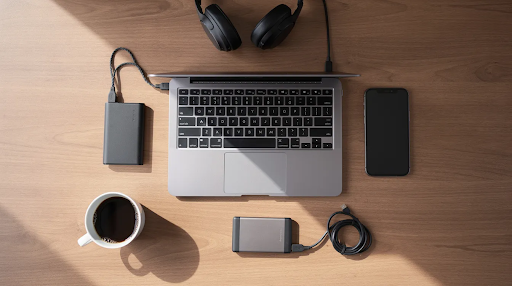
Your laptop is your desk, your office, and your lifeline. For most remote workers, the choice comes down to portability versus power.
If you work in graphic design or video editing, you need something with a solid GPU and enough RAM to handle heavy software. If your online business runs on email, documents, and Zoom calls, a lighter machine will do just fine. Either way, go for something with a long battery life. You will not always find a power outlet at your favorite coffee spot in Lisbon.
Keep an external hard drive in your bag as a backup. Cloud storage is essential, but having a local copy of your most important files is a safety net you will appreciate when your internet connection drops in the middle of nowhere.
Internet and Connectivity: The Real Game Changer
Nothing kills productivity faster than bad Wi-Fi. And if you have ever tried to buy a local SIM card in a country where you do not speak the language, you know the hassle.
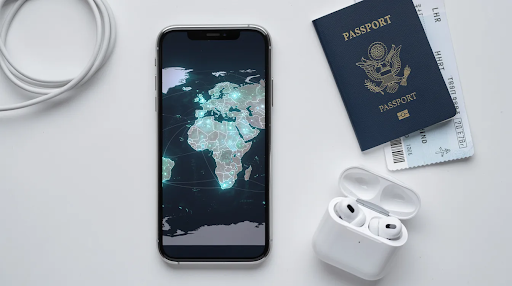
This is where eSIM technology has changed the game for remote workers. Instead of swapping physical SIM cards every time you cross a border, you can activate a travel eSIM solution on your phone before you even land. No extra cost for roaming, no hunting for a phone shop, and no losing your phone number in the process.
For digital nomads hopping between countries in Europe, Asia, or South America, having data plans for Europe and other regions ready to go on your device is essential. You land, you connect, you get to work. It is that simple.
Pair that with a portable power bank and a mobile hotspot, and you have reliable internet access pretty much anywhere in the world.
Communication and Collaboration Tools
Staying connected with clients and teams across time zones is a core part of the digital nomad life. Here is what most remote workers rely on:
Slack or Discord for daily communication. These tools keep conversations organized and let you create channels for different projects without clogging up your inbox.
Zoom or Google Meet for video calls. Make sure you have a decent pair of noise-canceling headphones. A ring light helps too if you take a lot of client-facing calls.
Notion or Trello for project management. Whether you run an online business solo or manage a small team, keeping tasks organized is non-negotiable.
Finance and Banking
Managing money across multiple countries used to be a nightmare. Today, services like Wise and Revolut let you hold accounts in different currencies, pay with no hidden fees, and send invoices without worrying about exchange rates.
For accounting, tools like FreshBooks or Wave make it super easy to track expenses, create invoices, and figure out your taxes at the end of the year.
Building Community on the Road
The digital nomad life can get lonely. Joining a Facebook group or online community for remote workers in your region helps you connect with people who understand the lifestyle. Platforms like Nomad List let you find coworking spaces, meet other nomads, and discover which cities offer the best balance of cost, internet speed, and quality of life.
Keep It Simple
The best digital nomad tech stack is not about having the most software or the fanciest gear. It is about choosing a few reliable tools that let you work remotely from anywhere without friction.
A solid laptop, reliable connectivity through eSIM, the right communication apps, and smart banking. That is really all you need to run your business from any corner of the world. Everything else is just nice to have.
The tools keep getting better every year. The real challenge is not finding stuff to add to your stack. It is figuring out what you can remove to keep things light and your life simple.