
Understanding the Dutch IPTV Provider Market in 2026: What Quality Actually Costs and Why It Matters

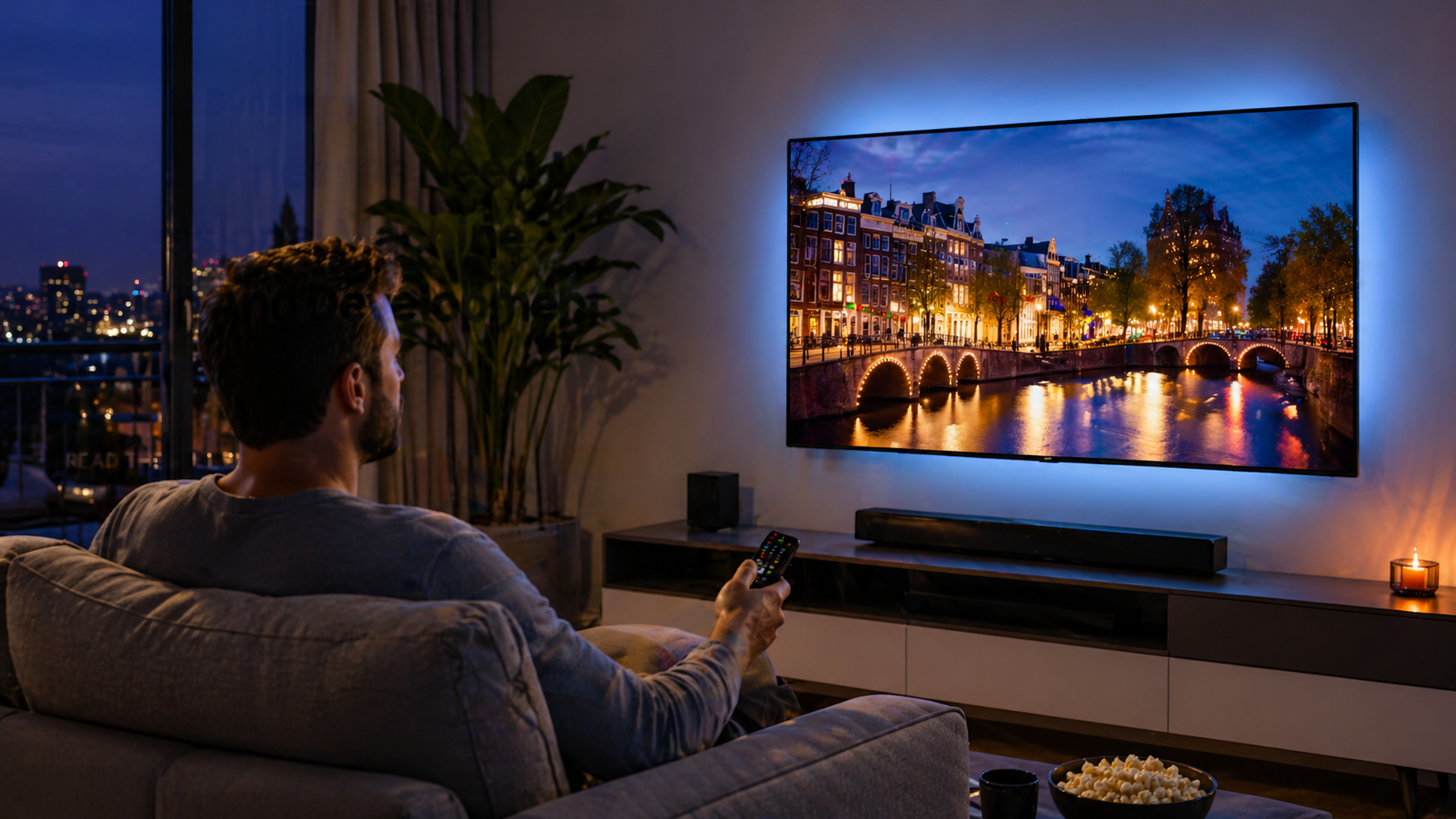
A market analysis of the Dutch IPTV provider landscape, the economics of quality differentiation, and why Dutch consumers are discovering that not all IPTV subscriptions are equal.
The Dutch IPTV market has undergone significant consolidation since 2022. The combination of FTTH infrastructure maturation (above 65 percent household coverage nationally), accelerating cable subscription cancellations (88,000 net in Q1 2025 according to ACM data), and increased rights holder enforcement activity against unlicensed streaming has produced a market where the quality gap between providers is more visible, and more consequential, than at any previous point in the market’s development.
For Dutch consumers evaluating IPTV providers in 2026, understanding the economics behind quality differences is more useful than reading provider marketing claims, because provider marketing claims are largely uniform and provide no meaningful differentiation signal. What differentiates providers is observable through a specific evaluation protocol, but understanding why the differences exist requires a look at the underlying market economics.
The CDN Investment Thesis
Content Delivery Network infrastructure is the primary technical determinant of Dutch IPTV stream quality, and it is also the primary capital investment that separates quality providers from marginal ones.
Dutch IPTV CDN quality is not primarily about bandwidth. The Netherlands’ national internet infrastructure is excellent: the Amsterdam Internet Exchange (AMS-IX) is one of the world’s largest peering hubs, regularly handling over 10 terabits per second. The limiting factor for Dutch IPTV stream quality is not bandwidth availability at the internet level. It is whether a specific IPTV provider has deployed CDN nodes in peering proximity to AMS-IX, and whether those nodes have sufficient concurrent streaming capacity for Dutch peak viewing hours.
A provider that has co-located CDN infrastructure in AMS-IX-adjacent data centres (Equinix Amsterdam, Interxion Amsterdam) and established direct peering relationships with major Dutch ISPs (Ziggo, KPN, Odido) can deliver IPTV streams to Dutch subscribers at 1 to 5 milliseconds of network latency. The HLS streaming protocol’s segment-based buffer system, which downloads 2 to 10 second video segments sequentially, fills comfortably ahead of playback at these latencies, producing stable streams even during peak concurrent demand.
A provider routing Dutch traffic through CDN infrastructure not co-located in Amsterdam, or using generic global CDN services without Dutch-specific edge deployment, serves Dutch users at 15 to 40 milliseconds of latency. This latency difference is invisible in most internet applications. In live HLS streaming during Dutch peak concurrent viewing, it determines whether the buffer fill percentage stays above 80 percent through the NOS Journaal 20:00 transition, or drops below 50 percent and produces the buffering events that define a poor IPTV experience.
Services like iptv diamond officieel that specifically invest in Dutch CDN infrastructure and target the Dutch viewer market are making capital commitments that smaller or generalist providers don’t. This investment is the reason quality differences between legitimately operating providers are observable in practice despite superficially similar marketing claims.
Content Licensing Economics
The content side of the Dutch IPTV cost structure explains why price is the first quality signal a Dutch consumer should evaluate.
ESPN Netherlands holds exclusive domestic broadcast rights for Eredivisie football. Distribution of ESPN’s Eredivisie streams to Dutch subscribers requires either a direct carriage agreement with ESPN Netherlands, or operating outside the licensing framework. The carriage agreement carries a per-subscriber fee that makes the economics of sub-10-euro IPTV subscriptions including ESPN channels simply incoherent for any provider with a meaningful subscriber base.
Ziggo Sport’s Champions League and Formula 1 rights, Viaplay’s Dutch Formula 1 rights package, and the various other premium Dutch sport channel rights follow the same pattern. Each carries a per-subscriber or fixed-fee licensing cost that establishes a floor below which any provider claiming to include these channels legitimately cannot profitably operate.
The legitimate Dutch IPTV market pricing floor of 15 to 25 euros per month is not arbitrary. It reflects the aggregated licensing cost structure that makes legitimate Dutch channel carriage economically viable at a realistic subscriber scale. This is why price is the first screening criterion Dutch consumers should apply: providers below this range either don’t have the licensed content they claim, or are operating at unsustainable losses with uncertain service continuity.
The iDEAL Signal and Its Institutional Implications
iDEAL is the Dutch digital payment network used by 71 percent of Dutch online transactions. For IPTV providers, accepting iDEAL is not primarily a payment convenience feature. It is an institutional compliance marker.
Dutch payment processors that operate iDEAL facilities (Mollie, Buckaroo, MultiSafepay) require merchant applicants to complete a formal business registration verification process. This process includes KvK (Dutch Chamber of Commerce) registration number verification, Dutch banking relationship establishment, and compliance with Dutch financial conduct requirements. A provider that has completed this process and obtained iDEAL acceptance has been vetted by a regulated Dutch financial institution.
From a market analysis perspective, iDEAL acceptance functions as a credentialing mechanism. It establishes that the provider has made a verifiable institutional investment in legitimate Dutch market participation. Providers who decline iDEAL in favour of cryptocurrency or informal transfer methods have specifically chosen to avoid this vetting process, which is informative about their position relative to the Dutch institutional and regulatory framework.
For Dutch IPTV market structure analysis, the iDEAL-accepting segment represents the institutionally legitimate market. ACM consumer protection law, CVDM broadcasting regulations, and Dutch civil law consumer protections apply fully and enforceably to the subscriptions Dutch consumers enter with iDEAL-accepting providers. These protections, including the herroepingsrecht, the one-month maximum cancellation notice, and AVG data rights, create the legal framework within which legitimate provider-consumer relationships operate.
Market Consolidation Dynamics
The Dutch IPTV provider market of 2026 is substantially more consolidated than the market of 2020. Understanding the consolidation dynamics explains the current competitive landscape.
The early Dutch IPTV market (roughly 2015 to 2020) was characterised by low barriers to entry: reselling stream access required minimal infrastructure investment, the enforcement environment was nascent, and consumer quality expectations were calibrated against the early-stage product. Providers entered and exited rapidly. Consumer experience was variable. The market was effectively pre-competitive in the economic sense: price and availability rather than quality differentiation drove choices.
The 2021 to 2026 period changed the market structure on three dimensions simultaneously. First, the Dutch FTTH rollout raised consumer quality expectations by removing the broadband infrastructure limitation: Dutch consumers on 500 Mbps FTTH expect IPTV stream quality equivalent to cable, not merely functional. Second, rights holder enforcement activity increased, specifically targeting the CDN infrastructure and reseller networks that supplied unlicensed Dutch sport content. Third, consumer awareness of the distinction between legitimate and informal providers grew as more mainstream households (not just early adopters) entered the IPTV market.
The combined effect is a market where providers without CDN infrastructure investment, legitimate content licensing, and institutional compliance face increasing operational risk. The informal segment has not disappeared but it has become more volatile. Providers that built sustainable businesses in the Dutch IPTV market are those that made the institutional and infrastructure investments that survival in the current environment requires.
What Dutch Consumers Should Look for in 2026
Translating the market analysis above into a practical evaluation framework for Dutch consumers in 2026:
Price range as first filter: 15 to 25 euros per month for a complete package. Below this range, the content licensing economics don’t work for legitimate providers. Above this range, without bundled streaming services, the pricing is above market.
iDEAL as institutional marker: Not the only marker but the most observable. iDEAL acceptance correlates with Dutch company registration, banking relationships, and regulatory framework compliance.
Free trial as CDN quality test: Run during Dutch peak demand (weekday 20:00, Eredivisie Saturday afternoon). The trial CDN is the production CDN. There is no separate trial infrastructure. What you see during the trial is what you get after subscribing.
Support quality test before subscribing: Send a Dutch WhatsApp message with a specific technical question (Samsung Smart TV model recommendation is reliable). The response tells you about support competence before you have a problem that requires it.
Annual plan only after verification: Monthly for two to three months post-trial, then annual after confirmed reliability. The discount on annual plans (20 to 40 percent) is real and worthwhile, but only after the service has demonstrated quality at Dutch peak demand conditions over multiple weeks.
The beste iptv abonnement for any specific Dutch household is the one that performs reliably at their peak viewing times on their devices and connection. No market analysis or comparative review substitutes for the direct trial. But understanding why the market is structured the way it is helps Dutch consumers ask the right questions and interpret the answers they receive.
The European Market Comparison
The Dutch IPTV market structure in 2026 is approximately two to three years ahead of comparable European markets in its development stage. UK FTTH penetration at approximately 20 percent means the UK market is still in the infrastructure transition phase that the Netherlands passed in 2021 to 2022. German IPTV market development has lagged even further behind Dutch FTTH deployment. Spanish IPTV adoption is accelerating as Spain’s fibre rollout matures.
From an investment and market development perspective, the Dutch IPTV market provides a preview of what comparable European markets will look like as their fibre infrastructure matures. The consolidation dynamics, the legitimacy markers that correlate with quality, and the consumer evaluation framework described here will replicate in UK, German, and other European IPTV markets on a delay of 18 to 36 months. The Dutch experience is the most detailed and regulatorily-documented case study of an IPTV market transition available in Europe.
For Dutch IPTV providers specifically, the market maturation dynamic creates competitive pressure toward quality differentiation that was absent in the early market. Providers competing on price alone face the challenge that the price floor is defined by content licensing costs that all legitimate providers share. Competitive advantage in a mature legitimate IPTV market requires quality differentiation, CDN infrastructure, EPG accuracy, support responsiveness, feature development, that translates into lower churn, higher customer lifetime value, and defensible market position.
Frequently Asked Questions
What determines stream quality in Dutch IPTV?
Primarily CDN infrastructure: whether the provider has deployed server capacity near AMS-IX (Amsterdam Internet Exchange) with direct ISP peering. Providers with Dutch-proximate CDN infrastructure deliver streams at 1 to 5 milliseconds latency. Providers without Dutch-specific edge deployment serve Dutch users at 15 to 40 milliseconds, which manifests as peak-hour buffering during the NOS Journaal at 20:00 and Eredivisie Saturday afternoons.
Why does legitimate Dutch IPTV cost 15 to 25 euros per month?
Content licensing fees for the channels included (ESPN for Eredivisie, Ziggo Sport equivalent for Champions League and Formula 1, Dutch public broadcaster carriage), CDN infrastructure co-location costs near AMS-IX, iDEAL payment processing setup and fees, Dutch company operational overhead, and customer support staffing. These costs collectively establish the economic floor below which a legitimately operating provider cannot deliver a complete Dutch channel package.
How does iDEAL acceptance verify a Dutch IPTV provider?
Dutch payment processors that provide iDEAL facilities require KvK (Chamber of Commerce) registration verification, Dutch banking establishment, and financial conduct compliance. A provider that has completed this process and obtained iDEAL acceptance has been institutionally verified by a regulated Dutch financial entity. This vetting is the reason iDEAL acceptance functions as a legitimacy signal rather than merely a payment convenience.
What is the best way to evaluate Dutch IPTV quality before subscribing?
Three steps in sequence: First, check price (15 to 25 euros per month), iDEAL acceptance, and terms (14-day herroepingsrecht, one-month cancellation). Second, test support quality with a Dutch-language technical question. Third, run the free trial during Dutch peak demand hours (weekday 20:00, Eredivisie Saturday). These three steps verify the quality dimensions that marketing claims cannot reliably signal.
Market analysis based on publicly available Dutch IPTV market data, ACM regulatory reports, and industry pricing observations as of April 2026. This does not constitute investment advice.







Comment