Ask any growth marketer what slows their video testing down, and you will hear the same answer: production. Not ideas, not budget, not targeting — production. A single 30-second ad still moves through scripting, casting, shooting, editing, and revisions before it ever reaches an ad account. By the time the creative is live, the market has moved, the promotion has changed, and the team is already behind on the next test. In 2026, that bottleneck is finally starting to break, and the reason is the arrival of AI models that can generate a complete 30-second clip in a single pass.
The real problem: creative testing is too slow and too expensive
Performance marketing runs on iteration. The teams that win are not the ones with a single brilliant ad; they are the ones who test twenty variations, kill the eighteen that fail, and scale the two that work. That model only functions when producing each variation is cheap. For static images and copy, it already is. For video — the format that now dominates paid social, YouTube, and connected TV — it is not.
The math is brutal for small teams. A modest product video might cost a few hundred to a few thousand dollars and take a week or two to produce. Testing ten hooks means ten shoots or ten expensive edits. Most small brands simply cannot afford that, so they shoot one video, run it until it fatigues, and wonder why their return on ad spend keeps sliding. The creative testing loop that big brands run every week is closed to them entirely.
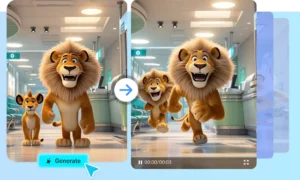
This is where the economics of AI video generation start to matter. When a 30-second clip can be generated from product images, brand references, and a structured prompt, the cost of a creative variation collapses from thousands of dollars to minutes of work. That change does not just make production cheaper — it changes what a marketing team is able to do.
Why 30 seconds is the number that matters
Earlier AI video tools could produce four to ten seconds of footage. That was enough for a mood clip or a social sticker, but not for an actual ad. A performance ad needs a hook, a value proposition, a product moment, and a call to action — and that structure does not fit into a six-second fragment stitched awkwardly to three others.
Thirty seconds of native, single-clip output changes the equation because it maps directly onto the formats marketers actually buy: the 30-second pre-roll, the full-length product demo, the brand story, the short spot for connected TV. A tool like Seedance 2.5 AI video generator is built around this exact length, producing a continuous 30-second clip rather than a sequence of short cuts glued together in post. For a marketer, that continuity is the difference between a usable ad and a tech demo.
From product images to testable ads
The shift that should interest performance teams most is the move from footage you have to capture to footage you can assemble from assets you already own. Every brand already has a library of product photography, logos, brand colors, and reference imagery. The newer generation of models can take dozens of these reference assets — up to fifty in Seedance 2.5’s case — and use them to hold the product, the character, the setting, and the visual style consistent across the full clip.
That matters because consistency is exactly where AI ads used to fall apart. If your product warps between frames or your brand color drifts, the ad is unusable no matter how cinematic it looks. Anchoring generation to a stable set of references is what turns a novelty into a production tool. It means the sneaker in second three is the same sneaker in second twenty-seven, and the packaging matches what actually ships.
A practical workflow for small teams
Here is what a realistic creative-testing loop starts to look like when 30-second generation is on the table. It is not magic, and it still rewards marketers who understand their audience — it just removes the production wall.
First, gather your inputs: three to five clean product images, your logo, your brand palette, and one or two reference clips or images that capture the mood you want. Second, write the ad as a second-by-second plan rather than a paragraph. Because models like Seedance 2.5 offer second-level control, you can specify what happens from 0–5 seconds (the hook), 5–15 seconds (the product in use), 15–25 seconds (the benefit), and 25–30 seconds (the call to action). Third, generate several variations that change only the hook, since the opening three seconds decide most of your performance. Fourth, run them, read the data, and regenerate the winners with tighter variations.
That loop — which used to take weeks and a production budget — can now run inside a single working day. The strategic skill shifts away from managing a shoot and toward knowing which hook, offer, and audience to test next.
Where this fits, and where it does not
It would be dishonest to claim AI video replaces every kind of production. High-end brand films, founder-led storytelling, and anything that depends on a real human performance still belong in front of a camera. What changes is the middle of the funnel — the enormous volume of direct-response creative that exists purely to be tested, measured, and mostly discarded. That is the work AI generation is genuinely suited for, because speed and volume matter more there than craft.
Three use cases stand out as immediate fits. E-commerce launches, where a new product needs ten hook variations before a sale goes live. SaaS demos, where a feature can be shown in motion without booking screen-recording sessions. And app promotion, where a short, punchy spot needs to exist in a dozen slightly different forms for different placements.
The 2026 outlook
The teams that benefit most will not be the ones chasing the most cinematic output. They will be the ones who rebuild their creative process around fast iteration — treating each generated 30-second clip as a cheap, disposable experiment rather than a precious deliverable. In performance marketing, the winner has always been whoever can learn fastest. For years, video was the format where small teams could not afford to learn quickly. That constraint is lifting.
The honest framing for 2026 is not “AI will make your ads for you.” It is “AI removes the production tax on video testing, so your ideas and your data decide the outcome instead of your budget.” For small teams that have watched larger competitors out-iterate them for years, that is the change worth paying attention to — and tools built specifically around 30-second output are where that shift becomes real.