AI video generation is moving incredibly fast.
Only a short time ago, most AI video tools were mainly used for experiments: surreal clips, short animations, simple camera movement, or social media demos. Today, the conversation has changed. Creators are no longer asking whether AI can generate video. They are asking a much harder question:
Which AI video model is actually useful for real creative work?
That is why the comparison between models like Wan 2.7 and Seedance 2.0 matters. Both represent the new direction of AI video generation, but they seem to approach the problem from slightly different angles.
Seedance 2.0 has attracted a lot of attention for its multimodal generation capabilities, cinematic motion, and strong prompt following. Wan 2.7, on the other hand, has become interesting because of its practical control features, including first-and-last-frame generation, image-to-video, reference-based generation, and instruction-based editing.
And with more people already looking ahead to Wan 3.0, one question naturally appears:
Could the next Wan model become a serious challenger to Seedance 2.0?
The honest answer is: we do not know yet.
Wan 3.0 has not been fully released, so it would be premature to make strong claims about its final quality. But by looking at the direction of Wan 2.7 and comparing it with Seedance 2.0, we can make some reasonable guesses about what the next stage of AI video generation may look like.
Seedance 2.0: A Strong Benchmark for AI Video Generation
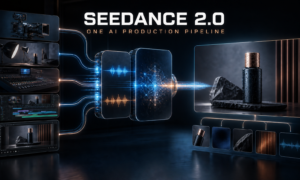
Seedance 2.0 is one of the most talked-about AI video models right now, and for good reason.
Its biggest strength is that it is not just a simple text-to-video model. It is designed for more flexible video creation, where users can guide the output with richer creative instructions and visual references.
This is important because real creative work is rarely based on a single text prompt.
A filmmaker may want to control the camera angle.
A marketer may want to keep a product visually consistent.
A creator may want a specific character style, motion rhythm, or scene structure.
An editor may want the generated video to follow an existing reference.
Seedance 2.0 appears to be built for this kind of richer creative direction. Its focus on motion quality, cinematic output, and prompt control makes it a strong benchmark for the AI video market.
In many ways, Seedance 2.0 represents where AI video is going: not just generating random beautiful clips, but giving users more control over performance, camera movement, lighting, timing, and overall scene composition.
Wan 2.7: A More Practical Control-Oriented Direction
Wan 2.7 is also important, but for a slightly different reason.
Instead of only focusing on cinematic output, Wan 2.7 seems especially interesting because of its control features.
For example, first-and-last-frame generation gives creators a clearer way to define where a video begins and where it should end. This is much more useful than simply typing a prompt and hoping the model understands the intended motion.
Image-to-video allows users to animate a still image.
Reference-to-video helps preserve character or subject consistency.
Instruction-based editing makes it possible to modify a video using natural language.
Multi-image input and storyboarding-style workflows suggest a future where AI video generation becomes more structured and less random.
This matters because one of the biggest problems with AI video is not generation itself.
The real problem is control.
A model may create a beautiful clip, but can it follow the exact scene direction?
Can it keep the same subject consistent?
Can it continue a shot instead of starting over?
Can it edit a generated result without destroying the original idea?
Can it help creators move from one lucky output to a repeatable workflow?
Wan 2.7 points toward this practical side of AI video.
It may not always be about producing the most impressive demo. Sometimes the more important question is whether the model gives users enough control to actually finish a project.
The Real Competition: Quality vs Control
When people compare AI video models, they often focus on visual quality first.
That makes sense. A good AI video model needs to generate sharp, realistic, cinematic, or stylistically impressive results. If the output looks bad, nothing else matters.
But as AI video becomes more mature, visual quality alone will not be enough.
The next competition will likely happen across several dimensions:
Prompt understanding
Can the model follow complex instructions without ignoring important details?
Motion consistency
Can it generate realistic movement without strange distortions or broken physics?
Character and subject consistency
Can the same person, product, animal, or object remain recognizable across shots?
Camera control
Can users direct movement, angle, framing, and pacing?
Reference control
Can the model use images, videos, and other assets as guidance?
Editing ability
Can users revise the output instead of regenerating from zero every time?
Workflow usability
Can creators use it repeatedly in real projects, not just as a demo tool?
Seedance 2.0 is strong because it pushes high-quality AI video generation forward. Wan 2.7 is interesting because it focuses on controllability and practical creative workflows.
That is why Wan 3.0 could become important.
Not because we already know it will be better.
But because if Wan 3.0 continues the direction of Wan 2.7, it may compete in the areas that matter most for real users: control, consistency, editing, and production workflow.
What Wan 3.0 Might Bring Next
Since Wan 3.0 has not been fully released, any discussion about it should be treated as prediction, not fact.
Still, based on the evolution from previous Wan models, there are a few areas where people may reasonably expect improvement.
1. Better Motion and Scene Coherence
One of the most important upgrades for any next-generation video model is motion quality.
AI video often struggles with object permanence, body movement, hand details, camera transitions, and multi-subject scenes. If Wan 3.0 improves motion coherence, it could make generated videos feel less like short AI experiments and more like usable production assets.
For creators, this would be a major step forward. The difference between a fun demo and a usable video is often not the first frame. It is whether the motion stays believable until the final frame.
2. Stronger First-and-Last-Frame Control
Wan 2.7 already shows how useful first-and-last-frame generation can be. For creators, this is a powerful feature because it gives structure to the output.
Instead of asking the model to “make a video” from scratch, users can define both the starting point and the destination. This turns AI video generation into something closer to directed motion.
A stronger Wan 3.0 could potentially make transitions smoother, more predictable, and more cinematic.
This would be especially useful for ads, product videos, short films, anime-style clips, and social media storytelling.
3. More Reliable Character Consistency
Character consistency is one of the biggest challenges in AI video.
Creators do not just want a good-looking person in one clip. They want the same character to appear across multiple scenes, angles, outfits, and actions.
If Wan 3.0 improves reference-based generation and subject consistency, it could become much more useful for storytelling, virtual influencers, branded content, and AI film production.
This is also where many AI video tools still struggle. A model can generate a beautiful scene, but if the main character changes face, clothing, or body structure every few seconds, the result becomes hard to use in serious content.
4. Better Video Editing Instead of Endless Regeneration
One of the most frustrating parts of AI video generation is having to regenerate the entire clip when only one small thing is wrong.
Instruction-based editing is therefore a very important direction.
A future Wan 3.0 workflow could become more powerful if users can say things like:
“Keep the camera movement, but change the background.”
“Make the product larger.”
“Preserve the character, but change the lighting.”
“Extend this scene for five more seconds.”
“Make the motion slower and more cinematic.”
This would move AI video closer to an editing tool, not just a generation tool.
For real creators, this may be more important than simply having a more impressive first output. The ability to iterate is what makes a tool useful in production.
5. A More Creator-Friendly Workflow
The winning AI video model may not simply be the one with the best benchmark score.
It may be the one that gives creators the smoothest workflow.
That means fast generation, clear controls, reference support, predictable results, affordable pricing, and an interface that does not require users to understand complex technical settings.
This is where Wan 3.0 has an opportunity.
If it can combine the control-oriented direction of Wan 2.7 with stronger cinematic quality, it could become a serious alternative for creators who are comparing it with Seedance 2.0 and other leading AI video models.
Seedance 2.0 vs Wan 3.0: The Question Is Not Just “Which Is Better?”
A simple “which model is better?” comparison may be too shallow.
A better question is:
Which model is better for which workflow?
Seedance 2.0 may be attractive for users who want cinematic scenes, strong motion quality, and advanced prompt-based video generation.
Wan 2.7 is already interesting for users who care about structured control, first-and-last-frame generation, reference-driven creation, and instruction-based editing.
Wan 3.0, if it builds on these strengths, could compete by offering a more controllable and creator-friendly AI video workflow.
That does not mean Wan 3.0 will automatically beat Seedance 2.0.
But it does mean the competition is becoming more interesting.
The future of AI video will not be decided by one model alone. It will be shaped by how well these tools solve real creative problems.
What Creators Should Actually Look For
For creators, marketers, and AI video users, it is easy to get distracted by viral demos.
A short clip on social media may look amazing, but that does not always mean the model is practical for daily use.
When evaluating AI video tools, users should look beyond the demo and ask:
Can I control the result?
Can I keep the same subject consistent?
Can I guide the motion?
Can I edit the output?
Can I use references?
Can I repeat the workflow?
Can I create something useful without regenerating endlessly?
These questions matter more as AI video moves from entertainment to real production.
The next generation of AI video tools will need to become more predictable, more editable, and more reliable.
This is why the evolution from Wan 2.7 to Wan 3.0 is worth watching.
Final Thoughts
AI video generation is entering a more serious phase.
The early era was about surprise: generating something that looked impossible a year ago.
The next era is about control: generating something that matches what the creator actually intended.
Seedance 2.0 is an important model because it raises expectations for high-quality, cinematic AI video generation.
Wan 2.7 is important because it shows how much creators need practical control, reference inputs, editing, and structured workflows.
Wan 3.0 is still something to watch rather than something to judge too early. But if it continues improving in the same direction, it could become one of the more interesting challengers in the next wave of AI video tools.
For anyone tracking the future of controllable AI video generation, Wan 3.0 is worth keeping an eye on.
Wan 3.0 is not just about another model name. It represents a bigger question for the AI video industry:
Can the next generation of video models move from impressive demos to truly controllable creative tools?