A model ByteDance hasn’t officially confirmed is already reshaping how to think about the economics of generative video. Here’s what’s actually known, what’s still rumor, and why the price tag matters more than the specs.
There’s a lot of buzz around a new AI video model right now, but it’s still pretty mysterious. They’re calling it Seedance 2.0 Mini, and it’s supposed to be a more lightweight version of something from ByteDance’s Seedance family. The thing is, we don’t really know much about it yet – no official announcement, no specs to speak of. We’re not even sure if it’s going to be available in June. But despite all the uncertainty, people are still talking about it. And the reason for all the fuss isn’t because of some leaked list of features or anything like that. It’s actually because of the price.
According to reporting that began circulating in May, Mini would land at roughly $0.073 per second — below ByteDance’s own Seedance 2.0 Fast tier at about $0.076, and well under the standard tier. If that holds, the newest model in the family would also be the cheapest, and by the same reports it would outperform the budget tier it undercuts. That combination is unusual enough to be worth unpacking carefully — including the parts that aren’t confirmed.
What’s actually reported, and what isn’t
Start with the honest ledger, because the gap between “reported” and “confirmed” is wide here.
Confirmed by ByteDance: nothing. There is no Seed blog post, no system card, no model page, no pricing announcement. The “June 2026 launch window” repeated across social feeds is a rumor, not a date on anyone’s calendar.
It seems that some people are saying that a certain AI system costs around $0.073 per second to run. This information came from a report in May that was posted on several Chinese AI websites and also discussed on a subreddit called r/Seedance_AI. They somehow figured out that it costs about 0.5 RMB per second, which is the same as the report said. Just because two sources say the same thing, it doesn’t mean it’s definitely true. There’s also a claim that one AI system, called Mini, is better than another one called Fast, but there’s not much evidence to back this up yet. The people making this claim are just repeating what they’ve heard from others, without doing any real measurements to confirm it.
So here’s the thing: there are some pretty strong hints that ByteDance is working on a more affordable, entry-level version, but so far, they haven’t said anything officially. If someone starts talking about the specs of this new Mini, like how good the resolution is, how long the clips can be, or when it’s coming out, they’re just making educated guesses based on what we already know about the other models. The only number that really matters is the one that ByteDance will eventually announce, not the one that’s been leaked.
Why a cheaper bottom tier is the surprising part
Set the rumor aside and look at the shape of the claim, because that’s what actually matters.
Normally, when a new model comes out, it’s the most expensive one and the old top model becomes cheaper. But with Mini, it’s the opposite – the new model is the cheapest and it’s even better than the more expensive one above it. This is really rare and it got people in the Seedance community talking, they were trying to figure out if the numbers were even real. They spent a whole thread discussing it, trying to see if it was actually possible for the new model to be both cheaper and better. It’s not often that you see a new model come out and be the best value for money, especially when it’s the cheapest one.
The gap between Mini and Fast looks trivial on paper — three-tenths of a cent per second. The reason it matters isn’t the size of the gap. It’s the direction. For two years, the story of AI video was capability: what each new model could newly do. A cheaper-and-better bottom tier is a different kind of news. It’s the first clear sign that the next phase is about access — what becomes newly affordable — rather than what becomes newly possible.
Why cost-per-render is what actually matters
To understand why a small amount of money per second is significant, it’s essential to examine how these tools are utilized in real-world scenarios.
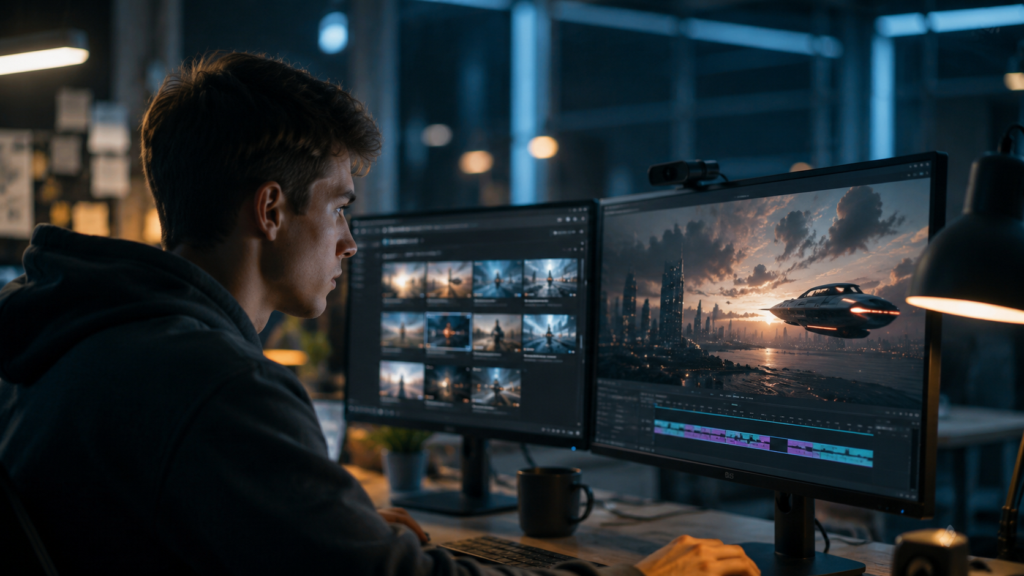
Generating video is not a single transaction. It’s a loop. You write a prompt, render, look at the result, change something, and render again. The first take is rarely the keeper; a usable clip might be the eighth attempt, or the twentieth. That makes the unit cost of a single render the number that decides who can really use the technology.
When video production costs are too high, it’s the small businesses and individuals who need affordable options the most that get left behind. Think of a bakery with no marketing team or a freelancer working on a tight deadline – they can’t afford to spend a lot on video production. But when the cost per unit goes down, they don’t just save money, they actually use it as an opportunity to try out more ideas. For example, if a creator could only afford to make 20 different versions of an ad before, now they can make 40. That’s why even a small difference in price can make a big difference. It’s not just about getting the sharpest image, it’s about being able to experiment and try out new things. A model that’s a few cents cheaper per second may not seem like a lot, but it can actually be a game-changer for people who need to produce a lot of content on a tight budget. They can use that extra money to run more tests, try out new ideas, and ultimately create better content.
Who Mini would actually unlock
A cheaper tier changes little for the people who were always fine. A studio with a crew and a budget didn’t adopt AI video to save fractions of a cent, and won’t switch over it.
This change is a game changer for everyone who thought video was too expensive – like small businesses who knew what they wanted but couldn’t afford to pay someone to make it, let alone make it over and over. Making things cheaper doesn’t mean people will suddenly be able to do more complicated things. It just means more people will be able to do things. If Mini is priced like people think it will be, using AI to publish videos every day will stop being something only rich people can do and will start being something any small team can do to get noticed. This is because it will be like normal equipment that everyone can use, not just something special for people who are ahead of the game.
What it would change about the work
Some platforms are already speaking out about this idea. For example, seedance2mini.ai is based on the idea that making drafts should be cheap, and you should only have to pay for the version you want to keep. This means that a short, low-quality test video would cost just a fraction of a longer, higher-quality final video. You can even see how much each version will cost before you decide to pay for it. This platform uses the latest models, like Seedance 2.0 and Fast, to generate videos from text, images, and more. It also has a “Mini” model that’s not available yet, but will be soon. The idea is that if you can try out ideas without spending a lot of money, you’ll be more likely to keep using the tool. And when the cost of using these tools goes down, the platform that’s ready will be able to pass the savings on to its users. This could be a big advantage for them. The platform is taking a chance that people will want to use a tool that lets them experiment and try out new things without breaking the bank. If they’re right, they’ll be the ones to benefit when the prices drop.
What Mini won’t fix
Let’s be real about what this thing can do. All the excitement around it doesn’t always match up with what it can actually deliver. Even if it’s cheaper than other options, that doesn’t mean it fixes the problems we already know about. For example, when you’re working with text inside a frame, or trying to keep characters consistent across different cuts, or dealing with complex physics-based motion, that’s where this model tends to struggle. And just because it’s faster than some other options doesn’t mean it’s going to be good enough if it can’t handle those key areas. There’s also a big question mark around whether it includes face and dialogue modes, which are important for some users. If you’re doing work that focuses on characters, you shouldn’t assume it has those features until we get confirmation. It’s better to have a clear understanding of what it can and can’t do, rather than getting caught up in the hype.
No matter how good a model is, it can’t replace the real thing – a person’s face, a actual shop, or a genuine customer speaking from the heart. The key to success has shifted from just using equipment to being able to clearly say what you want. This skill is important, no matter what tool you use or what level you’re at.
What to watch next
When the Mini finally arrives, people won’t be paying much attention to the marketing hype. There are three things that will really matter: first, if the actual price matches the one that was leaked – because often the launch price is a little different, and that can make a big difference when you’re selling a lot. Second, if the Mini still has face and dialogue modes – these are important features that people like. And third, what the company ByteDance does with Fast, quietly, behind the scenes. If the Mini is cheaper and better, then Fast won’t have a reason to exist anymore.
For now, the truth is that Seedance 2.0 Mini is giving us a clear signal, even if it’s not a done deal yet. This signal is strong and consistent, and it’s telling us that the future of AI video is going to be about making things cheaper, without sacrificing quality. This is the direction things are heading, no matter what the final product ends up being called. You can check it out and even try generating content with the models that are available now, just head to seedance2mini.ai.