
How AI Agents Will Transform the Role of the Chief Marketing Officer in SMEs

Marketing has never had more technology at its disposal. Over the past decade, Chief Marketing Officers (CMOs) have invested heavily in CRM platforms, marketing automation, analytics, customer data platforms, and performance marketing tools. Yet many marketing teams continue to struggle with fragmented customer experiences, disconnected data, manual processes, and increasing pressure to demonstrate measurable business impact.
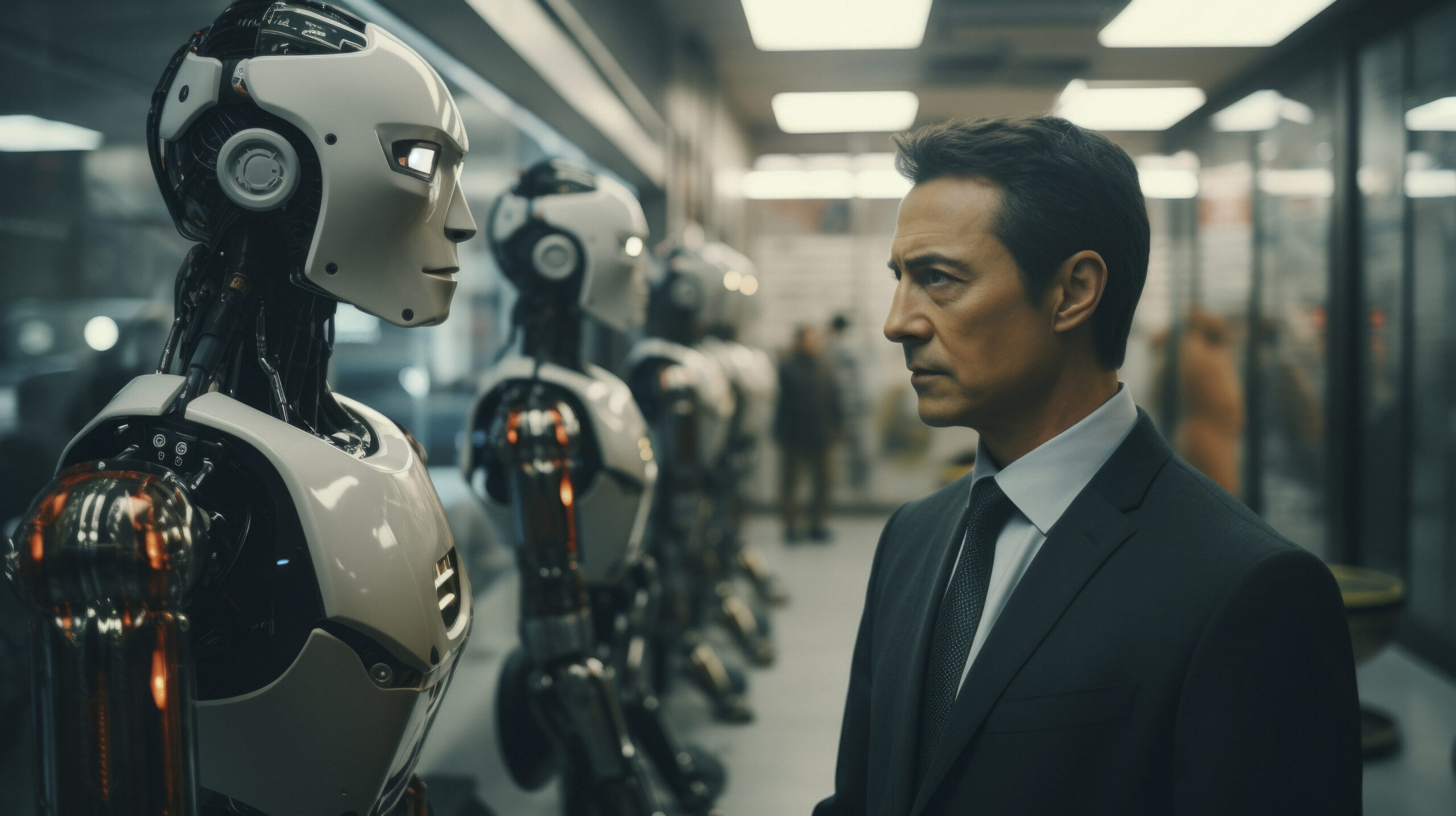
The next wave of artificial intelligence promises something fundamentally different. Rather than introducing another software platform, AI agents are enabling integrated marketing solutions that execute marketing tasks, make decisions within defined boundaries, and continuously improve customer engagement with minimal human intervention.
For SMEs, this shift could prove even more significant than it is for large enterprises. While many smaller businesses cannot afford large marketing teams or enterprise-scale technology investments, AI agents have the potential to democratise sophisticated marketing capabilities that were once available only to large corporations.
From Managing Campaigns to Orchestrating Intelligence
Traditionally, the role of a Chief Marketing Officer has been to define strategy, manage agencies and internal teams, oversee campaigns, and measure marketing performance. As AI agents mature, that role is evolving from managing marketing activities to orchestrating an intelligent ecosystem where people and autonomous digital workers collaborate seamlessly.
Instead of asking, “How many people do I need for this campaign?”, tomorrow’s CMO will increasingly ask, “Which AI agents should execute each stage of the customer journey, and where should human expertise create the greatest value?”
Marketing is no longer becoming more automated. It is becoming more autonomous.
AI agents can already qualify leads, personalise customer interactions, optimise advertising budgets, monitor campaign performance, trigger WhatsApp and email communications, update CRM systems, identify customers at risk of churn, and recommend the next best action for every prospect. Working together, these specialised agents can execute an entire customer journey while continuously learning from customer behaviour.
Why Large Enterprises Are Moving Faster
Large organisations have been among the earliest adopters of AI agents because they possess the data infrastructure needed to integrate multiple business systems.
Today, AI is being used to optimise media spending across advertising platforms, personalise customer communication at scale, automate lead nurturing, strengthen CRM and lead management, analyse marketing performance in real time, and support customer service around the clock.
The difference is already visible among leading enterprises. Companies such as Coca-Cola have connected customer data, CRM, AI, analytics, email, WhatsApp, and commerce into a unified customer engagement platform capable of delivering real-time, personalised experiences across multiple channels. PepsiCo is pursuing a similar strategy by integrating AI agents with CRM, marketing, sales, ERP, and field operations, allowing intelligent systems to coordinate customer engagement rather than relying on disconnected teams and isolated software platforms.
Their competitive advantage does not come simply from deploying AI. It comes from integrating AI into a single decision-making ecosystem where customer data flows seamlessly across every touchpoint, enabling marketing, sales, service, and commerce to function as one connected organisation.
Why SMEs Are Falling Behind
While large enterprises are building integrated AI ecosystems, most SMEs are still at a much earlier stage of adoption.
As Sumeet Mohanty, Co-Founder of ArthaVerse, an AI-powered Fractional CMO platform, explains:
“For SMEs, the disconnect is rarely about access to AI. Most have access to ChatGPT, marketing automation tools, and analytics platforms. The real gap is integration. Without a unified intelligence layer connecting customer acquisition, CRM, WhatsApp, commerce, analytics, and customer retention, AI remains a collection of tools instead of becoming a true marketing engine.”
The integration gap is becoming one of the biggest competitive challenges for smaller businesses.
Consider a typical ₹25 crore manufacturing or D2C business. It runs Google and Meta campaigns to generate enquiries. Customers visit the company’s website, submit enquiry forms, and send WhatsApp messages. The sales team manually updates the CRM, marketing uses a separate platform for email campaigns, inventory sits inside the ERP, and performance reports are prepared in spreadsheets every week.
Every system works—but largely in isolation.
As a result, valuable leads are missed, customer information is duplicated, follow-ups depend on individual employees, and business owners rarely have a real-time view of the customer journey. Instead of focusing on growth, marketing teams spend hours updating records, preparing reports, coordinating agencies, and moving information between disconnected platforms.
Now imagine the same business operating with an integrated marketing intelligence layer.
A prospect clicks on a Google advertisement and lands on the company’s website. An AI agent immediately starts a conversation, answers product questions, qualifies the enquiry, and captures the lead. The information is automatically written into the CRM, where another AI agent scores the opportunity based on buying intent and customer behaviour.
Within minutes, the prospect receives a personalised WhatsApp message with relevant product information or a catalogue. Inventory availability is checked automatically through the ERP. If the customer doesn’t purchase, AI schedules personalised follow-ups across WhatsApp and email. Once an order is placed, another AI agent enrols the customer into a loyalty programme, monitors repeat buying behaviour, and recommends retention campaigns whenever engagement begins to decline.
No single employee is coordinating these activities. Instead, AI agents are continuously working together across customer acquisition, CRM, commerce, communication, analytics, and retention.
This is not about replacing marketers. It is about removing the operational friction that prevents SMEs from growing efficiently.
Ironically, the challenge is no longer access to AI. The technology is already available and increasingly affordable. The real opportunity lies in connecting these capabilities into a unified operating model where every customer interaction informs the next, allowing SMEs to compete with organisations many times their size.
The Future CMO for SMEs Won’t Just Run Marketing—They’ll Build Growth Systems
For many SMEs, hiring a full-time Chief Marketing Officer is simply not practical. Building an experienced marketing leadership team, investing in multiple software platforms, and managing specialist agencies often requires resources that growing businesses do not have.
Yet customer expectations are changing rapidly. Buyers expect personalised experiences, faster responses, seamless communication across channels, and consistent engagement long after the first purchase. Competing on product or price alone is becoming increasingly difficult.
This is where the role of the CMO itself is evolving.
Rather than spending time coordinating agencies, reviewing campaign reports, or managing disconnected software platforms, the next generation of marketing leaders will focus on building integrated growth systems. Their responsibility will be to ensure that customer acquisition, CRM, WhatsApp engagement, commerce, analytics, and AI agents work together as a single operating model.
Platforms like [WRITER](https://writer.com/) are built for exactly this shift: its AI agents take a marketing goal and execute it end-to-end — researching audience trends, generating on-brand content, adapting it across email and social channels, and applying compliance checks automatically — so SMEs using AI agents to reinvent the customer journey can operate with the reach and consistency of a much larger marketing team.
For SMEs, this shift is particularly significant. Instead of investing in large in-house marketing teams, businesses can increasingly combine human strategic leadership with AI agents that execute repetitive operational work around the clock. This enables smaller organisations to access capabilities that were once available only to large enterprises, without requiring enterprise-scale budgets.
The future CMO will therefore become less of a campaign manager and more of a growth orchestrator—designing the systems, workflows, and customer journeys that enable people and AI to work together seamlessly.
Conclusion
AI agents represent far more than another marketing technology. They signal a fundamental shift in how marketing organisations operate and how CMOs create value.
Large enterprises have already demonstrated that integrating AI with customer data, CRM, commerce, analytics, and communication channels can transform customer engagement and operational efficiency. For SMEs, the opportunity is even greater. They are no longer constrained by access to AI—they are constrained by the absence of integration.
The next generation of competitive advantage will not belong to organisations with the most AI tools. It will belong to those that build connected intelligence layers where AI agents work seamlessly across the entire customer journey.
For SMEs, the future belongs not to the businesses with the biggest marketing teams, but to those with the smartest marketing systems. The next generation of Chief Marketing Officers will not be defined by the campaigns they launch, but by the intelligent growth engines they build.




Comment