
Global Payments Made Easy: A Practical Guide for Business Owners

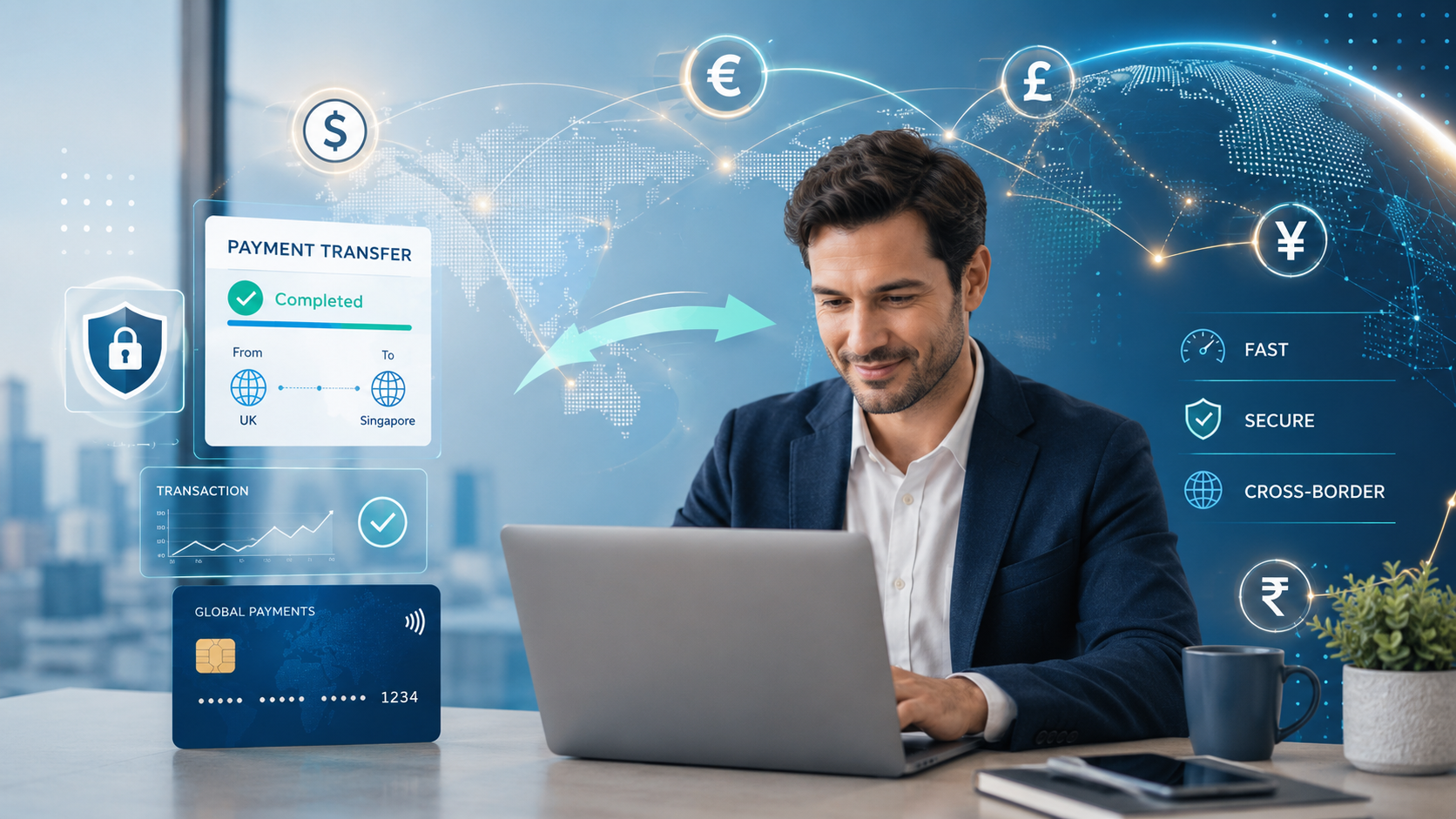
Selling to customers in other countries sounds straightforward until the money starts moving. Different currencies, payment methods, fees, settlement times, and local rules can turn a simple transaction into a finance task that takes far too much attention. A good payment setup should make that work easier, not create another pile of admin. For business owners, the aim is straightforward: accept and send money internationally with fewer headaches and a clear view of what each transaction really costs.
What Are Global Payments and How Do They Work?
Global payments are transactions that involve people or businesses in different countries. They can include collecting money from an overseas customer, paying a supplier abroad, sending money to a contractor, or moving funds between business entities.
What happens behind the scenes depends on the payment method. A customer might pay by card, bank transfer, digital wallet, or a local option that is common in their country. The payment then passes through the relevant financial networks and service providers before the funds reach the recipient.
Currency can add another step. If the sender pays in one currency and the recipient needs another, the funds may be converted before they are settled. That conversion can affect the final amount received, just as processing charges and other fees can.
For smaller companies, a global payment app like Sokin can bring several of these tasks into one place. Instead of jumping between different services to check transactions, currencies, and transfers, a business may be able to manage much of its payment activity through one system.
Business owners should look beyond the interface and check where money is held, how conversion rates are set, how long settlement takes, and what happens when a transaction fails.
Choosing the Right Ways to Send and Receive Money Internationally
A payment method that works brilliantly in one country may be a poor fit somewhere else. Customers have their own habits, and local payment preferences can vary considerably from market to market.
Businesses can accept or send money through cards, bank transfers, digital wallets, account-to-account payments, and local payment methods. The right mix depends on what the company sells, where its customers are located, and how money needs to reach suppliers or other recipients.
Country coverage is only one part of the decision. Check which currencies are supported and whether money can be received and held in those currencies. Settlement times matter too. A business that needs quick access to funds has different requirements from one that can wait several days.
Refunds deserve a place in the conversation. If a customer pays in one currency and receives a refund after conversion, the amount returned and the amount originally charged may not line up perfectly.
Recurring payments are another point to check for subscription businesses. Marketplaces may need seller payouts, while companies with overseas teams may need regular transfers to contractors.
Before choosing a provider, map out how money actually moves through the business. A little planning here can save plenty of work later.
How Batch Payments Can Simplify Business Operations
Making the same type of payment over and over can eat up a surprising amount of time. Batch payments give businesses a way to group multiple transactions into a single payment run rather than handling every recipient separately.
Think about a company paying 30 contractors at the end of each month. Each person may have a different payment amount, bank account, or currency. Preparing those transactions together gives the finance team one organized process to review before the money is sent.
This can work just as well for suppliers, affiliates, freelancers, marketplace sellers, and other recurring recipients. It cuts down on repetitive data entry and makes it easier to see the total value of a payment run.
There is still a human check involved. Recipient details need to be accurate, payment amounts should be reviewed, and businesses should have clear rules about who can approve a payment. Those steps matter even more when a single mistake could affect dozens of recipients.
Good records help too. Keep track of who prepared the payment, who approved it, when it was submitted, and whether each transaction was completed. That information can make reconciliation much less painful.
For businesses that make regular payment runs, connecting the process with accounting or finance software can remove even more manual work. Fewer repeated entries usually means fewer opportunities for duplicated payments or simple data-entry mistakes.
What Do Global Payments Really Cost?
The fee shown on a pricing page rarely tells the whole story. An international transaction may involve a processing charge, currency conversion cost, cross-border fee, receiving fee, or another charge depending on the provider and payment route.
Foreign exchange is an easy one to overlook. A provider might advertise a low transaction fee but make up some of that difference through its exchange rate. Another provider might charge more for processing but offer a better rate. The only useful comparison is the final cost.
The only useful comparison is the final cost of the transaction, including processing fees, exchange rates, and any additional charges.
Take a typical transaction and work it through from beginning to end. How much does the sender pay? What exchange rate is used? How much reaches the recipient? Are any fees taken before settlement?
Transaction volume changes the picture, too. A small difference on one payment can become a sizeable expense when the same process is repeated hundreds or thousands of times.
Businesses should look at currency conversion as part of the wider payment cost. If a company receives euros and later pays a European supplier in euros, automatically converting those funds into another currency may create an extra cost for no good reason.
It is worth reviewing payment costs as the company grows. Pricing, transaction volumes, markets, and payment habits can all change. A setup that worked for a small operation may not make financial sense once the business starts processing much larger amounts.
Keeping International Payments Secure and Under Control
Moving money across borders calls for sensible controls. Fraud is one concern, but it is not the only one. Incorrect bank details, duplicate transactions, chargebacks, sanctions checks, and local regulatory requirements can cause problems too.
Start with access. Only authorized people should be able to create, approve, or release payments. Larger transactions may need a second approval, particularly where several people are involved in managing company funds.
Payment providers may carry out Know Your Customer (KYC) and anti-money laundering (AML) checks. These checks help financial services businesses verify customers and monitor transactions for activity that may require further review. Requirements vary by provider and jurisdiction.
Security around payment data matters just as much. Businesses should understand what information is being stored, who can access it, and what protections the provider has in place.
Only authorized people should be able to create, approve, or release payments, with additional approval for higher-value transactions where appropriate.
Then there is reconciliation. Compare payment records with provider statements, bank accounts, and accounting records on a regular basis. This makes unusual charges, missing transactions, duplicate payments, and failed transfers much easier to spot.
Technology can handle much of the routine work, but it should sit alongside sensible internal procedures. A fast payment process is useful; a fast payment process with no checks is a very different proposition.
Frequently Asked Questions
What is the difference between global payments and cross-border payments?
Global payments cover a wider range of international money movement, while cross-border payments specifically refer to transactions involving different countries or jurisdictions. A business may deal with both when collecting revenue, paying suppliers, converting currencies, and transferring funds internationally.
How can a small business accept payments from customers in multiple countries?
A small business can use a provider that supports its target markets, currencies, and preferred local payment methods. Before signing up, compare transaction costs, settlement times, currency conversion, available payment methods, and any compliance requirements that apply.
What are batch payments used for?
Batch payments are useful when a business needs to send many payments during the same payment run. Common examples include supplier invoices, contractor payments, affiliate commissions, employee payments, and marketplace seller payouts.
How can businesses reduce international payment fees?
Businesses can lower costs by comparing the full price of a transaction rather than looking at the processing fee alone. Checking exchange rates, reducing unnecessary currency conversions, and reviewing payment routes as transaction volumes change can reveal worthwhile savings.
Are global payments secure?
Global payments can be secure when businesses use providers with suitable authentication, fraud monitoring, data protection, and compliance measures. Companies should still verify recipient details, control access to payment systems, use approval procedures, and reconcile transactions regularly.
Final Thoughts
International payments do not have to become a daily source of frustration as a company grows. A clear payment strategy, sensible choice of payment methods, organized payment runs, careful monitoring of fees, and straightforward security checks can take much of the unnecessary work out of international finance. The result is a process that gives business owners more clarity over where money is going and how much it costs to move it.







Comment