Medical scrubs and uniforms serve as the standard attire for healthcare professionals across the globe. These garments fulfill critical functions regarding hygiene, identification, and overall occupational safety. Healthcare environments demand clothing that can withstand rigorous physical activity, frequent washing, and exposure to various biological and chemical substances. Consequently, the selection of appropriate medical apparel requires careful consideration of material composition, construction quality, and specific occupational requirements.
If you are looking for more information about Medical Uniform Supplier & Custom Scrubs Manufacturer – LANO go here right away
The evolution of medical apparel has introduced customization as a standard practice for clinics, hospitals, and private practices. Custom scrubs offer facilities the ability to standardise staff appearance while accommodating different roles and departments. This standardization aids in patient navigation and enhances the overall security of the healthcare facility.
For more in-depth information you should view from Medical Uniform Supplier & Custom Scrubs Manufacturer – LANO
This comprehensive guide examines the technical aspects of medical uniforms, focusing on durability, fabric selection, and customization processes. Readers will gain insight into the structural components of high-quality scrubs, the methodologies for applying facility logos, and best practices for garment maintenance.
Understanding Medical Scrubs and Uniforms
The foundation of appropriate healthcare attire begins with a thorough understanding of what these garments are designed to achieve. Medical uniforms must balance regulatory compliance with functional utility.
What are Medical Scrubs?
Medical scrubs are sanitary clothing worn by surgeons, nurses, physicians, and other workers involved in patient care. Originally designed for use in operating rooms, these garments have become the standard uniform for many healthcare environments. A standard scrub set consists of a short-sleeved shirt and drawstring or elastic-waist pants. They are intentionally designed to be simple, featuring minimal places for contaminants to hide. The straightforward design also allows for easy removal and laundering at high temperatures, which is essential for infection control.
Importance of Quality in Medical Uniforms
Quality in medical apparel directly impacts both infection control and worker performance. High-quality uniforms are constructed with reinforced seams and resilient textiles that prevent the physical breakdown of the garment. Poor-quality scrubs can thin out, tear, or lose their structural integrity, potentially exposing the wearer to workplace hazards. Furthermore, well-constructed uniforms maintain their color and shape after repeated industrial laundering, ensuring that healthcare professionals present a neat, cohesive appearance to patients and the public.
Durability of Scrubs Made for Healthcare Professionals
Durability is measured by a garment’s resistance to abrasion, tearing, and chemical degradation. Healthcare professionals subject their clothing to intense conditions, including long shifts involving constant movement, lifting, and stretching. Durable scrubs utilize advanced fabric blends, often incorporating polyester for strength and spandex for flexibility, alongside traditional cotton for breathability. Manufacturers reinforce stress points, such as pockets and side slits, with bar-tack stitching. This technical construction ensures the garment can endure the physical demands of the healthcare sector without requiring premature replacement.
Custom Scrubs: Tailoring Your Medical Uniform
Customization transforms standard medical apparel into a functional tool for institutional branding and staff organization. Tailoring uniforms involves selecting specific colors, fits, and embroidered details that align with organizational standards.
Benefits of Custom Medical Scrubs
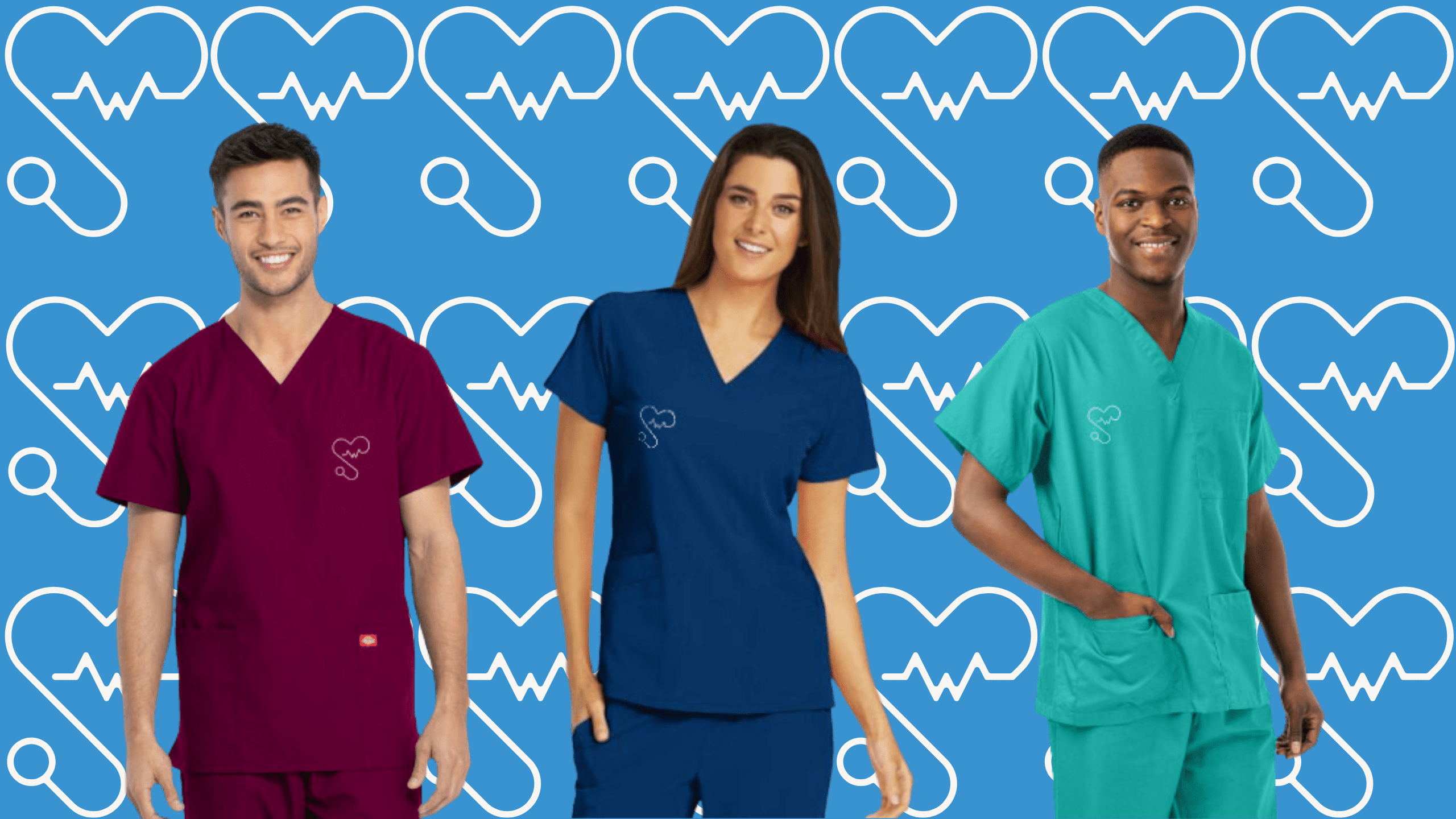
Custom medical scrubs provide several operational advantages. First, they facilitate role identification. Many hospitals assign specific scrub colors to different departments (e.g., navy blue for registered nurses, burgundy for respiratory therapists), allowing patients and staff to identify personnel instantly. Second, custom scrubs foster a sense of unity and professionalism among the staff. Third, fitted scrubs tailored to the specific measurements of the workforce reduce occupational hazards associated with excessively loose or restrictive clothing, thereby improving mobility and comfort during extended shifts.
How to Order Custom Scrubs with Logos
The procurement process for custom scrubs with logos requires coordination with specialized uniform suppliers. The first step involves selecting the base garment, considering factors like fabric weight and pocket configuration. Next, the facility must provide a high-resolution digital file of the logo. The supplier digitizes this image, converting it into a format readable by industrial embroidery machines. Facility administrators must review a physical or digital proof of the embroidered logo to verify color accuracy, sizing, and placement before approving the bulk order. Standard placement for logos is typically the left chest area of the scrub top.
Personalizing Your Scrub Style
While institutions mandate general uniform guidelines, individual professionals often have options to personalize their scrub style within those parameters. This personalization may include selecting specific pocket layouts (such as cargo pants or multi-pocket tops) that suit daily tasks. Additionally, choices between V-neck, mock-wrap, or crew-neck tops allow individuals to select garments that accommodate their physical requirements while adhering to the facility’s dress code.
Embroidered Scrubs and Nursing Uniforms
Embroidery represents the most durable method for customizing healthcare apparel. Unlike screen printing, which can crack or fade under high-temperature washing, embroidery thread withstands the rigorous laundering processes required in medical settings.
Choosing Embroidered Scrubs for a Professional Look
Embroidered scrubs elevate the standard medical uniform to a professional corporate standard. When selecting embroidery, the density of the stitches and the quality of the thread are critical metrics. Polyester embroidery threads are highly recommended for medical environments due to their resistance to bleach and UV light. A well-executed embroidered logo maintains its crisp edges and vibrant colors throughout the lifespan of the garment, continuously reflecting the institution’s commitment to quality.
Customizing Nursing Uniforms with Logos
Nursing staff represent the largest segment of the healthcare workforce and have the most frequent direct contact with patients. Customizing nursing uniforms with clear, embroidered logos and credentials (such as “RN” or “LPN” below the name) serves a dual purpose. It complies with healthcare regulations regarding proper identification and reassures patients by clearly indicating the qualifications of their caregiver. Precise, legible embroidery is essential for this function.
Popular Styles of Scrubs and Lab Coats
The medical uniform market offers various styles to accommodate different professional roles. Traditional unisex scrubs provide a relaxed fit suitable for general applications. Modern athletic-fit scrubs incorporate four-way stretch fabrics and articulated joints, favored by emergency room and intensive care staff who require maximum mobility. Lab coats, typically worn by physicians and laboratory technicians, range from consultation-length jackets to full-length coats. These coats often feature specialized compartments for medical instruments, tablets, and protective eyewear.
FAQs on Custom Scrubs and Medical Uniforms
Addressing common inquiries helps administrators and healthcare professionals make informed decisions regarding uniform procurement and maintenance.
Common Questions About Scrubs with Logos
What is the minimum order quantity for custom embroidered scrubs?
Order minimums vary by supplier, but many industrial providers require a minimum of 12 to 24 units for the initial digitization and embroidery setup.
Can logos be applied to any scrub fabric?
Most standard scrub fabrics (cotton/polyester blends) accept embroidery well. However, ultra-lightweight or highly elastic performance fabrics may require specialized backing stabilizers during the embroidery process to prevent puckering.
How long does the customization process take?
Standard turnaround times for custom embroidered medical apparel range from two to four weeks, depending on the complexity of the logo and the volume of the order.
How to Maintain and Polish Your Custom Scrubs
Proper maintenance preserves the structural integrity of the fabric and the vibrancy of the embroidered logo. Scrubs should be washed according to the manufacturer’s care label, typically involving warm or hot water to ensure sanitization. To protect the embroidery, garments should be turned inside out before washing. Avoid the use of chlorine bleach directly on embroidered sections unless the threads are certified as bleach-resistant. Tumble dry on a low heat setting to prevent the fabric from shrinking and to minimize wrinkling.
Choosing the Right Fabric for Your Medical Uniform
Fabric selection dictates the performance, comfort, and longevity of the medical uniform.
- 100% Cotton: Offers high breathability and softness, ideal for sensitive skin, but is prone to wrinkling and potential shrinkage.
- Polyester/Cotton Blends: The industry standard. These blends combine the breathability of cotton with the durability and wrinkle resistance of polyester.
- Performance Blends (Spandex/Rayon/Polyester): These textiles provide moisture-wicking properties and multi-directional stretch. They are highly suitable for active environments where temperature regulation and unrestricted movement are required.
Next Steps for Optimizing Medical Apparel
Selecting the appropriate medical uniforms and custom scrubs is a strategic decision that impacts workplace safety, staff morale, and institutional branding. Healthcare administrators and professionals must evaluate fabrics, construction methods, and customization options based on objective, technical criteria rather than solely on aesthetic preferences. By prioritizing durability, selecting the correct fabric blends for specific environments, and utilizing high-quality embroidery for facility logos, organizations can ensure their medical apparel meets the rigorous demands of the healthcare industry.