
Designing Human-Centered AI for the Future of Innovation

As artificial intelligence accelerates from experimentation to enterprise-wide deployment, the defining challenge has shifted from scale and speed to usability and trust. Generative AI and agentic systems are transforming industries with personalized, automated experiences, and their impact will depend on how well they are designed to serve people. For organizations, the question is no longer whether AI can be powerful, but whether it can be approachable, intuitive, and dependable enough to create lasting value.
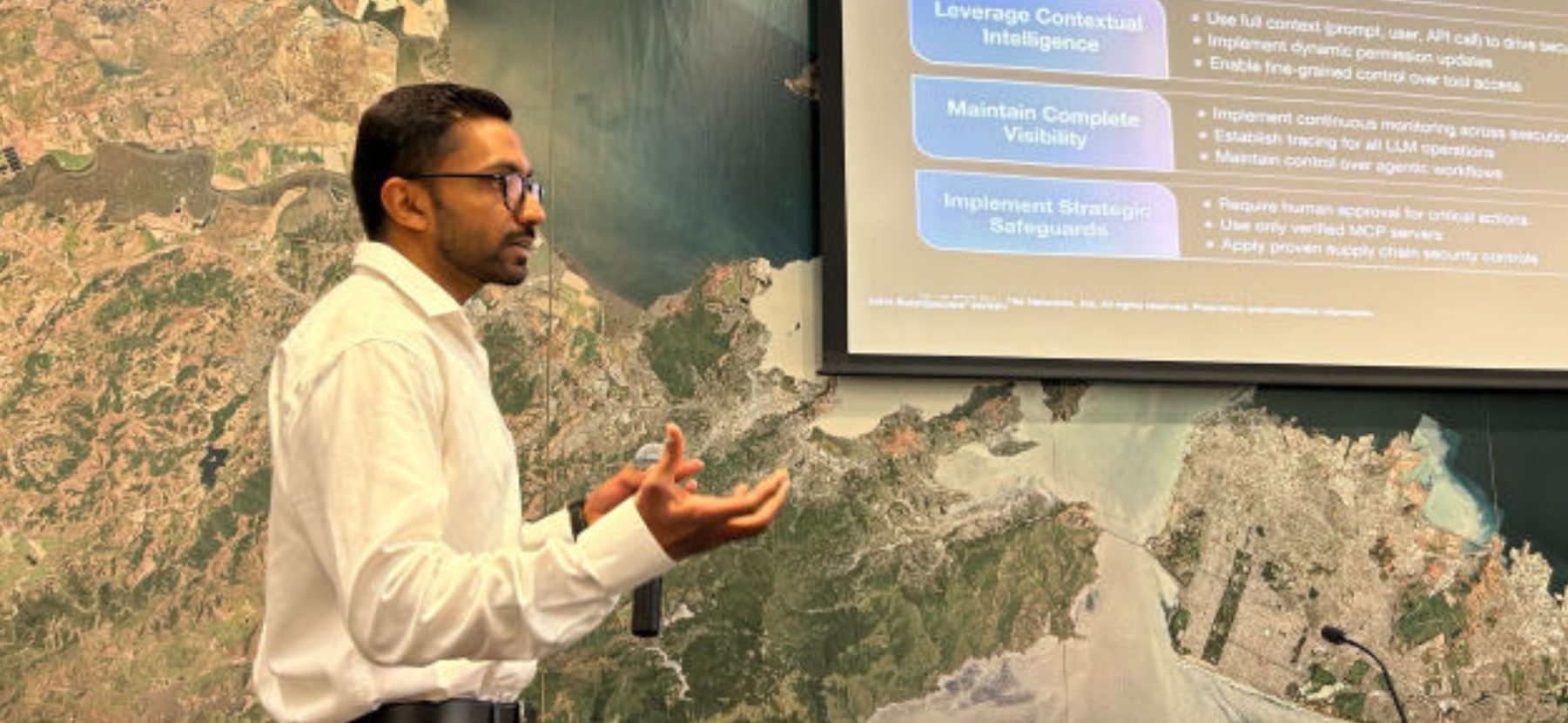
At the forefront of navigating this transition is Rakshith Aralimatti, Principal Product Manager at Palo Alto Networks, IEEE Senior Member, and product leader whose career spans engineering, fintech, automotive, and collaboration tools. His career arc — engineer to product leader to AI innovator — highlights a consistent focus on personalization and human-centered design, showing that complex technology can be made accessible and impactful across industries.
Understanding the Human-Centered Challenge
The rise of generative and agentic AI has unlocked transformative potential in finance, automotive, and enterprise collaboration. But with greater capability comes the responsibility to ensure these systems remain useful, transparent, and aligned with human needs. Designing for usability means anticipating not only what technology can do, but how people will actually interact with it — whether that’s simplifying a financial process, making in-car systems more intuitive, or empowering teams with insights that reduce cognitive load.
“These aren’t theoretical concerns,” Rakshith notes. “If we don’t design for people from the start, we risk building AI that looks impressive on paper but fails in practice. The future of AI depends on trust, and trust depends on usability.”
From Engineering to Product Leadership
Rakshith’s trajectory illustrates the value of grounding product leadership in technical depth. At Mercedes-Benz, he helped shape the MBUX infotainment system, embedding personalization into the automotive experience. Over two years, he spearheaded development of the industry’s first AI-powered personalized automotive interface, creating 160+ intelligent widgets and the Zero Layer AI architecture. The result: over $1 billion in annual recurring revenue, a 20% ARR uplift from personalization features, and a 25% increase in customer adoption — achievements that set a new benchmark for the automotive industry.
At Intuit, he led a seven-month initiative to create a comprehensive Generative AI and UX framework across TurboTax, QuickBooks, Mailchimp, and Credit Karma. His team built the GenUX widget ecosystem with multimodal data entry and NLP-driven copilot functionality, enabling millions of users to interact with financial products naturally. This work delivered a 20% revenue increase (over $100 million in ARR), accelerated product cycles by 40%, and improved user productivity by 25%, establishing a new industry standard for AI-native financial software.
Human-Centered AI in Collaboration
His work at Mural underscored the importance of usability in enterprise collaboration. By leading development of a personalized AI-powered dashboard and recommendation system, Rakshith helped users cut time-to-insight by 40% and lifted engagement by 23%. The project generated $3 million in new recurring revenue while showing how AI can empower teams without overwhelming them.
During Mural’s year-long project, his team built a first-of-its-kind AI-powered personalization engine integrating advanced analytics, automatic clustering, and collaborative insights. The success illustrated Rakshith’s consistent focus on AI that is not just powerful but approachable.
Building the Next Wave of Human–AI Interaction
Today, at Palo Alto Networks, Rakshith applies this philosophy to the next frontier: agentic AI. Capable of executing multi-step workflows autonomously, these systems promise massive productivity gains but also require thoughtful design to keep people in control. His frameworks embed transparency, human-in-the-loop validation, and monitoring dashboards, ensuring that autonomy enhances rather than erodes trust.
“Agentic AI is powerful precisely because it can operate without constant supervision,” Rakshith explains. “But that autonomy only works if people trust the system. Innovation succeeds when usability and accountability move in lockstep.”
Human-Centered Innovation as a Competitive Advantage
From the automotive personalization that reshaped Mercedes’ customer experience, to financial copilots at Intuit, to collaborative insights at Mural, and now secure agentic frameworks at Palo Alto Networks, Rakshith’s career reflects a consistent throughline: AI achieves its full potential only when it is designed around people.
This lesson extends beyond companies to national competitiveness. As AI becomes a cornerstone of global growth, leadership will not be determined by who develops the most advanced models, but by who makes those models usable, trusted, and adopted at scale. Safe deployment and usability are no longer optional; they are strategic imperatives. Rakshith’s career arc — engineer, product leader, innovator — embodies this truth. His work demonstrates how human-centered AI can strengthen enterprises while contributing to the United States’ broader edge in innovation.




Comment