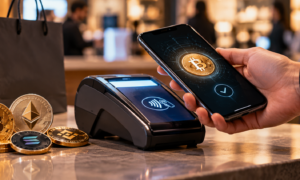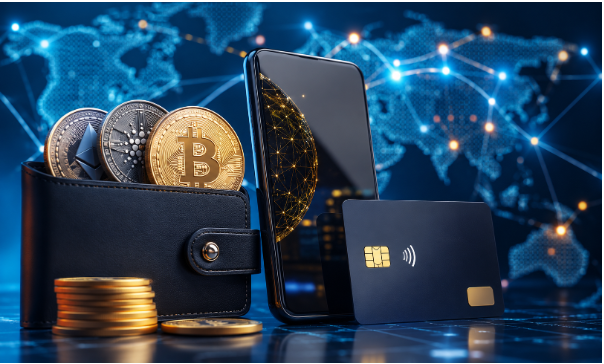
Cryptocurrency has introduced a new way for people and businesses to move funds between digital wallets, platforms, and financial services. Bitcoin, stablecoins, and other digital assets can be used for payments, transfers, and online transactions, although availability depends heavily on the service provider, payment network, and local regulations.
Unlike traditional card or bank payments, cryptocurrency transactions are generally recorded on a blockchain and require users to manage wallet addresses and network fees. This creates a different payment experience, with potential advantages alongside important risks. Understanding how these transactions work, what security measures matter, and how regulations affect digital assets can help users make more informed decisions.
The Rise of Digital-Asset Payments
Digital assets have become increasingly relevant to online payments because they can support electronic transactions without relying exclusively on conventional banking networks. Some businesses accept cryptocurrencies directly, while others use third-party payment processors that convert digital assets into another currency.
However, cryptocurrency payments are not governed by one universal set of rules. Requirements vary between jurisdictions, and businesses may need to address licensing, customer verification, anti-money-laundering controls, and other compliance obligations. Financial regulators and international organizations continue to examine emerging risks associated with digital assets and payment channels, particularly where transactions can move quickly across borders.
How Cryptocurrency Transactions Work
A cryptocurrency transaction normally starts with a compatible digital wallet. When a user selects cryptocurrency as a payment method, the service provider provides a wallet address or payment request. The user then sends the specified amount from their own wallet.
The transaction is recorded on the relevant blockchain and may require network confirmation before the recipient considers the payment complete. Network fees can vary depending on the blockchain and current network activity. Transfers in the opposite direction work similarly, with digital assets being sent to the user’s nominated wallet address.
Users should carefully verify the blockchain network, wallet address, and payment amount before confirming a transaction because blockchain payments can be difficult or impossible to reverse once completed.
Key Benefits of Using Cryptocurrency for Payments
One potential benefit of cryptocurrency payments is that they can operate through digital wallets rather than traditional card-processing systems. Depending on the asset and network, transactions may also be processed across borders without relying entirely on conventional banking infrastructure.
Stablecoins provide another option for users who want a digital asset designed to maintain a relatively stable value against a reference currency. However, stablecoins still involve technology, issuer, liquidity, and regulatory risks that users should understand.
Another consideration is transaction transparency. Blockchain networks can provide a public record of transactions, although the information visible on-chain is different from the personal identity information held by an exchange, wallet provider, or financial service.
These characteristics can make cryptocurrency useful for certain types of payments and transfers, but they do not automatically make every transaction safer, faster, or cheaper.
Risks and Considerations
Cryptocurrency payments introduce risks that may be less common with ordinary card or bank transactions. Cryptocurrency prices can fluctuate significantly, meaning the value of funds may change between the time they are received and when they are spent or converted. Other risks can include hacking, theft, fraud, and loss of access to a digital wallet.
Wallet security is another major responsibility. Sending funds to the wrong address or using an incompatible network can result in permanent loss. Users should also consider transaction fees, transfer limits, verification requirements, and the reputation of the service provider before making a payment.
Regulatory developments are also important. Digital-asset systems can create money-laundering and financial-crime risks, making compliance controls increasingly important for exchanges, payment providers, and other businesses operating in this space.
Choosing a Secure Digital-Asset Payment Service
Before using cryptocurrency for payments, users should examine the service provider rather than focusing only on the digital assets it supports. Company information, licensing details where applicable, terms and conditions, security practices, and clearly stated payment policies are useful starting points.
Security should also extend to account access. Strong passwords, two-factor authentication where available, and careful management of wallet credentials can reduce avoidable security problems. Users should access financial or payment accounts through official websites and applications rather than links received through unsolicited messages. For example, when accessing an online account, users should confirm that they are using the legitimate Winbox login page rather than an unverified link or copycat website.
The payment section should clearly explain supported cryptocurrencies, available networks, minimum and maximum transaction amounts, fees, processing requirements, and verification procedures. Understanding these details before making a transaction can help prevent unexpected problems.
Mobile Cryptocurrency Payments
Mobile devices have made digital-asset payments more convenient because users can manage wallets and financial accounts from a smartphone. At the same time, this makes device security particularly important.
Screen locks, operating-system updates, reputable wallet applications, and two-factor authentication can all help protect access to digital assets. Users should avoid installing financial applications from unknown sources and should verify the official website and application version before installation. Anyone searching for the winbox download latest version apk should similarly confirm that the source is legitimate and that the application has not been modified or replaced with an unofficial version.
Mobile users should also avoid conducting financial transactions over unsecured public networks when possible. Most importantly, wallet addresses and transaction details should be checked carefully before funds are sent.
Blockchain vs. Traditional Payments
| Feature | Blockchain Payments | Traditional Payments |
| Payment method | Digital assets and blockchain wallets | Cards, bank transfers, e-wallets |
| Transaction record | Recorded on a blockchain | Recorded by banks or payment providers |
| Reversals | Generally difficult after confirmation | May offer dispute or chargeback mechanisms depending on the method |
| Value stability | Can vary significantly by asset | Usually denominated in fiat currency |
| Wallet management | User may manage private keys | Usually managed through a financial institution |
| Transaction fees | Depends on blockchain/network | Depends on bank or payment provider |
| Regulation | Varies by jurisdiction and asset | Usually covered by established financial/payment rules |
| Processing time | Depends on network and confirmations | Depends on payment method and provider |
The practical difference is that blockchain payments place more responsibility on the user to understand wallets, networks, addresses, and digital-asset volatility. Traditional payment methods generally rely more heavily on banks or regulated payment providers.
Regulatory Landscape and the Future of Digital-Asset Payments
Regulation is becoming an increasingly important part of the digital-asset industry. International organizations and national regulators continue to develop stronger controls for virtual assets and virtual-asset service providers, including measures addressing customer identification, transaction monitoring, and suspicious activity.
Financial regulators are also examining how cryptocurrency payments affect consumer protection, financial crime prevention, and payment security. This means the availability and treatment of digital assets can differ considerably between markets.
For users, this changing regulatory environment makes it important to understand the rules that apply in their location before using cryptocurrency for payments, transfers, or other financial activities.
Conclusion: The Future of Cryptocurrency Payments
Cryptocurrency has created an alternative payment model, but its long-term role will depend on more than technological adoption. Regulation, consumer protection, wallet security, transaction monitoring, network efficiency, and the treatment of digital-asset volatility will all influence how businesses and individuals use cryptocurrency.
For users, understanding the mechanics is more important than simply choosing a service that accepts cryptocurrency. They should check applicable regulations, understand payment conditions, verify the service provider, and protect both account credentials and wallet information.
As regulators continue developing rules for virtual assets and digital payments, cryptocurrency transactions may become more structured and widely integrated into financial services. However, their suitability will continue to depend on the specific asset, payment network, service provider, and circumstances of each user.
FAQs
Can businesses accept cryptocurrency payments?
Yes. Some businesses accept cryptocurrencies directly, while others use third-party payment processors that handle digital assets or convert them into traditional currencies. Availability depends on the provider, payment system, and applicable regulations.
Are cryptocurrency transactions reversible?
Blockchain transactions are generally difficult to reverse after confirmation. Users should therefore verify the recipient address, network, and amount before sending funds.
Does using cryptocurrency provide complete anonymity?
Not necessarily. Blockchain transactions may be publicly visible, while exchanges, payment providers, and financial services can have customer-identification and compliance requirements.
What are the main risks of cryptocurrency payments?
Important risks include price volatility, wallet theft, incorrect addresses, network fees, scams, regulatory uncertainty, and the possibility of using an unreliable or poorly regulated service provider.
Are cryptocurrency payments legal everywhere?
No. Digital-asset regulations vary between jurisdictions. Users should check the laws and requirements applicable to their location before using cryptocurrency payment services.