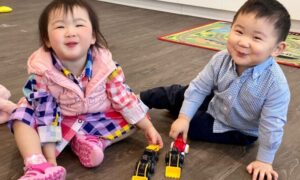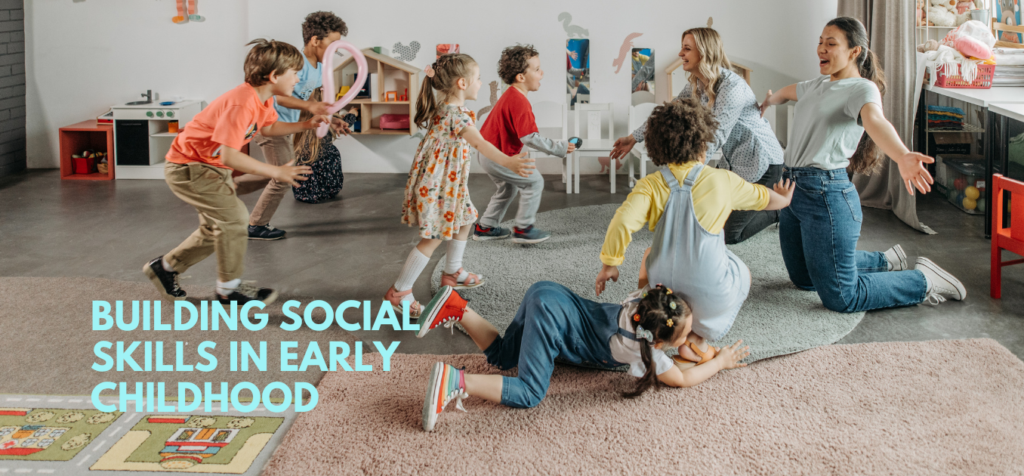
Long before children sit in classrooms or work in teams, they are learning the delicate art of getting along with others. Watch two toddlers negotiate a shared sandpit, and you are watching social development in its most raw and fascinating form. There are hopeful offers of friendship, sudden disagreements over a bucket, gales of laughter, and occasional tears. Every moment is a lesson.
Social skills are among the most important competencies a child can develop, and the early years are the most critical window for laying the foundations. Children who learn to regulate their emotions, take another’s perspective, communicate clearly, and cooperate with peers carry those abilities into every future chapter of their lives.
What Social Skills Really Are
Social skills are more than just politeness. They include a wide range of capabilities: understanding and expressing emotions, listening and responding, reading body language, waiting and taking turns, negotiating conflicts, cooperating on shared projects, and recovering from social missteps. They also include less visible abilities such as empathy, perspective-taking, and moral reasoning.
In the early years, these skills develop in layers. A baby begins by reading their caregiver’s face and tuning into emotional tone. A toddler practises parallel play, side by side with peers rather than fully engaged with them. A preschooler moves into true cooperative play, with shared roles and agreed-upon rules. Each stage builds on the last and prepares the child for the next.
Why Social Skills Matter So Much
Research consistently shows that social and emotional competence in early childhood predicts success in many domains of life, sometimes more strongly than early academic skills do. Children with strong social skills tend to have easier school transitions, better friendships, stronger mental health, and higher academic achievement over time. They are also more likely to become adults who form stable relationships, succeed in team-based workplaces, and contribute positively to their communities.
The reverse is also true. Children who struggle with social skills in the early years are at higher risk of isolation, behavioural difficulties, and mental health problems later on. This makes early intervention and support especially valuable. Social skills are not innate; they are learnt, practised, and refined through countless everyday interactions.
The Role of Relationships
Social skills grow first in the soil of relationships. A child who has a warm, responsive attachment with a primary caregiver learns, in their very bones, that people can be trusted, that feelings matter, and that communication leads to connection. This secure base gives them confidence to venture out into the wider social world.
As children enter group settings such as extended family, playgroups, and early learning environments, the range of relationships expands. They begin to experience the complexity of multiple friendships, the dynamics of group play, and the nuances of interacting with different personalities. The adults in their lives shape how they interpret and navigate these experiences.
Families looking for trusted childcare facilities in Perth often ask how educators support children’s social growth. The answer is usually a blend of warm relationships, intentional planning, and skilled coaching through the inevitable social bumps of early childhood.
The Power of Play
Play is the laboratory of social skills. When children play together, they practise almost every social capability: joining in, negotiating roles, expressing ideas, managing disagreements, and maintaining friendships. Pretend play is particularly powerful because it requires children to coordinate imaginary worlds with others, adjust their ideas in response to peers, and sustain shared narratives.
Unstructured, child-led play offers the richest social learning. When adults let children work things out themselves as much as possible, children develop agency, problem-solving skills, and resilience. Adult intervention is valuable when safety or emotional escalation require it, but over-policing children’s interactions can actually slow social growth.
Teaching Emotional Vocabulary
Young children feel big emotions long before they can name them. A tantrum is often the body’s way of expressing a feeling the mind does not yet have words for. One of the most powerful things adults can do is help children build an emotional vocabulary.
This begins with simple labelling. “You look disappointed.” “That sounds frustrating.” “I can see you’re excited.” Over time, children begin to recognise these feelings in themselves and others. As their vocabulary expands, so does their ability to articulate needs, understand peers, and resolve conflicts without physical expressions of distress.
Books and stories are wonderful tools for emotional learning. Characters who experience a range of feelings help children explore emotions safely. Discussing how a character feels, why they might feel that way, and what they could do next strengthens both emotional understanding and perspective-taking.
Coaching Through Conflict
Conflict is not the opposite of social skill development; it is the crucible in which social skills are forged. Young children will have dozens of conflicts a day, and each one is a learning opportunity. Skilled adults help children navigate these moments by staying calm, acknowledging feelings on all sides, helping children articulate what happened and what they need, and supporting them to find a resolution together.
Over time, this coaching helps children internalise the steps of conflict resolution: identifying the problem, listening to others, sharing their own perspective, and looking for a solution that works for everyone. These are skills that will serve them through primary school, adolescence, the workplace, and family life.
Friendship Skills
Making and keeping friends is one of the most meaningful social tasks of early childhood. Children often need support with the specific skills this requires: how to enter a group that is already playing, how to invite someone to join them, how to handle rejection, how to be a good listener, and how to apologise when they have hurt a friend.
Educators in quality early learning settings pay close attention to friendship dynamics. They might pair children thoughtfully for activities, coach a child who is struggling to enter a group, or quietly scaffold a child whose social style is less confident. They also model kindness, inclusion, and respectful communication in their own behaviour.
Empathy and Perspective-Taking
Empathy is the heart of social skill. It allows children to understand that others have feelings, needs, and perspectives different from their own. This capacity develops gradually through the preschool years and deepens across childhood.
Adults can nurture empathy by modelling it, pointing out others’ feelings, wondering aloud why people might behave the way they do, and reading stories that invite reflection on different perspectives. Family discussions about kindness, fairness, and community also help children internalise values that guide their social choices.
Supporting Social Skills at Home
Families can support their children’s social development in many simple ways. Prioritise unhurried family meals where everyone gets a turn to talk. Read stories that explore feelings and relationships. Arrange regular opportunities to play with other children in relaxed settings. Model respectful communication in your own interactions. Narrate the emotional landscape gently but consistently.
When conflicts or social stumbles happen, resist the urge to solve everything immediately. Instead, help your child reflect on what happened, consider how others might have felt, and think about what they could try next time. These conversations build the reflective capacity that underlies mature social skill.
A Lifelong Foundation
The social skills children build in their earliest years lay the groundwork for every relationship, community, and collaboration they will ever be part of. With warm relationships, rich play, emotional vocabulary, and gentle coaching, every child can grow into a confident, empathetic, and capable member of the human community. That is a gift worth every bit of the patience and care it requires.
Photo Creadit: Pavel Danilyuk